





Breast Cancer
Latest News

Advertisement
Video Series






Latest Videos






Shorts

2:03
Previewing the lidERA Trial PRO Data Being Presented at ESMO 2026
6 days ago
by
Alexis LeVee, MD

2:11
Previewing Breast Cancer Insights Expected at ESMO 2026
9 days ago
by
Kevin Kalinsky, MD, MS

2:04
Emphasizing the Importance of Vigilance When Using AI in Oncology
11 days ago
by
Matthew Kurian, MD
0:36
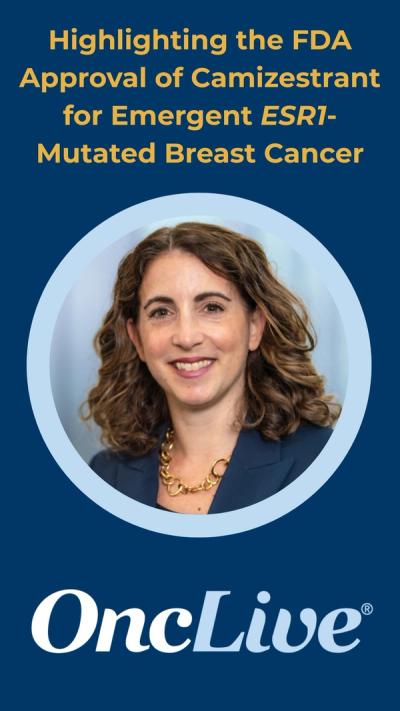
Highlighting the FDA Approval of Camizestrant for Emergent ESR1-Mutated Breast Cancer
18 days ago
by
Erica L. Mayer, MD, MPH

1:44
Weighing the Benefits and Limitations of AI Tools in Breast Oncology
19 days ago
by
Matthew Kurian, MD

1:14
Highlighting the Importance of Individualized Breast Cancer Screening Practices
a month ago
by
Sara Nunnery, MD, MSCI(+1 more)

0:52
Individualizing Efforts to Lower Recurrence Risk in Breast Cancer
a month ago
by
Sara Nunnery, MD, MSCI(+1 more)

0:30
Highlighting the Importance of Proactive Breast Cancer Care
2 months ago
by
Eleonora Teplinsky, MD(+1 more)

0:47
Spotlighting the lidERA Trial in Breast Cancer
2 months ago
by
Ajaz M. Khan, MD, MBA, CPE

0:31
Managing Sacituzumab Govitecan–Related AEs in Breast Cancer
2 months ago
by
Nan Chen, MD
Podcasts








































































Advertisement
More News
Here is your cheat sheet to all therapeutic options that were cleared by the FDA in September 2026 spanning tumor types.

The FDA approved tucatinib plus trastuzumab and pertuzumab as maintenance for advanced HER2-positive breast cancer after induction.

The FDA approved pirtobrutinib for untreated chronic lymphocytic leukemia, granted priority review to elinzanetant for breast cancer hot flashes, and more.

Did you catch all of this week's top oncology news? Test your knowledge with OncLive's Weekly News Quiz.

In case you missed any, read a recap of the episodes of OncLive On Air that aired in September 2026.

Experts spotlight the variety of breast cancer research being presented at the 2026 ESMO Congress.
FDA Approves Denosumab Biosimilar for Skeletal-Related Events, GCTB, and Hypercalcemia of Malignancy
Denosumab-adet (Degevma) is FDA-approved as an Xgeva biosimilar for SRE prevention in myeloma and bone metastases, giant cell tumor of bone, and hypercalcemia of malignancy.

Researchers at Wake Forest University School of Medicine identified a protein that may help breast cancer spread to the brain and evade immune defenses.

The sNDA for elinzanetant seeks FDA approval for moderate to severe vasomotor symptoms in women receiving endocrine therapy for HR-positive breast cancer.

The top 5 OncLive TV videos of the week cover insights in breast cancer, PV, myeloma, and CLL.
Clinicians and researchers are set to gather for the UCSF-cosponsored International Invasive Lobular Carcinoma Symposium.

Read a refresh of breast cancer FDA news from August 2026, including an sNDA application in PIK3CA-mutant disease and a fast track designation.

The FDA approved imlunestrant plus abemaciclib in breast cancer and photodynamic therapy in skin cancer, and more.
The FDA approved imlunestrant/abemaciclib for ER-positive, HER2-negative, ESR1-mutated advanced breast cancer after progression on endocrine therapy.

Japan approved T-DXd plus pertuzumab for HER2-positive disease and Dato-DXd for triple-negative disease in first-line metastatic breast cancer.
Obesity may increase breast cancer risk partly by removing a natural defense.
Camizestrant plus palbociclib did not significantly improve progression-free survival vs anastrozole plus palbociclib in the first-line SERENA-4 trial.
A UCLA-led review found there is not yet enough real-world evidence to determine whether using AI in routine screening actually reduces the number of breast cancers diagnosed between screenings

The FDA approved camizestrant for ESR1-mutated breast cancer, cleared ropeginterferon alfa-2b for essential thrombocythemia, and more.
The FDA approved camizestrant plus a CDK4/6 inhibitor for hormone receptor–positive, HER2-negative metastatic breast cancer that acquires an ESR1 mutation.

GLP-1 receptor agonists are generating buzz for their metabolic benefits, as well as for their potential to directly combat breast cancer progression.
T-DXd plus pertuzumab was approved in the European Union as first-line treatment for unresectable or metastatic HER2-positive breast cancer.
The FDA approved daraxonrasib for pancreatic cancer, cleared zanidatamab-based regimens for HER2-positive gastric cancer, and more.

Did you catch all of this week's top oncology news? Test your knowledge with OncLive's Weekly News Quiz.

The sNDA is supported by VIKTORIA-1 Study 2 data showing that gedatolisib-based regimens approximately doubled median PFS vs alpelisib plus fulvestrant.
Advertisement
Advertisement
Trending on OncLive
1
FDA Approves Tucatinib Plus Trastuzumab/Pertuzumab as First-Line Maintenance in Advanced HER2+ Breast Cancer
2
VIR-5500 Receives FDA Fast Track Designation in mCRPC
3
Iberdomide Plus Daratumumab/Dexamethasone Yields Significant PFS Benefit in R/R Myeloma
4
FDA Approves Atezolizumab Plus Chemo for Stage III dMMR Colon Cancer
5