



Breast Cancer
Latest News


FDA ODAC Live Updates: Committee Reviews SERENA-6 Data for Camizestrant in ESR1-Mutated, Hormone Receptor+ Breast Cancer
By Chris Ryan
Advertisement
Video Series
Latest Videos



Shorts
4:19
OncLive News Roundup for the Week of 4/5
6 months ago
by
Chris Ryan(+1 more)

0:39
Initiating Productive Conversations About Weight Gain During Breast Cancer Treatment
6 months ago
by
Patricia Jakel, MSN
0:57
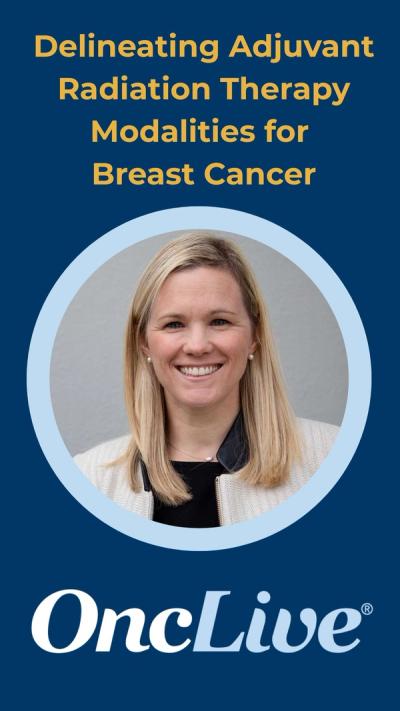
Delineating Adjuvant Radiation Therapy Modalities for Breast Cancer
6 months ago
by
Meghan R. Flanagan, MD, MPH

0:37
The Potential Role of the SERENA-6 Data in Breast Oncology
6 months ago
by
Kevin Kalinsky, MD, MS
3:08
OncLive News Roundup for the Week of 3/22
6 months ago
by
Chris Ryan(+1 more)

1:08
The Evolution of Axillary Lymph Node Dissection Practices in Breast Cancer
6 months ago
by
La-Urshalar Brock, FNP, BSN, MSN
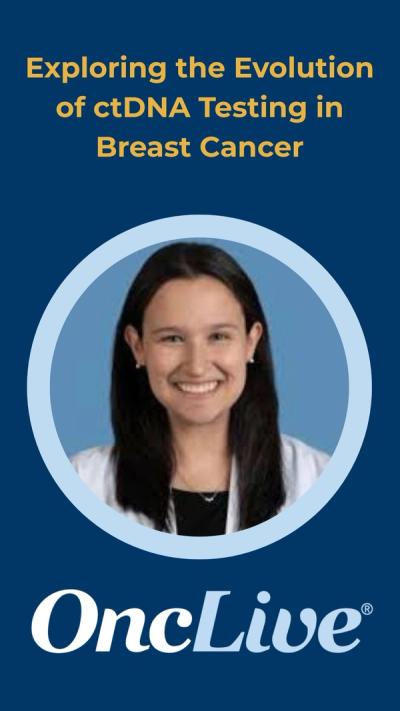
1:27
Exploring the Evolution of ctDNA Testing in Breast Cancer
7 months ago
by
Marla D. Lipsyc-Sharf, MD

0:46
Emphasizing the Importance of Considering Different Patient Priorities
7 months ago
by
Sami Diab, MD

0:39
Previewing Future Directions for Investigating RSK Inhibition in Breast Cancer
7 months ago
by
Hung T. Khong, MD

3:48
OncLive News Roundup for the Week of 3/8
7 months ago
by
Chris Ryan(+1 more)
Podcasts






























































Advertisement
More News

Rena D. Callahan, MD, notes the implications of adding camizestrant to an aromatase inhibitor in ER-positive breast cancer with an emergent ESR1 mutation.

Frontline treatment with zovegalisib, atirmociclib, and fulvestrant yielded responses in pretreated, PI3Kα-mutated HR-positive metastatic breast cancer.

Breast cancer experts discuss nuances of using CDK4/6 inhibitors to treat patients with high-risk hormone receptor–positive, HER2-negative early disease.

The top 5 OncLive TV videos of the week cover insights in head and neck cancer, esophageal cancer, renal cell carcinoma, and breast cancer.

Rena D. Callahan, MD, discusses clinical considerations for CDK4/6 inhibitor–based regimens and oral SERDs in hormone receptor–positive breast cancer.

Rena D. Callahan, MD, discusses the implications of the NATALEE trial of adjuvant ribociclib plus endocrine therapy in HR-positive early breast cancer.

Experts from across oncology specialties highlight research being presented at the 2026 AACR Annual Meeting.

Drs Nunnery and Iyengar highlight the evolving integration of GLP-1 agonists into the breast cancer treatment armamentarium.
Meghan R. Flanagan, MD, MPH, discusses the multidisciplinary complexities that arise when trying to coordinate de-escalated breast cancer care.
Meghan R. Flanagan, MD, MPH, notes takeaways from a multidisciplinary tumor board discussion on how genomic assays can guide treatment decisions for DCIS.

During a recent Peer Exchange, breast and lung cancer experts discussed comprehensive strategies for identifying and mitigating the AEs associated with ADCs.
The NCCN updated its 2026 Guidelines for breast cancer screening and diagnosis to include an AI-based risk assessment tool to predict breast cancer risk.
Catch up on insights into the global development of breast cancer therapies that are making waves around the world.
The top 5 OncLive TV videos of the week cover insights in multiple myeloma, head and neck cancer, breast cancer, prostate cancer, and leukemia.
Read our recap of top phase 1 and 2 breast cancer data announcements and highlights that may influence further clinical research and developments.
Drs Nunnery and Iyengar discuss lifestyle and medical interventions pertinent to breast cancer survivorship.
The addition of palbociclib to maintenance HER2-directed and endocrine therapy improved PFS vs SOC therapy alone in HER2-positive advanced breast cancer.
Read a refresh of the top FDA news in breast cancer from March 2026, including anticipated approvals and a biosimilar approval.

Read our recap of the top phase 3 breast cancer data announcements and highlights that may influence clinical practice in the near future.

Kevin Kalinsky, MD, MS, FASCO, discusses the role of integrative oncology programs and the importance of survivorship clinics within cancer care.

The biosimilar Ponlimsi is approved for all reference denosumab indications, and applications for an omalizumab biosimilar candidate have been accepted.
The top 5 OncLive TV videos of the week cover insights in bladder cancer, colorectal cancer, breast cancer, chronic myeloid leukemia, and multiple myeloma.
Kevin Kalinsky, MD, MS, FASCO, notes the advantages of collaborating with multidisciplinary tumor boards when managing metastatic breast cancer.
Sami Diab, MD, discusses the use of genomic assays for determining whether extended adjuvant therapy is needed for patients with breast cancer.

Oncology experts ask and answer multidisciplinary questions based on presentations from the 43rd Annual Miami Breast Cancer Conference.
Advertisement
Advertisement
Trending on OncLive
1
FDA Approves Tucatinib Plus Trastuzumab/Pertuzumab as First-Line Maintenance in Advanced HER2+ Breast Cancer
2
VIR-5500 Receives FDA Fast Track Designation in mCRPC
3
Iberdomide Plus Daratumumab/Dexamethasone Yields Significant PFS Benefit in R/R Myeloma
4
FDA Approves Atezolizumab Plus Chemo for Stage III dMMR Colon Cancer
5