

Precision Medicine in Oncology®
Latest News
Advertisement
Latest Videos






























































Advertisement
More News
Abraham Chachoua, MD, associate director of cancer services at NYU Langone Medical Center, talks about targeted treatment for mutations in non-small cell lung cancer and adenocarcinoma.

The 'precision medicine initiative' proposed by President Barack Obama will require an initial investment of $215 million and consent from 1 million volunteers, with the goal of discovering potential cures for patients with cancer.
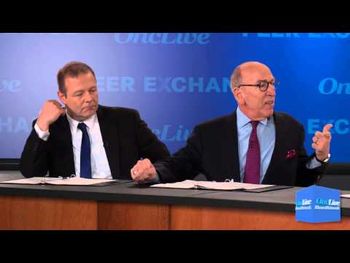
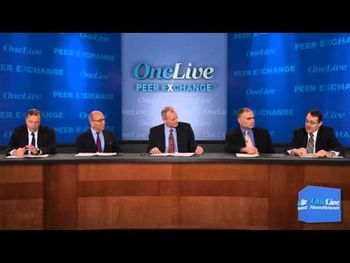
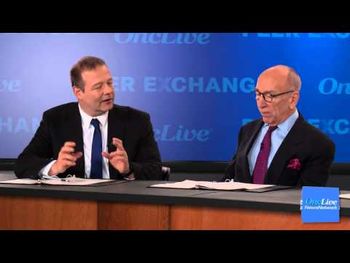

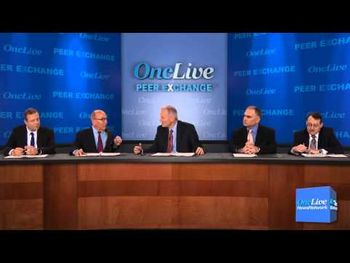



Ten or 15 years ago, a diagnosis of advanced non– small cell lung cancer (NSCLC) led directly to a discussion of chemotherapy.

Joan Lunden talks about imaging technology and genetic testing for the early detection of breast cancer with Roy Firestone and Patrick I. Borgen, MD, in advance of her keynote address at the 32nd Miami Breast Cancer Conference.
"Precision, personalized, individualized, targeted" - most oncologists are well acquainted with these terms. On Tuesday, President Obama introduced this concept to the nation in his State of the Union Address.

The New York State Stem Cell Science Program recently awarded a 4-year $11.9 million grant to Roswell Park Cancer Institute to fund research and development of a stem-cell based treatment for ovarian cancer.

Andre Goy, MD, chairman, director, and chief of the Lymphoma Division at the John Theurer Cancer Center, sat down with OncLive to discuss the recent merger and what that means for the future of precision medicine.
Advertisement
Advertisement
Trending on OncLive
1
Ifinatamab Deruxtecan BLA Voluntarily Withdrawn in Previously Treated Extensive-Stage SCLC
2
Etentamig Improves Response and PFS vs Standard Therapies in Triple-Class Exposed Relapsed/Refractory Myeloma
3
Dr Voorhees on Eligibility Criteria for the CERVINO Trial in Multiple Myeloma
4
Long-Term PERSEUS Data Confirm Durable PFS Benefit With D-VRd in Transplant-Eligible Newly Diagnosed Myeloma
5