


Precision Medicine in Oncology®
Latest News
Advertisement
Latest Videos






























































Advertisement
More News

Although prostate cancer (PC) is the most common solid tumor malignancy among men in the Western Hemisphere, disease-specific mortality remains low, primarily due to optimized screening, diagnosis, and treatment.
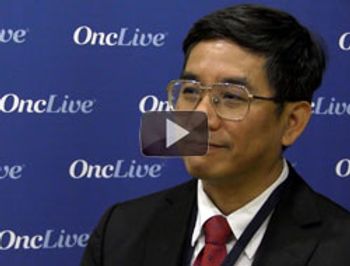
James CH Yang, MD, PhD, from the National Taiwan University Hospital, discusses the future of lung cancer treatment.

The PARP inhibitor veliparib exhibits antitumor activity and is safe and tolerable on a continuous dosing schedule when used for the treatment of patients with BRCA-positive and BRCA-wild type tumors.

The promise of personalized medicine in cancer will only be met once physicians have both the arsenal of therapeutics they need and a more complete understanding of genomic tumor profiles.

The actress Angelina Jolie's decision to undergo a preventive double mastectomy after learning she carried the BRCA1 gene mutation-associated with an increased risk of breast and/or ovarian cancer-apparently sparked an "Angelina effect" on public health.
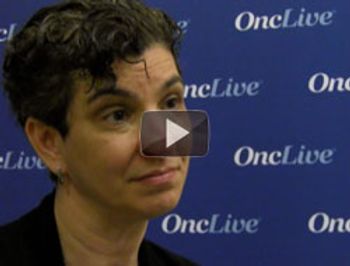
Claudine Isaacs, MD, professor, medical director, Fisher Center for Familial Cancer Research, co-director, Breast Cancer Program, Georgetown University/Lombardi Cancer Center, discusses the importance of genetic counseling and the role of the genetic counselor

Robert Petit, PhD, the chief scientific officer at Advaxis, provides insight into the ADXS-PSA immunotherapy and the rationale behind the combination study with pembrolizumab.

A major step toward improved tolerability of cisplatin-based therapy came in the early 2000s with the advent of the modern regimen of gemcitabine and cisplatin.

A number of large pharmaceutical companies have forged clinical trial collaborations focused on the investigation of novel combinations and companion diagnostics across multiple cancer indications.

A genomic analysis of renal cell carcinoma (RCC) has uncovered new clues about the development, growth, and spread of the cancer.

Suzanne A. W. Fuqua, PhD, professor of medicine at Baylor College of Medicine, discusses the Y537 hotspot in breast cancer.
Selena Juarez Stuart, MD, hematology/oncology fellow, Cancer Therapy & Research Center, The University of Texas Health Science Center at San Antonio, discusses the risks and benefits of phase I liver dysfunction studies.
Andrew R. Allen, BM, BCh, MA, MRCP, PhD, Executive Vice President of Clinical and Pre-Clinical Development, Chief Medical Officer, Co-Founder, Clovis Oncology, provides an overview of CO-1686.

Settlemen addressed broad questions about his research into acquired resistance mechanisms in an interview with OncologyLive.

When it comes to the personalized treatment of genitourinary cancers, biomarkers hold an immense amount of promise. Already, there are predictive and prognostic tools available to urologists.
David R. Gandara, MD, Professor of Medicine, Division of Hematology and Oncology, Director, Thoracic Oncology Program, Associate Director, Clinical Research, UC Davis Comprehensive Cancer Center, discusses examining third-generation EGFR TKIs in lung cancer.





Hailed as "new ammunition in the war against cancer" and featured in TIME magazine at the turn of the new millennium, molecularly targeted therapies have gone on to revolutionize cancer treatment. Clinical responses, however, are all too often short-lived as cancer cells become resistant.

Women harboring a loss-of-function mutation in the PALB2 gene demonstrated an increased risk of developing breast cancer that was similar to the predisposition seen with mutations in the infamous BRCA gene

Nobody disputes the need for careful, judicious diagnostic testing. But as the number of individual gene tests continues to grow, clinicians are struggling to keep up. On the one hand, using diagnostic markers like KRAS in colon cancer or hormone receptor status in breast cancer to select the most appropriate chemotherapy regimen is essential.
Advertisement
Advertisement
Trending on OncLive
1
Ifinatamab Deruxtecan BLA Voluntarily Withdrawn in Previously Treated Extensive-Stage SCLC
2
Etentamig Improves Response and PFS vs Standard Therapies in Triple-Class Exposed Relapsed/Refractory Myeloma
3
Dr Voorhees on Eligibility Criteria for the CERVINO Trial in Multiple Myeloma
4
Long-Term PERSEUS Data Confirm Durable PFS Benefit With D-VRd in Transplant-Eligible Newly Diagnosed Myeloma
5