Precision Medicine in Oncology®
Latest News
Latest Videos

CME Content
More News

Oncology practitioners now have several resources to consult for advice on genetic testing for their patients following the US Preventive Services Task Force (USPSTF) December 2013 update of its 2005 BRCA recommendations.

Continuing EGFR inhibition beyond progression with afatinib plus paclitaxel significantly improved PFS and ORR compared with chemotherapy alone in patients with heavily pretreated metastatic NSCLC.

Aleix Prat, MD, PhD, medical oncologist, Vall D'Hebron Institute of Oncology, Barcelona, Spain, discusses the differences between EndoPredict and Prosigna.

Walter J. Curran, Jr, MD, discusses a report that examined the effect of institutional clinical trial enrollment volume on survival of patients with stage III non-small cell lung cancer (NSCLC) treated with chemoradiation.

Naiyer A. Rizvi, MD, an associate attending physician, Memorial Sloan Kettering Cancer Center, discusses the safety and response with plus erlotinib in patients with epidermal growth factor receptor mutant (EGFR MT) advanced non-small cell lung cancer (NSCLC).

Maha Hussain, MD, from the University of Michigan Comprehensive Cancer Center, discusses the possibility of ETS gene fusions acting as a predictive biomarker for prostate cancer.

A new reimbursement program initiated by WellPoint, Inc., looks to pay oncologists an additional $350 a month for each patient who is enrolled in and follows one of the insurer's recommended cancer treatment regimens

CO-1686 has received a breakthrough therapy designation from the FDA for its potential as a treatment for patients with metastatic T790M mutation-positive NSCLC who have received at least one prior line of EGFR-targeted therapy.

A cell-cycle gene array test demonstrated independent value for predicting metastatic progression after surgery for organ-confined renal cell carcinoma (RCC) of clear cell histology, a retrospective study of patient data showed.

The highly selective EGFR inhibitor AZD9291 demonstrated an overall response rate of 64% without inducing dose-limiting toxicities in patients with metastatic NSCLC who harbor an acquired EGFR T790M resistance mutation.

For the past two decades, researchers have been exploring B-cell specific antigens in hopes of developing a new anticancer target that would mirror the success of the CD20-targeting rituximab (Rituxan). Now, strategies aimed at CD19 are proving particularly promising.

Judith A. Salerno, MD, MS, president, CEO, Susan G. Komen, comments on donations to breast cancer research.

Fresh insights into outcomes for patients with low-risk, HER2-positive breast cancer suggest that adjuvant chemotherapy regimens with or without trastuzumab (Herceptin) should be considered as options for managing this growing population

Anas Younes, MD, chief, Lymphoma Service, Memorial Sloan Kettering Cancer Center, discusses the future of treating lymphoid malignancies.

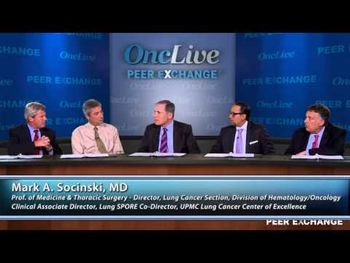
Leading experts in the rapidly evolving field of lung cancer treatment assembled to offer their perspectives on the latest research and provide clinical insights for practitioners dealing with challenging cases.

It seems that rarely a month goes by these days without the publication of a major study demonstrating the impact of fresh knowledge regarding molecular abnormalities in a particular tumor type.

Balazs Halmos, MD, section chief of Thoracic Oncology at New York-Presbyterian Hospital/Columbia University Medical Center, discusses the impact of EGFR inhibitors on the treatment of lung cancer.

A physician's confidence level in his genomic knowledge plays a significant role in attitudes towards genomic tests, especially in tests that look for changes in DNA that are taken from patients' tumor samples

Locally advanced non-small cell lung cancer (NSCLC) remains a challenging disease to treat, with a 5-year survival rate for patients with unresectable stage III disease of approximately 20%, even after definitive radiation therapy and concurrent chemotherapy.

Pamela L. Kunz, MD, assistant professor of medicine, Oncology, Stanford University Medical Center, discusses the effort to identify molecular subtypes of gastric cancer.

A novel immunotherapeutic known as IMCgp100 induced clinical responses with manageable toxicity in patients with advanced melanoma

Ellen T. Matloff, MS, CGC, director, Yale Cancer Genetic Counseling Program at the Yale School of Medicine/Yale Cancer Center, gives an overview of the recent changes to the field of genetic testing.

Medicine is undergoing a revolution that will transform the practice of healthcare, including oncology.

Ari Melnick, MD, a professor of medicine at the Weill Cornell Medical College, discusses EZH2 and its potential as a target in diffuse large B-cell lymphoma.

The approval of the first small-molecule, targeted therapy for patients with chronic lymphocytic leukemia (CLL) launches a new era that promises to transform management of the disease, yet significant challenges in translating research advances into improvements in long-term outcomes remain