






Colorectal Cancer
Latest News
Advertisement
Latest Videos





































































Advertisement
More News

Tanios Bekaii-Saab, MD, professor of Medicine, Mayo Clinic, discusses the recent expansion of treatment options available for patients with colorectal cancer.

Alan P. Venook, MD, The Madden Family Distinguished Professor of Medical Oncology and Translational Research at the University of California, San Francisco Helen Diller Family Comprehensive Cancer Center, discusses the potential that immunotherapy may have in the treatment of patients with colorectal cancer.

It is highly probable that molecular profiling is the key to more precise treatments, as well as prediction of outcomes in metastatic colorectal cancer.

Tanios Bekaii-Saab, MD, a professor of Medicine at Mayo Clinic, discusses sequencing regorafenib (Stivarga) and TAS-102 (Lonsurf) in metastatic colorectal cancer (mCRC).

The FDA has granted a priority review to a supplemental biologics license application for pembrolizumab for previously treated patients with advanced microsatellite instability-high cancer.

John L. Marshall, MD, chief, Division of Hematology and Oncology, Medstar Georgetown University Hospital, and director, Otto J. Ruesch Center for the Cure of Gastrointestinal Cancers, discusses the safety profile of Yttrium-90, particularly when combined with capecitabine as a treatment for patients with liver-dominant metastatic colorectal cancer.

John L. Marshall, MD, chief, Division of Hematology and Oncology, Medstar Georgetown University Hospital, and director, Otto J. Ruesch Center for the Cure of Gastrointestinal Cancers, discusses Y-90 in metastatic castration resistant colorectal cancer (mCRC).

Tanios Bekaii-Saab, MD, professor of Medicine, Mayo Clinic, compares the toxicity profiles of regorafenib and TAS-102, which are both used to treat patients with metastatic colorectal cancer.

Alan P. Venook, MD, discusses key issues in metastatic colorectal cancer, including tumor sidedness and the conflicting data regarding the precise benefit of cetuximab in the frontline setting.
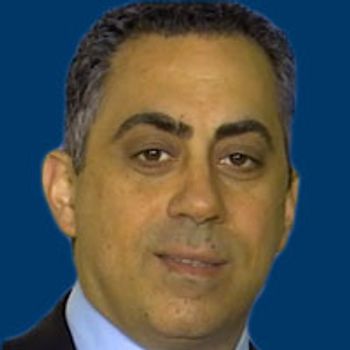
For a long time, patients with metastatic colorectal cancer had poor outcomes and very limited treatment options, said Tanios Bekaii-Saab, MD.

An overall survival analysis of 3 randomized controlled trials exploring Yttrium-90 (Y-90) resin microspheres may demonstrate noteworthy survival benefits for patients with liver-dominant metastatic colorectal cancer receiving first-line FOLFOX6 with or without bevacizumab plus Y-90 resin microspheres.

Suzanne L. Topalian, MD, professor of Surgery, Johns Hopkins Medicine, discuses novel immunotherapy biomarkers in colorectal cancer (CRC).
Alan P. Venook, MD, The Madden Family Distinguished Professor of Medical Oncology and Translational Research at the University of California, San Francisco Helen Diller Family Comprehensive Cancer Center, discusses factors in determining first-line treatment for patients with metastatic colorectal cancer (mCRC).
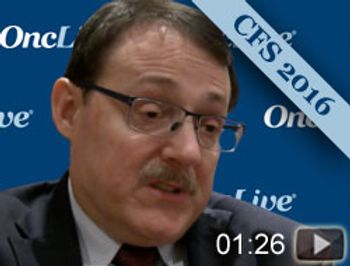
Alan P. Venook, MD, The Madden Family Distinguished Professor of Medical Oncology and Translational Research at the University of California, San Francisco Helen Diller Family Comprehensive Cancer Center, discusses evolving treatment strategies for patients with colorectal cancer, with regards to molecular features such as sidedness.

Mikhail Fedyanin, MD, PhD, Russian Academy of Medical Science, discusses mutation discordance in the primary tumor and metastases in patients with colorectal cancer (CRC), as well as the benefits of liquid biopsy.

Maria Ignez Braghiroli, MD, medical oncologist, Instituto do Câncer do Estado de São Paulo, discusses clinical characteristics and outcomes of patients with metastatic colorectal cancer (CRC) harboring NRAS mutations.

Maria Ignez Braghiroli, MD, medical oncologist, Instituto do Câncer do Estado de São Paulo, discusses what the current treatment landscape looks like for patients with colorectal cancer, as well as what the future may hold.

Volker Heinemann, MD, PhD, director of the Comprehensive Cancer Center at Ludwig Maximilian University of Munich, compares the use of depth of response and RECIST criteria to measure responses in patients with colorectal cancer.

Mutation discordance between primary and metastatic sites in colorectal cancer may occur more often than previously understood, opening the door for potential new therapeutic approaches to treating the disease.
The correlation between tumor location and improved survival varies based on stage of disease in patients with metastatic colorectal cancer.

Mikhail Fedyanin, MD, PhD, Russian Academy of Medical Science, discusses mutation discordance in the primary tumor and metastases in patients with colorectal cancer (CRC).
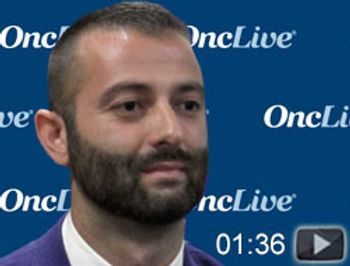
Filippo Pietrantonio, MD, Department of Medical Oncology, Medical Oncology Unit, Fondazione IRCCS Istituto Nazionale dei Tumori, Milan Fondazione IRCCS Istituto Nazionale dei Tumori, discusses a nomogram that can predict 12-week survival rates for patients with colorectal cancer.

Maria Ignez Braghiroli, MD, medical oncologist, Instituto do Câncer do Estado de São Paulo, discusses the ways in which treatment can be individualized for patients with colorectal cancer depending on the mutations they may harbor.

To properly manage patients with DNA mismatch repair deficiency rectal cancer, one must have a well-rounded understanding of the molecular and clinical causes and risks associated with this subgroup of patients.
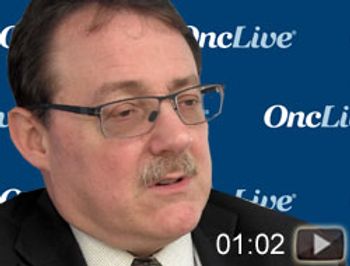
Alan P. Venook, MD, The Madden Family Distinguished Professor of Medical Oncology and Translational Research at the University of California, San Francisco Helen Diller Family Comprehensive Cancer Center, discusses future steps for treatment of patients with colorectal cancer.
Advertisement
Advertisement
Trending on OncLive
1
The OncFive: Top Oncology Articles for the Week of 10/4/2026
2
FDA Approves Atezolizumab Plus Chemo for Stage III dMMR Colon Cancer
3
FDA Grants Breakthrough Device Designation to Natera’s Multi-Cancer Early Detection Assay
4
FDA Flashback: Hematologic Cancer Decisions and News From September 2026
5