





Gastrointestinal Cancer
Latest News
Advertisement
Latest Videos
























































Advertisement
More News

Josep M. Llovet, MD, discusses a phase II, double-blind, placebo-controlled trial examining the efficacy and safety of namodenoson, an A3 adenosine receptor agonist, as a second-line treatment for patients with Child-Pugh B advanced hepatocellular carcinoma.

As the immunotherapy research field grows, NY-ESO-1 is emerging as a high-priority target for cancer vaccine development and adoptive T-cell therapies.

Investigators hope to expand frontline treatment options for patients with hepatocellular carcinoma via the phase III IMbrave150 study, which is exploring the synergistic potential of immunotherapy and the immunomodulatory potential of a VEGF inhibitor in locally advanced, metastatic or unresectable HCC.
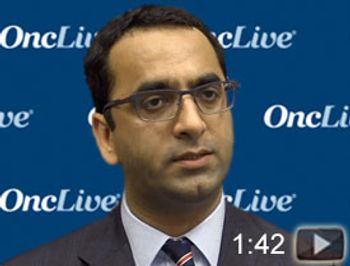
Pashtoon M. Kasi, MBBS, MD, MS, hematologist, internist, oncologist, Mayo Clinic, discusses the comparison of circulating tumor DNA tests, tissue, and liquid biopsies, in a study of patients with colorectal cancer.

It is crucial to develop screening programs for stomach cancer in the United States in order to make diagnoses at earlier stages of disease, provide better care, and improve outcomes.













The FDA has approved pembrolizumab for the treatment of patients with recurrent locally advanced or metastatic squamous cell carcinoma of the esophagus whose tumors express PD-L1 (combined positive score ≥10) as determined by an FDA-approved test, with disease progression after ≥1 prior lines of systemic therapy.
Christopher Lieu, MD, director, GI Medical Oncology Program and deputy associate director for clinical research, at the University of Colorado Cancer Center, discusses the predictive value of BRAF V600E mutations in metastatic colorectal cancer (mCRC).

Anthony B. El-Khoueiry, MD, associate professor of clinical medicine, Keck School of Medicine, USC Norris Comprehensive Cancer Center, discusses immunotherapy combination in hepatocellular carcinoma (HCC).

The European Medicines Agency's Committee for Medicinal Products for Human Use has backed approval of TAS-102 for the treatment of adult patients with metastatic gastric cancer, including adenocarcinoma of the gastroesophageal junction, following treatment with at least 2 prior systemic regimens for advanced disease.

Advertisement
Advertisement
Trending on OncLive
1
Epcoritamab Plus R-CHOP Meets PFS End Point in Newly Diagnosed DLBCL
2
‘Our Impact Will Be Broad and Transformative’: Wells Messersmith, MD, Takes the Reins at CU Anschutz Cancer Center
3
FDA Approves Pirtobrutinib for Previously Untreated CLL/SLL
4
Berzosertib Plus Carboplatin Fails to Improve Responses in Pretreated mCRPC
5