





Gastrointestinal Cancer
Latest News
Advertisement
Latest Videos

























































Advertisement
More News




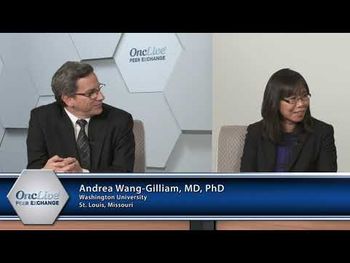


Donald A. Richards, MD, PhD, discusses the use of genetic testing in patients with metastatic pancreatic cancer.

A new set of recommendations for the treatment of small bowel adenocarcinoma, a relatively rare type cancer of the gastrointestinal tract, have been created by the National Comprehensive Cancer Network. The guidelines are the first in the United States and second in the world to recommend treatments specific to the malignancy, which is often diagnosed at advanced stages.

Benjamin Weinberg, MD, discusses treatment strategies for patients with different molecular subtypes of metastatic colorectal cancer.

Michael S. Lee, MD, discusses trial data evaluating the combination of atezolizumab (Tecentriq) and bevacizumab (Avastin) in unresectable hepatocellular carcinoma.

The addition of cisplatin to gemcitabine and nab-paclitaxel resulted in encouraging activity in patients with previously untreated advanced pancreatic cancer, despite not having demonstrated the prespecified number of complete responses to meet the primary endpoint of a phase Ib/II clinical trial (NCT01893801), according to findings published in JAMA Oncology.

Combining the pegylated IL-10 pegilodecakin with FOLFOX (folinic acid, 5-FU, oxaliplatin) chemotherapy did not improve overall survival as a second-line therapy for patients with metastatic pancreatic cancer.

Tanios S. Bekaii-Saab, MD, FACP, discusses the results of the phase II BACCI trial evaluating the addition of atezolizumab to capecitabine plus bevacizumab versus capecitabine/bevacizumab plus placebo in patients with microsatellite stable metastatic colorectal cancer.

Rachna T. Shroff, MD, MS, discusses actionable targets in intrahepatic and extrahepatic cholangiocarcinoma.

Patients with metastatic gastric or gastroesophageal junction cancer had improved overall survival with TAS-102, irrespective of prior gastrectomy.

Tanios S. Bekaii-Saab, MD, discusses the safety profile of the combination of tucatinib and trastuzumab in patients with HER2-amplified metastatic colorectal cancer.

Anuradha S. Budhu, PhD, discusses using molecular features as predictive markers in liver cancer.
Advertisement
Advertisement
Trending on OncLive
1
Epcoritamab Plus R-CHOP Meets PFS End Point in Newly Diagnosed DLBCL
2
‘Our Impact Will Be Broad and Transformative’: Wells Messersmith, MD, Takes the Reins at CU Anschutz Cancer Center
3
FDA Approves Pirtobrutinib for Previously Untreated CLL/SLL
4
Berzosertib Plus Carboplatin Fails to Improve Responses in Pretreated mCRPC
5