




Gastrointestinal Cancer
Latest News

Advertisement
Latest Videos

























































Advertisement
More News

The combination of gemcitabine plus cisplatin with or without veliparib is highly active in patients with pancreatic ductal adenocarcinoma and a germline BRCA/PALB2 mutation.

Patients with unresectable hepatocellular carcinoma who were randomized to first-line lenvatinib (Lenvima), compared with sorafenib (Nexavar), and received subsequent anticancer procedures experienced prolonged overall survival.

Van Morris, MD, discusses research around treatment for patients with unresectable colorectal cancer.

The triplet combination of cabozantinib, nivolumab, and ipilimumab induced higher response rates, progression-free survival, and overall survival compared with nivolumab plus cabozantinib in patients with advanced hepatocellular carcinoma.

The triplet of nivolumab, ramucirumab and paclitaxel showed promising antitumor activity with durable responses in a phase II study of patients with advanced gastric cancer.

Teresa Macarulla, MD, discusses a new finding from the phase III POLO trial regarding patients who rapidly progressed on treatment.

The efficacy of larotrectinib has been confirmed in patients with heavily pretreated TRK fusion–positive gastrointestinal cancers.
Pembrolizumab monotherapy in the first and later lines of therapy leads to more durable responses and meaningfully improves overall survival compared with chemotherapy in patients with advanced gastric/gastroesophageal junction cancer with a high number of PD-L1–expressing cells in the tumor, lymphocytes, and macrophages.

Mika Cline, MD, discusses data with PARP inhibitors in patients with BRCA1/2 mutated pancreatic cancer.
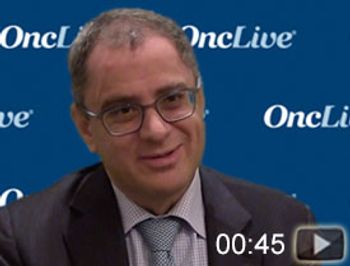
Ghassan K. Abou-Alfa, MD, discusses the role of ramucirumab in the treatment of patients with hepatocellular carcinoma in the second-line setting.

A DNA methylation-based cell-free DNA assay demonstrated high specificity and accurate localization of cancers to specific regions of the gastrointestinal tract.

Surufatinib improved progression-free survival compared with placebo in patients with low- or intermediate-grade advanced pancreatic neuroendocrine tumors for whom there is no effective therapy.
Afonso Ribeiro, MD, discusses the role of surgery in treating patients with pancreatic cancer.

The FDA has granted an orphan drug designation to durvalumab and tremelimumab for the treatment of patients with hepatocellular carcinoma.
Michael A. Choti, MD, discusses the future of treatment for patients with stage IV pancreatic cancer.

Josep Tabernero, MD, PHD, MSc, is best known for applying translational research against gastrointestinal tumors, with particular focus on colorectal cancer.
Therapeutic developments in cancer were rewarded with a wave of approvals in 2019.

Afonso Ribeiro, MD, medical director of Advanced Endoscopy and Gastroenterology at Memorial Healthcare System, discusses the criteria that can be used to determine whether a patient with pancreatic cancer is borderline resectable.
Investigators hope to answer a potentially paradigm-changing question in the phase II ANCHOR-CRC study (NCT03693170) of BRAF V600E–mutant colorectal cancer (CRC): Can the benefit observed with a targeted triplet in latestage disease extend to the first line?

Pablo Ferraro, MD, discusses the use of molecular profiling in pancreatic cancer.

Between 2013 and 2017, just 40% of patients with metastatic colon cancer received guideline-recommended biomarker testing that could have improved treatment decisions, according to findings from a retrospective study. Results also showed that adherence to evidence-based recommendations for genotyping was poor in academic and community settings alike.
Atif Hussein, MD, discusses the evolution treatment in hepatocellular carcinoma.

A. Craig Lockhart, MD, MHS, professor and associate director for Regional and Strategic Clinical Research Affiliations, Sylvester Comprehensive Cancer Center, University of Miami Health System, discusses investigational strategies targeting the RAS/RAF/MEK/ERK pathway in colorectal cancer (CRC).
Atif Hussein, MD, discusses how the treatment of patients with hepatocellular carcinoma and cholangiocarcinoma has evolved in recent years.

The standard of care in the second line for patients with mismatch repair–deficient metastatic colorectal cancer has shifted to favor therapy utilizing immunotherapeutic agents, according to Howard Hochster, MD.
Advertisement
Advertisement
Trending on OncLive
1
Epcoritamab Plus R-CHOP Meets PFS End Point in Newly Diagnosed DLBCL
2
‘Our Impact Will Be Broad and Transformative’: Wells Messersmith, MD, Takes the Reins at CU Anschutz Cancer Center
3
FDA Approves Pirtobrutinib for Previously Untreated CLL/SLL
4
Berzosertib Plus Carboplatin Fails to Improve Responses in Pretreated mCRPC
5