



Genitourinary Cancers
Latest News
Advertisement
Latest Videos





























































Advertisement
More News

David A. Braun, MD, PhD, discusses considerations with immunotherapy-based regimens in patients with renal cell carcinoma.

Treatment with nivolumab plus cabozantinib yielded responses in patients with non-clear cell renal cell carcinoma.
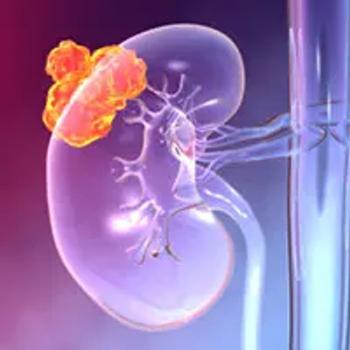
Positive PD-L1 expression was associated with worse survival in metastatic papillary renal cell carcinoma.

Sumanta Kumar Pal, MD, FASCO, discusses key biomarker analyses in renal cell carcinoma that will be presented at the 2024 ASCO Annual Meeting.

Experts from across oncology specialties discuss the abstracts and presentations they are most looking forward to seeing at the 2024 ASCO Annual Meeting.

Eliezer Van Allen, MD, discusses immuno-oncology in relation to precision cancer medicine.
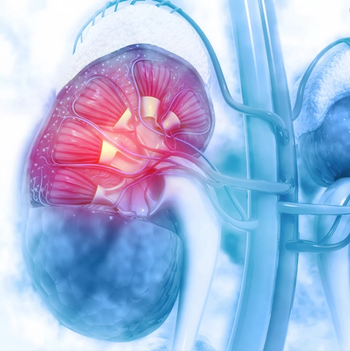
Tumor-infiltrating B lymphocytes were associated with worse outcomes in patients with metastatic ccRCC treated with axitinib plus anti–PD-1 therapy.
The FDA has updated the PDUFA target action date for the BLA for subcutaneous nivolumab in advanced or metastatic solid tumors.
Kian-Huat Lim, MD, PhD, discusses factors influencing the choice between treatment with FOLFIRINOX or NALIRIFOX for metastatic pancreatic cancer.

Meta: Benjamin Garmezy, MD discusses future therapeutic prospects for patients with variant renal cell carcinoma (RCC)

In case you missed it, below is your guide to the important regulatory approvals made by the FDA in April 2024.

Salvage treatment with nivolumab plus ipilimumab following progression on nivolumab alone led to significant treatment-free survival in advanced ccRCC.
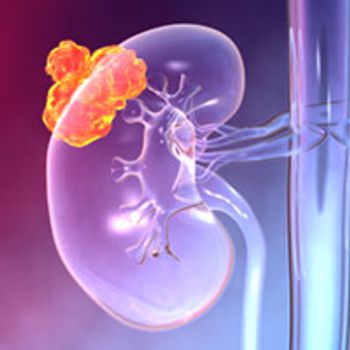
A retrospective analysis showed that metastasectomy plus radical nephrectomy could improve survival in patients with metastatic non–clear cell RCC.
Kathryn Beckermann, MD, PhD, discusses ongoing studies investigating the role of TREM2 in the treatment of patients with clear cell renal cell carcinoma.

Robert Wang, MD, discusses the presently limited utility of using molecular imagining with quantitative thresholds in distinguishing RCC from oncocytic renal masses.

The FDA has accepted a biologics license application for subcutaneous nivolumab for adult patients eligible for approved solid tumor nivolumab indications.
Katherine Wang, MD, discusses the role of active surveillance for patients with renal masses and the ongoing MUSIC-KIDNEY project in Michigan.

Jaime R. Merchán, MD, discusses the future treatment of patients with advanced renal cell carcinoma.

Samer A. Srour, MB ChB, MS, explains the significance of early safety and efficacy data with CTX130 in CD70-expressing clear cell renal cell carcinoma.

Nikhil A. Gopal, MD, discusses future research directions for the treatment of various renal cell carcinoma histologies.
Samer A. Srour, MB ChB, MS, discusses the investigation of the allogeneic CAR T-cell therapy CTX131 in advanced clear cell renal cell carcinoma.

Paul V. Viscuse, MD, spotlights key data from the 2024 Genitourinary Cancers Symposium in bladder cancer and renal cell carcinoma.

Nizar M. Tannir, MD, FACP, discusses unmet needs for patients with rare kidney tumors and how these needs may be addressed in the future.
Samer A. Srour, MB ChB, MS, discusses toxicities associated with CTX130 in advanced clear cell renal cell carcinoma.
Samer A. Srour, MB ChB, MS, discusses the utility of the CAR T-cell therapy CTX130 and unmet needs in advanced clear cell renal cell carcinoma.
Advertisement
Advertisement
Trending on OncLive
1
Savolitinib Plus Osimertinib NDA Submitted to FDA for MET-Driven, EGFR-Mutated NSCLC After EGFR TKI
2
FDA Grants Priority Review to Elinzanetant for Endocrine Therapy–Associated Vasomotor Symptoms in HR+ Breast Cancer
3
China's NMPA Approves Pirtobrutinib Across CLL
4
Calculating the Real Cost of False Positive Findings in Cancer Screening
5