



Genitourinary Cancers
Latest News
Advertisement
Latest Videos
































































Advertisement
More News
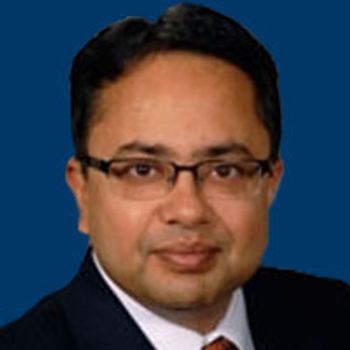
Neeraj Agarwal, MD, discusses his preferred sequencing strategies for treating patients with kidney cancer, and ongoing immunotherapy research in the field.

Charles G. Drake, MD, PhD, director of Genitourinary Oncology, NewYork-Presbyterian/Columbia University Medical Center and co-director of Columbia’s Cancer Immunotherapy Programs, discusses the CARMENA trial in metastatic renal cell carcinoma (mRCC).
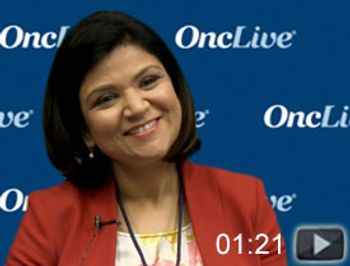
Shilpa Gupta, MD, assistant professor of medicine, Hematology/Oncology and Transplantation Division, University of Minnesota, discusses the phase Ib/II studies of pembrolizumab with bevacizumab for the treatment of patients with metastatic renal cell carcinoma.

Brian I. Rini, MD, professor of medicine, Cleveland Clinic, discusses findings from the IMmotion151 trial in renal cell carcinoma.

Moving radium-223 (Xofigo) up in the treatment paradigm for patients with prostate cancer could provide better outcomes and longer survival, according to Richard G. Stock, MD.
Raoul S. Concepcion, MD, FACS, discusses the importance of research opportunities for residents.

Bradley McGregor, MD, physician, Genitourinary Oncology program, Dana-Farber Cancer Institute, instructor of medicine, Harvard Medical School, compares recent data with combination therapy in renal cell carcinoma.
Petros Grivas MD, PhD, director, University of Washington Medicine’s Genitourinary Cancers Program , associate professor, Oncology, University of Washington, Seattle Cancer Care Alliance, discusses emerging biomarkers in advanced urothelial cancer.
Combining the CD122-biased cytokine NKTR-214 with the PD-1 inhibitor nivolumab (Opdivo) showed promising antitumor activity, particularly in PD-L1–negative patients.
Sumanta Kumar Pal, MD, associate clinical professor, Department of Medical Oncology and Therapeutics Research, co-director, Kidney Cancer Program, City of Hope, discusses an enrolling trial for patients with genitourinary (GU) cancers.

More than 40% of patients with metastatic or unresectable urothelial carcinoma responded to treatment with an investigational fibroblast growth factor receptor inhibitor.

Sunitinib alone was noninferior to cytoreductive nephrectomy plus sunitinib, the current standard of care, in patients with synchronous metastatic renal cell carcinoma.
Mario Sznol, MD, professor of medicine, co-director, Yale SPORE in Skin Cancer, Yale Cancer Center, discusses immunotherapy combinations in renal cell carcinoma.
Greater Boston Urology strives to offer comprehensive urologic care that includes up-and-coming diagnostics and treatments, such as the Prostate Health Index blood test and high intensity–focused ultrasound.

Brock O’Neil, MD, assistant professor, Division of Urology, University of Utah School of Medicine, Huntsman Cancer Institute, discusses adjuvant therapy for patients with bladder cancer.

David M. Nanus, MD, discusses the promise of immunotherapy and the continued role of surgery in the treatment in renal cell carcinoma.
Neeraj Agarwal, MD, associate professor, Division of Oncology, Department of Medicine, University of Utah School of Medicine, Huntsman Cancer Institute, discusses recent FDA approvals in renal cell carcinoma.
Key opinion leaders spoke with OncLive ahead of the 2018 ASCO Annual Meeting to share the top abstracts they believe could have the greatest impact on clinical practice and patient outcomes across lymphomas, gastrointestinal cancers, genitourinary cancers, and lung cancer.

Bradley McGregor, MD, physician, Genitourinary Oncology program, Dana-Farber Cancer Institute, instructor of medicine, Harvard Medical School, discusses new combinations with immunotherapy in renal cell carcinoma.

Mario Sznol, MD, professor of Medicine, co-director, Yale SPORE in Skin Cancer, Yale Cancer Center, discusses the importance of clinical trials in renal cell carcinoma.
The FDA has issued a drug safety notification warning against the use of frontline single-agent immune checkpoint inhibition for patients with PD-L1–low expressing platinum-eligible urothelial carcinoma.

Lauren C. Harshman, MD, assistant professor of medicine, Harvard Medical School, senior physician, Dana-Farber Cancer Institute, discusses moving immunotherapy earlier in the line of therapy for patients with renal cell carcinoma (RCC).

The European Commission has approved cabozantinib (Cabometyx) for previously untreated patients with intermediate- or poor-risk advanced renal cell carcinoma.
Toni Choueiri, MD, director, Lank Center for Genitourinary Oncology, director, Kidney Cancer Center, Jerome and Nancy Kohlberg Associate Professor of Medicine, Harvard Medical School, Dana-Farber Cancer Institute, discusses the current treatment of patients with renal cell carcinoma.

Robert J. Motzer, MD, has been at the forefront of research into renal cell carcinoma for nearly 30 years, with his work contributing to the approval of at least 8 new drugs.
Advertisement
Advertisement
Trending on OncLive
1
Savolitinib Plus Osimertinib NDA Submitted to FDA for MET-Driven, EGFR-Mutated NSCLC After EGFR TKI
2
Calculating the Real Cost of False Positive Findings in Cancer Screening
3
FDA Grants Priority Review to Elinzanetant for Endocrine Therapy–Associated Vasomotor Symptoms in HR+ Breast Cancer
4
Cilta-Cel Shows Long-Term Treatment-Free Remissions in Lenalidomide-Refractory Myeloma
5