





Genitourinary Cancers
Latest News
Advertisement
Latest Videos

































































Advertisement
More News

Lauren C. Harshman, MD, assistant professor of medicine, Harvard Medical School, senior physician, Dana-Farber Cancer Institute, discusses the potential for new treatment options in renal cell carcinoma.

Xiao X. Wei, MD, MAS, discusses managing possible adverse events of different systemic therapies in kidney and bladder cancer.

Guru P. Sonpavde, MD, navigates through the treatment landscape of urothelial carcinoma.

Bradley A. McGregor, MD, discusses the growth of combination therapy in the treatment of patients with kidney cancer.
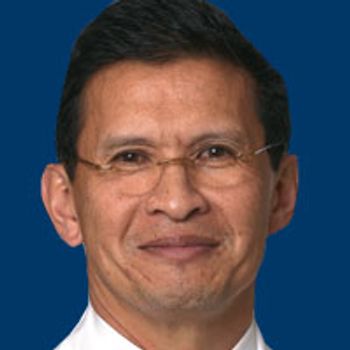
Raoul S. Concepcion, MD, FACS, discusses the current state of physicians the urology practice.

Since 2005, physician partners at Comprehensive Urologic Care have been using a form of clampless surgery, which they developed at their practice, for partial nephrectomies.

The European Commission has approved 2 new dosing schedules for nivolumab across several tumor types.

Xiao X. Wei, MD, MAS, instructor of medicine, Harvard Medical School, Dana-Farber Cancer Institute, discusses immune-related adverse events (irAE) in genitourinary (GU) cancers.

Combining ramucirumab with docetaxel in patients with locally advanced or unresectable metastatic urothelial carcinoma who progressed on platinum-based chemotherapy led to a positive trend, but not a statistically significant improvement, in overall survival.
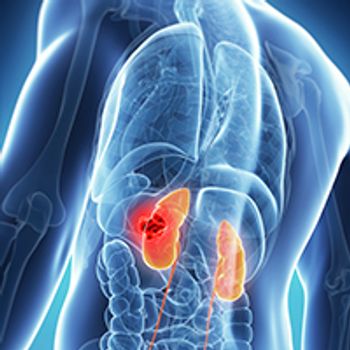
An interim analysis revealed that the immunotherapy rocapuldencel-T is unlikely to meet any of the primary endpoints of the phase III ADAPT trial in patients with metastatic renal cell carcinoma.

A search for molecular guidance in the use of anti-PD-1 therapy in urothelial cancer pointed toward myeloid-derived suppressor cells as a potentially useful biomarker.

Padmanee Sharma, MD, PhD, scientific director, Immunotherapy Platform, The University of Texas MD Anderson Cancer Center, discusses updated findings from the CheckMate-275 trial in bladder cancer during an interview at the 2018 AACR Annual Meeting.

Arjun V. Balar, MD, assistant professor, Department of Medicine, director, Genitourinary Medical Oncology Program, NYU Langone’s Perlmutter Cancer Center, discusses the results of a study investigating durvalumab (Imfinzi) plus tremelimumab in patients with metastatic urothelial cancer.

Rana R. McKay, MD, assistant professor of medicine and medical oncologist at the University of California, San Diego, discusses the FDA approval of nivolumab (Opdivo) combined with ipilimumab (Yervoy) in patients with renal cell carcinoma (RCC).

The FDA has approved the combination of nivolumab and ipilimumab as a frontline treatment for intermediate- and poor-risk patients with advanced renal cell carcinoma.
Toni Choueiri, MD, director, Lank Center for Genitourinary Oncology, director, Kidney Cancer Center, Jerome and Nancy Kohlberg Associate Professor of Medicine, Harvard Medical School, Dana-Farber Cancer Institute, discusses the latest treatments in genitourinary (GU) cancers.

Adjuvant axitinib did not extend disease-free survival versus placebo for patients at high risk of recurrent renal cell carcinoma after nephrectomy, according to findings from the phase III ATLAS trial.

Data from the phase III POUT clinical trial demonstrated that adjuvant platinum-based chemotherapy improves disease-free survival and metastasis-free survival in patients with upper tract urothelial carcinoma.
Hyung L. Kim, MD, discusses perioperative systemic therapy for patients with kidney cancer.

Amit Gupta, MD, discusses the superiority of robotic cystectomy compared with open cystectomies and its relevance in the current treatment landscape of bladder cancer.

Lauren C. Harshman, MD, assistant professor of medicine, Harvard Medical School, senior physician, Dana-Farber Cancer Institute, discusses how the PROTECT trial sought to answer the controversial results of the ASSURE and S-TRAC trials.
David M. Nanus, MD, medical oncologist, Weill Cornell Medicine/NewYork-Presbyterian Hospital, discusses the role of immunotherapy in the treatment of patients with kidney cancer.
Joaquim Bellmunt, MD, PhD, associate professor of medicine, Harvard Medical School, director, Bladder Cancer Center, Dana-Farber Cancer Institute, discusses The Cancer Genome Atlas (TCGA) project in bladder cancer.

Xiao X. Wei, MD, MAS, professor of medicine, Harvard Medical School, Dana-Farber Cancer Institute, discusses the side effect profile of cabozantinib (Cabometyx) in advanced kidney cancer.

Guru Sonpavde, MD, director of Bladder Cancer at Dana-Farber Cancer Institute, discusses immunotherapy plus chemotherapy in bladder cancer.
Advertisement
Advertisement
Trending on OncLive
1
Savolitinib Plus Osimertinib NDA Submitted to FDA for MET-Driven, EGFR-Mutated NSCLC After EGFR TKI
2
Calculating the Real Cost of False Positive Findings in Cancer Screening
3
FDA Grants Priority Review to Elinzanetant for Endocrine Therapy–Associated Vasomotor Symptoms in HR+ Breast Cancer
4
Cilta-Cel Shows Long-Term Treatment-Free Remissions in Lenalidomide-Refractory Myeloma
5