Articles by Sumanta Kumar Pal, MD
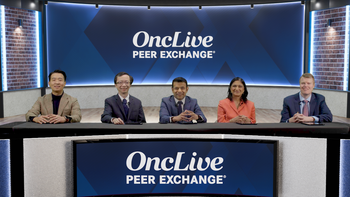
Future Directions: Neoadjuvant Strategies and Personalized Therapy in Advanced RCC
BySumanta Kumar Pal, MD,Ulka Vaishampayan, MD,Alan Tan, MD,Wenxin (Vincent) Xu, MD,Matthew T. Campbell, MD, MS In closing, the panel reflects on where the field of advanced RCC is headed. Neoadjuvant therapy is identified as an area of growing interest, with parallels drawn to other malignancies where preoperative systemic treatment has altered outcomes. Determining which patients benefit most from this approach remains an important research question.
Distinguishing Toxicity in Combination Regimens and Managing Long Term Tolerability in Advanced RCC
BySumanta Kumar Pal, MD,Ulka Vaishampayan, MD,Alan Tan, MD,Wenxin (Vincent) Xu, MD,Matthew T. Campbell, MD, MS As the discussion continues, attention turns to differentiating toxicities in combination regimens. When patients receive combinations such as IO plus TKI or belzutifan based regimens, overlapping symptoms can complicate attribution.
Belzutifan Safety Profile and Patient Selection in Practice in Advanced RCC
BySumanta Kumar Pal, MD,Ulka Vaishampayan, MD,Alan Tan, MD,Wenxin (Vincent) Xu, MD,Matthew T. Campbell, MD, MS This portion of the discussion focuses specifically on belzutifan related adverse events and how clinicians manage them in practice. Anemia and hypoxia are identified as the most characteristic toxicities associated with HIF-2 inhibition. Fatigue is frequently observed, often related to anemia but sometimes multifactorial.
Why Some Patients Never Reach Second Line Therapy in Advanced RCC
BySumanta Kumar Pal, MD,Ulka Vaishampayan, MD,Alan Tan, MD,Wenxin (Vincent) Xu, MD,Matthew T. Campbell, MD, MS Here the panel addresses a sobering clinical reality: not all patients with advanced RCC reach second or subsequent lines of therapy. Despite multiple approved options, attrition between lines remains significant.
Applying Newer Doublets in Practice and Sequencing After Immunotherapy in Advanced RCC
BySumanta Kumar Pal, MD,Ulka Vaishampayan, MD,Alan Tan, MD,Wenxin (Vincent) Xu, MD,Matthew T. Campbell, MD, MS In this segment, the discussion centers on how clinicians are interpreting newer combination data in the context of real world practice. The panel reflects on how regimens such as belzutifan based doublets may be incorporated after prior IO exposure and how cross trial comparisons can complicate decision making.
LITESPARK-011, Belzutifan Combinations, and the Enduring Role of Cabozantinib in Sequencing in Advanced RCC
BySumanta Kumar Pal, MD,Ulka Vaishampayan, MD,Alan Tan, MD,Wenxin (Vincent) Xu, MD,Matthew T. Campbell, MD, MS This segment centers on how LITESPARK-011 reshapes the later line treatment landscape while clarifying where cabozantinib continues to fit in modern sequencing. The panel reviews progression free survival improvements observed with belzutifan based combinations compared with cabozantinib, particularly in previously treated patients. Belzutifan, a HIF-2 inhibitor, represents a mechanistically distinct strategy and introduces a new therapeutic dimension beyond VEGF inhibition.
Integrating ctDNA, Biomarkers, and Quality of Life Into Treatment Decisions in Advanced RCC
BySumanta Kumar Pal, MD,Ulka Vaishampayan, MD,Alan Tan, MD,Wenxin (Vincent) Xu, MD,Matthew T. Campbell, MD, MS This section transitions into biomarker integration and the role of quality of life in longitudinal care. The panel discusses advances in circulating tumor DNA assays and peripheral blood biomarkers such as KIM-1. Sensitivity of assays has improved significantly, moving from limited variant detection to broader genomic profiling.
RECIST Versus Clinical Judgment in Assessing Progression in Advanced RCC
BySumanta Kumar Pal, MD,Ulka Vaishampayan, MD,Alan Tan, MD,Wenxin (Vincent) Xu, MD,Matthew T. Campbell, MD, MS This segment addresses a frequent clinical dilemma: how closely to adhere to RECIST criteria in everyday practice. While clinical trials rely on rigid percentage thresholds to define response or progression, real world management requires contextual interpretation.
Sequencing Philosophy and Prioritizing Immediate Patient Needs in Advanced RCC
BySumanta Kumar Pal, MD,Ulka Vaishampayan, MD,Alan Tan, MD,Wenxin (Vincent) Xu, MD,Matthew T. Campbell, MD, MS This section explores whether clinicians should plan multiple lines ahead when selecting first line therapy or focus on the patient’s immediate clinical needs. The discussion reflects two philosophical approaches: long term strategic sequencing versus treating the patient in front of you with the most appropriate therapy for the current moment.
Managing Progression After Adjuvant Therapy in Advanced RCC
BySumanta Kumar Pal, MD,Ulka Vaishampayan, MD,Alan Tan, MD,Wenxin (Vincent) Xu, MD,Matthew T. Campbell, MD, MS The conversation transitions to a clinically pressing question: how to manage patients who progress after receiving adjuvant therapy. The panel differentiates between early progression on active therapy versus recurrence after a treatment free interval.
Interpreting Adjuvant Intensification Data and Selecting the Right Patient in Advanced RCC
BySumanta Kumar Pal, MD,Ulka Vaishampayan, MD,Alan Tan, MD,Wenxin (Vincent) Xu, MD,Matthew T. Campbell, MD, MS This section focuses on emerging adjuvant trial data, including studies evaluating intensification strategies beyond single agent pembrolizumab. The panel discusses how disease free survival improvements must be interpreted in the context of absolute risk reduction and patient specific factors.
Risk Stratification and Frontline IO Strategy Selection in Advanced RCC
BySumanta Kumar Pal, MD,Ulka Vaishampayan, MD,Alan Tan, MD,Wenxin (Vincent) Xu, MD,Matthew T. Campbell, MD, MS The program opens with introductions and transitions into a discussion of how clinicians approach first line treatment decisions in advanced renal cell carcinoma. The panel emphasizes that patients are increasingly managed as though living with a chronic disease, which makes thoughtful sequencing essential from the outset. Risk stratification remains foundational. IMDC criteria help categorize patients into favorable, intermediate, and poor risk groups, but clinical judgment extends beyond formal scoring systems.
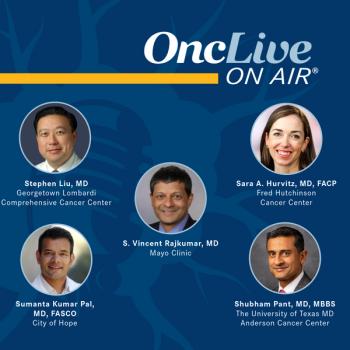
Oncology Experts Preview Top Abstracts From the 2024 ASCO Annual Meeting
ByStephen Liu, MD,Sara Hurvitz, MD,Vincent Rajkumar, MD,Sumanta Kumar Pal, MD,Shubham Pant, MD, MBBS Experts from across oncology specialties discuss the abstracts and presentations they are most looking forward to seeing at the 2024 ASCO Annual Meeting.
Sumanta K. Pal, MD, discusses the safety profile of cabozantinib in combination with atezolizumab in advanced renal cell carcinoma.
Sumanta K. Pal, MD, discusses the rationale behind the phase 3 TIVO-3 trial with tivozanib in advanced renal cell carcinoma.
Sumanta K. Pal, MD, discusses the benefit of tivozanib in later-line setting treatment settings for patients with refractory renal cell carcinoma.
Sumanta K. Pal, MD, discusses the background of the COSMIC-021 trial in urothelial cancer.
Sumanta Kumar Pal, MD, discusses the potential use of PARP inhibitors in renal cell carcinoma.
Sumanta Kumar Pal, MD, discusses potential developments with vaccines and CRISPR/Cas9 technology coming down the pipeline in renal cell carcinoma.
Sumanta Kumar Pal, MD, an associate clinical professor, Department of Medical Oncology & Therapeutics Research, co-director, Kidney Cancer Program, and medical oncologist at City of Hope, discusses the design of the phase II SWOG 1500 trial (NCT02761057) in locally advanced or metastatic papillary renal cell carcinoma (RCC).
Sumanta Kumar Pal, MD, a medical oncologist at City of Hope, discusses the emergence of molecular signatures in patients with renal cell carcinoma (RCC).
Sumanta Kumar Pal, MD, a medical oncologist at City of Hope, discusses the clinical utility of PD-L1 in metastatic renal cell carcinoma (mRCC).
Sumanta Kumar Pal, MD, a medical oncologist at City of Hope, discusses developments made in frontline treatment for patients with metastatic renal cell carcinoma (mRCC).
Sumanta Kumar Pal, MD, a medical oncologist at City of Hope, discusses the frontline approval of nivolumab (Opdivo) and ipilimumab (Yervoy) for patients with metastatic renal cell carcinoma (RCC).
Sumanta Kumar Pal, MD, associate clinical professor, Department of Medical Oncology and Therapeutics Research, co-director, Kidney Cancer Program, City of Hope, discusses the role of PD-L1 in metastatic renal cell carcinoma.