
Opinion|Videos|April 1, 2026
Applying Newer Doublets in Practice and Sequencing After Immunotherapy in Advanced RCC
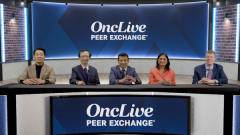
In this segment, the discussion centers on how clinicians are interpreting newer combination data in the context of real world practice. The panel reflects on how regimens such as belzutifan based doublets may be incorporated after prior IO exposure and how cross trial comparisons can complicate decision making.
Advertisement
Episodes in this series
In this segment, the discussion centers on how clinicians are interpreting newer combination data in the context of real world practice. The panel reflects on how regimens such as belzutifan based doublets may be incorporated after prior IO exposure and how cross trial comparisons can complicate decision making.
Panelists acknowledge that while progression free survival improvements are encouraging, real world patients often differ from trial populations. Questions arise around whether to favor combination intensification versus sequential single agent strategies, particularly in patients previously exposed to immunotherapy in either the adjuvant or frontline metastatic setting.
The group discusses the practical layering of therapies, recognizing that many regimens were studied in somewhat cleaner clinical scenarios than those encountered in practice. As more patients receive IO earlier in their disease course, clinicians are increasingly treating a population with prior checkpoint exposure and cumulative toxicity. There is an emphasis on mechanism based reasoning rather than strict algorithmic sequencing. The panel underscores that emerging regimens expand options, but require careful integration rather than reflex adoption.
Overall, this segment highlights the evolving complexity of sequencing in advanced RCC, particularly as new doublets enter the treatment landscape.
Advertisement
Related to this article
The NCCN update adds locally advanced CSCC to the category 2A listing cosibelimab received in metastatic disease in 2025.

In TASKIN, the 12-month OS rate was 61.3% with vilamakitug vs 55.7% with placebo plus trifluridine/tipiracil.

The 510(k) clearance covers an MRI-derived AI risk score for stage I to IIIA disease; the high-risk category carried an HR of 2.81 for recurrence.
The FDA has approved dostarlimab for MSI-H or dMMR locally advanced rectal cancer.

The FDA accepted an NDA for UGN-103 for recurrent low-grade intermediate-risk NMIBC, with a target action date of June 14, 2027.

Ulrich Steidl, MD, PhD, has finalized his Montefiore Einstein Comprehensive Cancer Center senior leadership team.

The CirCLIQ Injector approval for subcutaneous isatuximab in multiple myeloma is the first anticancer treatment delivered via an on-body injector in Japan.

The top 5 OncLive TV videos of the week cover insights in multiple myeloma, HR+ breast cancer, CAR T-cell therapy, CLL, and oral SERDs.
Advertisement
Advertisement
Trending on OncLive
1
FDA Clears TumorSight Risk, an MRI-Derived AI Recurrence Tool for HR+, HER2– Breast Cancer
2
Vilamakitug Meets OS Threshold in Phase 1/2 Refractory mCRC Trial
3
Dr Cercek on the FDA Approval of Dostarlimab for dMMR/MSI-H Locally Advanced Rectal Cancer
4
Weigh Benefit Against Burden: Defining Lurbinectedin’s Role in a Shifting Small Cell Lung Cancer Landscape
5