
Opinion|Videos|March 11, 2026
Interpreting Adjuvant Intensification Data and Selecting the Right Patient in Advanced RCC
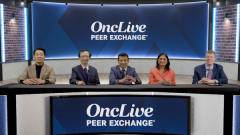
This section focuses on emerging adjuvant trial data, including studies evaluating intensification strategies beyond single agent pembrolizumab. The panel discusses how disease free survival improvements must be interpreted in the context of absolute risk reduction and patient specific factors.
Advertisement
Episodes in this series
This section focuses on emerging adjuvant trial data, including studies evaluating intensification strategies beyond single agent pembrolizumab. The panel discusses how disease free survival improvements must be interpreted in the context of absolute risk reduction and patient specific factors.
A key theme is that not all high risk patients derive equal benefit from escalation. Younger individuals with aggressive pathological features may accept increased toxicity in exchange for recurrence reduction. In contrast, older patients with competing comorbidities may prioritize minimizing treatment related adverse effects.
The downstream implications of adjuvant therapy are also addressed. Decisions made in the adjuvant setting can influence future metastatic options. Clinicians must weigh early toxicity risk and potential long term immune related effects against possible benefit in preventing relapse. The discussion underscores the complexity of counseling conversations, which may last up to an hour per patient.
Biomarker selection remains an unmet need. While relative benefit may be demonstrated in trials, clinicians still lack robust tools to identify which patients truly require intensification. The panel highlights the importance of individualized risk assessment rather than uniform adoption of more aggressive adjuvant combinations.
Overall, this segment emphasizes that adjuvant therapy selection requires careful balancing of disease biology, patient goals, tolerability, and long term planning.
Advertisement
Related to this article

Researchers at Wake Forest University School of Medicine identified a protein that may help breast cancer spread to the brain and evade immune defenses.

Benjamin Weinberg, MD, discusses the FDA approval of daraxonrasib, RASolute 302 survival data, safety considerations, and future RAS-targeted therapies in pancreatic cancer.
Half of lenalidomide-refractory patients with 1 to 3 prior lines remained alive and progression free at least 5 years after a single cilta-cel infusion.

Andrew Kuykendall, MD, discusses the FDA approval of rusfertide and how to apply it in clinical practice for polycythemia vera management.

An NDA seeks FDA approval of savolitinib plus osimertinib for EGFR-mutated NSCLC with MET overexpression or amplification after EGFR TKI therapy.

Jason Hafron, MD, discusses the emotional, clinical, and financial burden of false positive cancer screening results and improved risk stratification.

Raajit K. Rampal, MD, PhD, discusses JAK inhibitor choice in cytopenic myelofibrosis, emerging combinations, and anemia-directed agents.

The sNDA for elinzanetant seeks FDA approval for moderate-to-severe vasomotor symptoms in women receiving endocrine therapy for HR-positive breast cancer.
Advertisement
Advertisement
Trending on OncLive
1
China's NMPA Approves Pirtobrutinib Across CLL
2
FDA Grants Priority Review to Elinzanetant for Endocrine Therapy–Associated Vasomotor Symptoms in HR+ Breast Cancer
3
Long-Term PERSEUS Data Confirm Durable PFS Benefit With D-VRd in Transplant-Eligible Newly Diagnosed Myeloma
4
Calculating the Real Cost of False Positive Findings in Cancer Screening
5