
Opinion|Videos|March 25, 2026
RECIST Versus Clinical Judgment in Assessing Progression in Advanced RCC
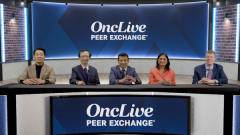
This segment addresses a frequent clinical dilemma: how closely to adhere to RECIST criteria in everyday practice. While clinical trials rely on rigid percentage thresholds to define response or progression, real world management requires contextual interpretation.
Advertisement
Episodes in this series
This segment addresses a frequent clinical dilemma: how closely to adhere to RECIST criteria in everyday practice. While clinical trials rely on rigid percentage thresholds to define response or progression, real world management requires contextual interpretation.
The panel discusses scenarios where tumor measurements increase marginally beyond RECIST thresholds but the patient remains clinically stable. Rather than automatically discontinuing therapy, clinicians often consider disease location, symptom burden, and pace of growth. Small increases in non threatening sites such as lymph nodes or small lung nodules may not justify immediate treatment change.
Radiographic nuance is emphasized. Necrotic changes, inflammatory responses after radiation, and imaging variability can complicate interpretation. Physicians highlight the importance of personally reviewing scans rather than relying solely on reports. Correlation with clinical status and laboratory trends provides critical context.
A case example illustrates how apparent progression in the liver was later determined to reflect imaging technique differences rather than true tumor growth. This underscores the value of due diligence before declaring treatment failure.
The discussion reinforces that while RECIST provides structure for trials, clinical oncology demands flexibility. Slow growth in asymptomatic patients may justify continued therapy, particularly if alternative options carry greater toxicity. The ultimate goal is to avoid prematurely discontinuing effective treatment based solely on numerical thresholds.
Advertisement
Related to this article

The NCCN update adds locally advanced CSCC to the category 2A listing cosibelimab received in metastatic disease in 2025.

In TASKIN, the 12-month OS rate was 61.3% with vilamakitug vs 55.7% with placebo plus trifluridine/tipiracil.

The 510(k) clearance covers an MRI-derived AI risk score for stage I to IIIA disease; the high-risk category carried an HR of 2.81 for recurrence.

The FDA has approved dostarlimab for MSI-H or dMMR locally advanced rectal cancer.

The FDA accepted an NDA for UGN-103 for recurrent low-grade intermediate-risk NMIBC, with a target action date of June 14, 2027.

Ulrich Steidl, MD, PhD, has finalized his Montefiore Einstein Comprehensive Cancer Center senior leadership team.

The CirCLIQ Injector approval for subcutaneous isatuximab in multiple myeloma is the first anticancer treatment delivered via an on-body injector in Japan.

The top 5 OncLive TV videos of the week cover insights in multiple myeloma, HR+ breast cancer, CAR T-cell therapy, CLL, and oral SERDs.
Advertisement
Advertisement
Trending on OncLive
1
FDA Clears TumorSight Risk, an MRI-Derived AI Recurrence Tool for HR+, HER2– Breast Cancer
2
Vilamakitug Meets OS Threshold in Phase 1/2 Refractory mCRC Trial
3
Dr Cercek on the FDA Approval of Dostarlimab for dMMR/MSI-H Locally Advanced Rectal Cancer
4
Weigh Benefit Against Burden: Defining Lurbinectedin’s Role in a Shifting Small Cell Lung Cancer Landscape
5