Raji Shameem, MD, and Shubham Pant, MD, MBBS, discuss the evolving pancreatic cancer treatment paradigm and novel treatments.

Shubham Pant, MD, MBBS, is a professor in the Department of Gastrointestinal Medical Oncology in the Division of Cancer Medicine at The University of Texas MD Anderson Cancer Center
Raji Shameem, MD, and Shubham Pant, MD, MBBS, discuss the evolving pancreatic cancer treatment paradigm and novel treatments.
Shubham Pant, MD, MBBS, discusses data for daraxonrasib and its potential impact on pancreatic cancer management.
Shubham Pant, MD, MBBS, explains the unique "on-state" binding mechanism of daraxonrasib.
Shubham Pant, MD, MBBS, discusses the management of dermatologic and GI toxicities associated with the RAS(ON) inhibitor daraxonrasib.
Shubham Pant, MD, MBBS, discusses results from the landmark phase 3 RASolute 302 trial for daraxonrasib in previously treated metastatic PDAC.
Shubham Pant, MD, MBBS, discusses data from the phase 3 BREAKWATER trial supporting upfront targeted therapy in BRAF V600E–mutant mCRC.
Shubham Pant, MD, discusses data from the phase 3 NAPOLI 3 trial supporting NALIRIFOX as a potent frontline regimen for metastatic pancreatic cancer.
Dr Pant discusses factors that drive frontline chemotherapy selection for metastatic pancreatic cancer and the role of NALIRIFOX in this treatment setting.
Despite recent breakthroughs, a major unmet need in pancreatic cancer remains extending effective therapies to patients without targetable mutations—requiring more precise molecular stratification, strategic combinations (including immunotherapy), and a continued focus on durable responses through clinical trial participation to truly transform outcomes in this heterogeneous and historically resistant disease.
After decades of limited progress, a new wave of RAS-targeted therapies—backed by stronger early-phase data and smarter trial design—is driving renewed optimism in pancreatic cancer, offering the real possibility of more effective, better-tolerated, and personalized treatment options for a disease long defined by therapeutic scarcity.
A new phase 3 trial evaluating an oral RAS-ON inhibitor in patients with advanced pancreatic cancer after frontline chemotherapy marks a major step toward potentially redefining second-line treatment, offering a targeted, patient-friendly alternative to standard chemotherapy with the hope of improving both outcomes and quality of life.
Recent breakthroughs in pancreatic cancer treatment focus on novel inhibitors that target the active, GTP-bound “RAS-ON” state—previously considered undruggable—showing promising early trial results with meaningful response rates, reduced circulating tumor DNA, and extended progression-free survival, signaling a potential paradigm shift in managing this historically difficult-to-treat disease.
Panelists discussed second-line treatment for RAS-mutant pancreatic cancer, emphasizing that sequencing regimens like FOLFIRINOX and gemcitabine-based therapies should be tailored to prior treatment and performance status, while also integrating holistic care—including pain management, nutrition, and early use of molecularly targeted agents—to maximize quality of life and capitalize on critical therapeutic windows.
Panelists emphasized that early, comprehensive molecular testing at diagnosis—including for RAS mutations—is essential in pancreatic cancer to uncover rare but actionable targets, facilitate timely clinical trial enrollment, and build a foundation for future treatment decisions, even if no immediate therapies are available.
Panelists highlighted how recent breakthroughs in KRAS-specific inhibitors—such as those targeting G12C, G12D, and G12V mutations—are transforming the management of pancreatic cancer, underscoring the importance of precise molecular profiling through tumor-based next-generation sequencing or, when necessary, circulating tumor DNA to guide emerging personalized therapies in this historically challenging disease.
Panelists discuss how advancements in molecular oncology are transforming RAS mutations—especially KRAS, but also NRAS and HRAS—from historically “undruggable” targets into promising avenues for personalized therapy in pancreatic and other solid tumors.
Panelists discuss how KRAS mutations, long considered “undruggable” in pancreatic cancer, are now emerging as actionable targets thanks to allele-specific inhibitors, marking a turning point in precision oncology and offering new hope for improving outcomes in a historically treatment-resistant disease.
Pant and Elliott discuss research seeking to extend the benefits of cancer vaccines as cancer management and prevention strategies.
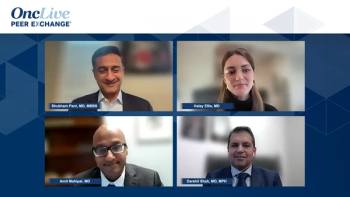
Panelists discuss how recent research presentations and data updates at the latest scientific meeting have advanced the understanding and treatment landscape of biliary tract cancer (BTC).
Panelists discuss how significant challenges remain in HER2-positive biliary tract cancer (BTC), including optimizing sequencing of targeted therapies, addressing resistance mechanisms, improving biomarker testing accessibility, and developing strategies for brain metastases.
Panelists discuss how treatment selection among HER2-targeted agents for biliary tract cancer (BTC) depends on multiple factors including patient characteristics and prior therapies, while also considering the role of traditional chemotherapy regimens such as FOLFOX in specific clinical scenarios.
Panelists discuss how the MyPathway study and SGNTUC-019 basket trial demonstrated the clinical activity of trastuzumab plus pertuzumab and tucatinib, respectively, in HER2-positive biliary tract cancer (BTC), highlighting key efficacy metrics and safety profiles that inform treatment selection.
Panelists discuss how the HERIZON-BTC-302 study demonstrated zanidatamab's efficacy in HER2-positive biliary tract cancer (BTC) with key end points presented at ASCO GI, while sharing insights on optimal dosing strategies and early real-world experience with this newly approved agent in the second-line setting.
Panelists discuss how the DESTINY-PanTumor 02 trial demonstrated significant efficacy of trastuzumab deruxtecan in HER2-amplified biliary tract cancer (BTC), with promising response rates and durability that support its use as a treatment option for these patients.
Panelists discuss how molecular testing strategies at disease progression are evolving in biliary tract cancer (BTC), with particular focus on HER2-amplification detection methods including immunohistochemistry (IHC), fluorescence in situ hybridization (FISH), and next-generation sequencing (NGS), while noting that HER2 positivity occurs in approximately 5% to 15% of cases.
Panelists discuss how emerging clinical trial data for immunotherapy combinations in first-line advanced biliary tract cancer (BTC) can be effectively translated into real-world treatment decisions, weighing factors such as biomarker status, safety profiles, and treatment sequencing.
Panelists discuss how the practice-changing TOPAZ-1 trial established durvalumab plus gemcitabine/cisplatin as a first-line standard for advanced biliary tract cancer (BTC) while exploring key clinical factors that influence the choice between durvalumab and pembrolizumab-based combinations following the KEYNOTE-966 results.
Panelists discuss how circulating tumor DNA (ctDNA) testing in biliary tract cancer (BTC) presents unique technical and interpretative challenges, including considerations around sensitivity, timing of collection, and clinical validation of results.
Panelists discuss how clinicians are increasingly utilizing both tissue and liquid biopsies with comprehensive DNA/RNA next-generation sequencing (NGS) for biomarker testing in biliary tract cancer (BTC), while noting variations in testing practices across different treatment centers.
Panelists discuss how comprehensive molecular profiling and biomarker testing are critical for guiding targeted therapy decisions in advanced biliary tract cancer (BTC), citing recent real-world data presented at ASCO GI that demonstrated improved outcomes with matched targeted therapies.