



Multiple Myeloma
Latest News
Advertisement
Latest Videos








































































Advertisement
More News
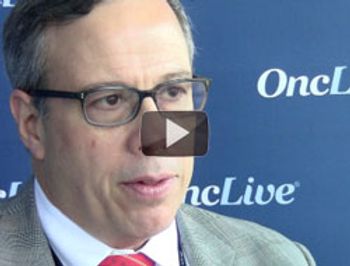
James R. Berenson, MD, founder, President and Medical and Scientific Director of the Institute for Myeloma and Bone Cancer Research, President of Oncotherapeutics, discusses the dose-escalation portion of the phase I/II CHAMPION-1 study looking at weekly carfilzomib in combination with dexamethasone for patients with relapsed or refractory multiple myeloma.

At the recent National Comprehensive Cancer Network (NCCN) 19th Annual Conference, experts discussed this year's updates to the NCCN Clinical Practice Guidelines in Oncology. The meeting also included reviews of NCCN Task Force reports on issues in supportive care. We asked eleven NCCN panel members to select the most significant updates and insights presented at the conference.

Combining panobinostat (LBH589) with bortezomib and dexamethasone delayed disease progression by 3.9 months over bortezomib and dexamethasone alone in patients with relapsed or relapsed and refractory multiple myeloma.

The CD38-specific monoclonal antibody SAR650984 demonstrated encouraging efficacy as a monotherapy and in combination with dexamethasone and lenalidomide without reaching a maximum tolerated dose in patients with heavily pretreated multiple myeloma.

The addition of the investigational hypoxia-targeted drug TH-302 to dexamethasone has demonstrated beneficial activity and a manageable adverse event profile in the treatment of patients with relapsed/refractory multiple myeloma.

Joshua Richter, MD, hematologist/oncologist, multiple myeloma, John Theurer Cancer Center, discusses using the FDA-approved multiple myeloma drug pomalidomide to treat patients with sickle cell disease.
James R. Berenson, MD, discusses a phase I study presented at the 2013 ASH meeting that analyzed the use weekly carfilzomib for patients with R/R multiple myeloma.

An improved assay for assessing MRD status in patients with multiple myeloma is contributing to the momentum for using MRD as a surrogate endpoint for survival in clinical trials and as a tool with the potential to help guide therapy choices.
Joshua Richter, MD, hematologist/oncologist, multiple myeloma, John Theurer Cancer Center, discusses the administration of carfilzomib.

Pomalidomide (Pomalyst) rode impressive trial results to accelerated FDA approval this year, and Kenneth Anderson thinks it will prove a valuable new tool in the fight against multiple myeloma

Shaji K. Kumar, MD, professor of medicine, Mayo Clinic, describes the design of a phase II trial looking at the single-agent activity of the proteasome inhibitor MLN9708 for the treatment of patients with multiple myeloma.
With the arrival and incorporation into clinical practice of immunomodulatory drugs (IMiDs) and proteasome inhibitor therapy, patients with multiple myeloma are achieving deep, durable responses and disease control, and are living longer.

The investigational cancer medications being developed by Stemline Therapeutics attack only a tiny percentage of all tumor cells. But those few cells-the stem cells that resist most treatment and drive tumor growth-may just be the most important ones.
C. Ola Landgren, MD, PhD, from the National Cancer Institute, discusses a phase II trial that explored the combination of carfilzomib, lenalidomide, and dexamethasone followed by maintenance lenalidomide in patients with newly diagnosed multiple myeloma.
Brian G.M. Durie, MD, chairman, International Myeloma Foundation, hematologist/oncologist, Cedars-Sinai Medical Center, Los Angeles, California, discusses a more sensitive automated flow cytometry minimal residual disease (MRD) test.

María-Victoria Mateos, MD, PhD, associate professor, hematology, University Hospital of Salamanca, Salamanca, Spain, discusses the design and results of a phase II trial that she presented at the 2013 American Society of Hematology (ASH) Meeting.
James R. Berenson, MD, discusses a phase I/II study looking at pomalidomide, dexamethasone and pegylated liposomal doxorubicin for patients with relapsed/refractory multiple myeloma. The study was presented at the 2013 ASH Meeting.

Jatin J. Shah, MD, from the University of Texas, MD Anderson Cancer Center, describes his excitement over novel therapeutics in development for patients with multiple myeloma.

The first-in-class targeted agent filanesib has demonstrated promising activity in patients with relapsed and refractory multiple myeloma.
Jacob Laubach, MD, MPP, from Dana-Farber Cancer Institute, discusses responses observed following the administration of daratumumab for patients with multiple myeloma.

The combination of continuous lenalidomide and low-dose dexamethasone extends PFS and trends toward improving OS compared with the standard MPT in patients with transplant-ineligible newly diagnosed multiple myeloma.

Intervention in early or "smoldering" myeloma with a three-drug regimen led to complete responses in a group of high-risk patients, suggesting a window of opportunity that may delay or prevent progression to a debilitating disease state.

A higher cumulative dose of bortezomib, including a longer duration of treatment and/or higher dose intensity, appears to improve OS in patients with previously untreated multiple myeloma.
Several protocols of novel immune and targeted agents show promise alone and in combination, including monoclonal antibodies, immune therapies, and newer proteasome inhibitors.
Multiple new proteasome inhibitors currently in clinical or preclinical development bode well for potential future therapies for multiple myeloma, both in frontline and relapsed or refractory settings.
Advertisement
Advertisement
Trending on OncLive
1
RELATIVITY-1093 Trial Aims to Advance Nivolumab Plus Relatlimab and Chemo in Nonsquamous NSCLC
2
Dostarlimab Monotherapy Elicits Durable cCRs in dMMR/MSI-H Locally Advanced Rectal Cancer
3
NEXERA-303 Trial Aims to Bring TGFβR2×PD-1 Bispecific Antibody INCA33890 Into First-Line MSS CRC
4
The OncFive: Top Oncology Articles for the Week of 10/25
5