


















































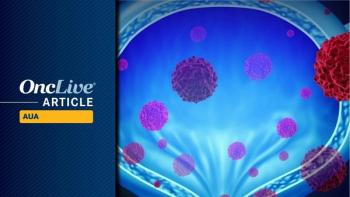
Pembrolizumab plus BCG achieved a 92% 6-month complete response rate in very high-risk T1 bladder cancer with no progression to muscle-invasive disease.
Pembrolizumab plus BCG achieved a 92% 6-month complete response rate in very high-risk T1 bladder cancer with no progression to muscle-invasive disease.

The FDA approved adjuvant atezolizumab for muscle-invasive bladder cancer with circulating tumor DNA molecular residual disease.

TRAEs were generally reversible and low grade, and 96.8% of patients remained free from progression to T2 or greater disease at the data cutoff.

Members of Roswell Park Comprehensive Cancer Center participated in the 2026 World Indigenous Cancer Conference.

GU experts identified key abstracts of interest from the upcoming ASCO Annual Meeting via OncLive’s social media.
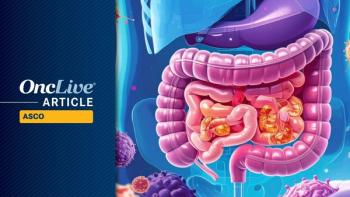
Polls highlighted key abstracts of interest from the upcoming ASCO Annual Meeting.
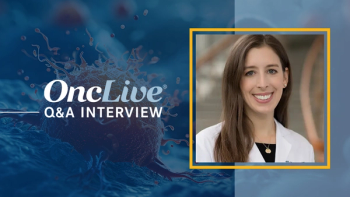
Beth N. McLellan, MD, discusses radiation dermatitis prevention, scalp cooling equity, and the future of personalized oncodermatology in melanoma management.
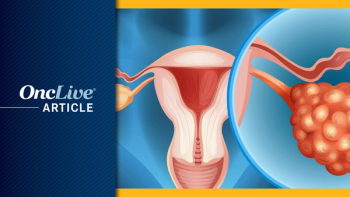
AVB-001 was tolerable and activated CD8+ and CD4+ T cells without regulatory T-cell expansion in platinum-resistant high-grade serous ovarian carcinoma.

Ahead of the 2026 AUA Annual Meeting, GU cancer experts highlighted the abstracts that they are anticipating the most.

Ibrutinib monotherapy produced durable efficacy over 10 years in patients with or without TP53-mutated chronic lymphocytic leukemia.
Aaron Gerds, MD, MS, and Anthony M. Hunter, MD, break down the challenges of anemia management in myelofibrosis and potential treatment avenues.
Perioperative durvalumab plus EV showed positive topline efficacy findings in MIBC.
The addition of rintatolimod to pembrolizumab and cisplatin demonstrated robust albeit preliminary antitumor activity in patients with recurrent ovarian cancer.

A Dana-Farber study showed cases of stage IV breast cancer are increasing in incidence and as a proportion of all breast cancer diagnoses.
Sagar A. Patel, MD, discusses the REVELUTION-2 trial evaluating cardiovascular safety with hormone therapy in prostate cancer.
Ahead of the 2026 ASCO Annual Meeting, experts in GI malignancies share the most anticipated research being presented during the meeting.

Breast cancer experts discuss the nuances of ESR1 mutations and oral SERD use in hormone receptor–positive breast cancer.
Aparna R. Parikh, MD, emphasizes the feasibility of immunotherapy trials in SCAC and the need for better treatment options in the second line and beyond.

The FDA has approved oral decitabine/cedazuridine plus venetoclax for newly diagnosed AML unfit for intensive chemo, based on phase 2 ASCERTAIN-V data.
The FDA granted accelerated approval to sonrotoclax for relapsed/refractory mantle cell lymphoma after at least 2 lines of systemic therapy.
Ashley Sumrall, MD, FACP, FASCO, discusses emerging data for tirabrutinib and the evolving role of CAR T-cell therapy in primary central nervous system lymphoma.
Alexey Danilov, MD, PhD, and Tycel Phillips, MD, highlight key consensus viewpoints in lymphoma published from the 2025 Bridging the Gaps meeting.

Kathy Chiao and Ken Hao commit $100 million for major capital projects, cancer research, and innovation at UCSF — building on a recent $75 million gift to UC Davis for veterinary medicine.

The AUA and SUO released the 2026 amendment to the Advanced Prostate Cancer Guideline.

A Fox Chase Cancer Center study will evaluate a tumor-informed, whole-genome sequencing–based test to assess recurrence risk in early-stage NSCLC.