





News
Latest News
Advertisement
Latest Videos




























































Advertisement
More News

Did you catch all of this week's top oncology news? Test your knowledge with OncLive's Weekly News Quiz.

The selective BCR::ABL1 inhibitor ELVN-001 produced major molecular responses in previously treated chronic-phase CML, including after asciminib progression.

Actinomycin D plus low-dose cytarabine and venetoclax produced high remission rates in a retrospective cohort of patients with NPM1-mutated AML.

Revumenib added to intensive chemotherapy produced deep, MRD-negative remissions with a manageable safety profile in newly diagnosed AML.

Explore frontline CLL therapy choices: durable BTK inhibitors vs fixed venetoclax regimens, emerging combos, and what long-term safety data reveal.

Ofirnoflast produced hematologic improvement in two-thirds of patients with ESA-refractory lower-risk MDS.
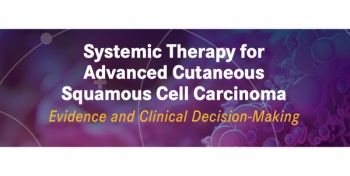
Explore how checkpoint inhibitors transform advanced cSCC care—more options, lower toxicity, and a push toward biomarker-driven, personalized treatment.

Mayo Clinic researchers identified a potential new approach to treating glioblastoma to improve the effectiveness of existing chemotherapy.

In the phase 2 RESTORE-PV trial, DISC-3405 cut phlebotomy events and maintained hematocrit below 45% in patients with polycythemia vera.
Selcodebart improved hemoglobin levels and transfusion independence across 3 anemia cohorts in myelofibrosis, regardless of concomitant JAK inhibitor use.

Gabriela Hobbs, MD, explains the importance of risk assessment and using disease factors to drive management approaches in myelofibrosis.

Faculty convened at an OncLive Scientific Interchange and Workshop to discuss HER2-mutant NSCLC testing, treatment selection, and sequencing strategies.

OS in the LIVERATION trial of namodenoson in advanced HCC appeared longer than anticipated, prompting consideration of an earlier interim analysis.

Micvotabart pelidotin produced a 36% confirmed ORR and a 6.2-month median PFS in pretreated recurrent/metastatic head and neck squamous cell carcinoma.

Patients with advanced abdominal cancers who are not candidates for tumor-removing surgery now have access to a treatment that may help control disease within the abdomen, reduce symptoms, preserve quality of life, and potentially extend survival.

The FDA approved sevabertinib for advanced or metastatic nonsquamous NSCLC harboring HER2 (ERBB2) TKD activating mutations.

Dabogratinib led to a high rate of responses FGFR3-altered low-grade intermediate-risk non–muscle-invasive bladder cancer.

Mipletamig plus venetoclax and azacitidine produced a CBR of 93% in induction-ineligible, TP53-mutated acute myeloid leukemia.

A UCLA-led review found there is not yet enough real-world evidence to determine whether using AI in routine screening actually reduces the number of breast cancers diagnosed between screenings

Durvalumab plus tarlatamab significantly improved OS and PFS vs durvalumab alone as maintenance in extensive-stage SCLC, per topline phase 3 data.

Signatera assay ctDNA testing showed stronger prognostic and predictive value than PET/CT imaging across lymphomas.

D. Ross Camidge, MD, PhD, and Eric K. Singhi, MD, preview the SCLC and NSCLC abstracts they are anticipating at the 2026 World Conference on Lung Cancer.

Arlocabtagene autoleucel met the primary end point of overall response rate in the registrational phase 2 QUINTESSENTIAL trial.

Patients with triple-class–exposed relapsed/refractory multiple myeloma reported improvements in pain, fatigue, and functioning during up to 2 years of linvoseltamab.

Pegylated G-CSF produced rates of successful CD34-positive cell collection and safety comparable to daily G-CSF in healthy allogeneic transplant donors.
Advertisement
Advertisement
Trending on OncLive
1
FDA Approves Lirafugratinib for Pretreated, Locally Advanced or Metastatic Cholangiocarcinoma
2
IDMC Recommends Continuation of Phase 2 MRD Study of IMNN-001 in Advanced Ovarian Cancer
3
Dr Mayer on the FDA Approval of Camizestrant for ESR1-Mutated Breast Cancer
4
INCB161734 Holds Potential Significance for KRAS G12D–Mutated mPDAC Management
5