
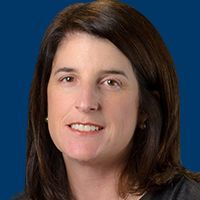






































































Susan M. O’Brien, MD always knew medicine was the field for her. Growing up in a house full of bankers and finance-oriented family members couldn’t deter her from her chosen path.
Susan M. O’Brien, MD always knew medicine was the field for her. Growing up in a house full of bankers and finance-oriented family members couldn’t deter her from her chosen path.

The American Society for Radiation Oncology released a new clinical guideline, which was also published in Practical Radiation Oncology, outlined recommendations and patient selection for optimal radiation dosing, sequencing, and treatment planning for patients with soft tissue sarcoma.

Sanaz Memarzadeh, MD, PhD, focuses on these ongoing multidisciplinary research directions aimed at improving outcomes for patients with ovarian cancer.

Nivolumab followed by tumor-infiltrating lymphocyte therapy and maintenance nivolumab demonstrated a suitable safety profile and antitumor activity in patients with metastatic non–small cell lung cancer.
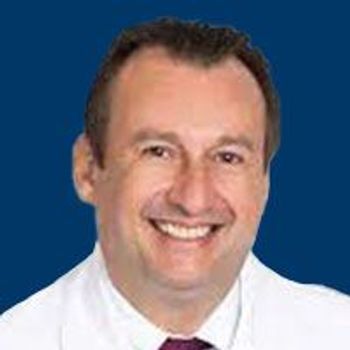
Since 2016, Florida Cancer Specialists & Research Institute has been a national leader in the transition of oncology care from a fee-for-service reimbursement structure to fee-for-value.

The European Commission has granted a conditional marketing authorization to tafasitamab plus lenalidomide followed by single-agent tafasitamab for use in adult patients with relapsed/refractory diffuse large B-cell lymphoma who are not candidates for autologous stem cell transplant.
Six-months of adjuvant androgen suppression plus 74 Gy or 78 Gy of concurrent external-beam radiation led to a statistically significant improvement in event-free survival and disease-free survival but failed to improve distant metastasis-free survival and overall survival vs external-beam radiation alone in patients with intermediate-risk prostate cancer.

Strategies are important to optimize learning in the virtual environment including speaker preparation, creating a virtual learning climate, and encouraging and enhancing interaction.
Ibrutinib demonstrated encouraging clinical responses in patients with variant-type, high-risk hairy cell leukemia.
Prior treatment with PD-1 or MAPK inhibitors resulted in lower objective response rates with adoptive cell transfer of autologous tumor-infiltrating lymphocytes in patients with metastatic melanoma vs patients who were naïve to these agents.

Acquired resistance to endocrine therapy has presented challenges for patients with hormone receptor–positive breast cancer.

The Japan Pharmaceuticals and Medical Devices Agency has approved the use of pembrolizumab in the treatment of patients with PD-L1–positive, hormone receptor–negative and HER2-negative, inoperable or recurrent breast cancer, and for single-agent use in patients with unresectable, advanced, or recurrent microsatellite instability–high colorectal cancer.

Montefiore Einstein Cancer Center has once again earned national recognition for its quality of care studies leading to enhanced patient care, its strong cancer screening and early detection initiatives, and its exceptional support services.

The FDA has approved the Oncomine Dx Target Test, developed by Thermo Fisher Scientific, for use as a companion diagnostic to identify patients with IDH1-mutated cholangiocarcinoma who may be eligible to receive the newly approved IDH1 inhibitor ivosidenib.

Induction with lenrolimab resulted in an improvement in modified progression-free survival and modified overall survival in patients with metastatic triple-negative breast cancer.

The Japanese Ministry of Health, Labor, and Welfare has approved the combination of cabozantinib and nivolumab for the treatment of patients with unresectable or metastatic renal cell carcinoma.

The first-in-class small molecule HIF-PHI inhibitor roxadustat demonstrated promising efficacy with favorable tolerability when used in the treatment of chemotherapy-induced anemia in patients with non-myeloid malignancies, meeting the primary end point of the phase 2 WHITNEY trial.
The FDA has approved ivosidenib for the treatment of adult patients with previously treated, locally advanced or metastatic cholangiocarcinoma with an IDH1 mutation, as detected by an FDA-approved test.
Increased intake of vitamin D was associated with a decreased risk of early-onset colorectal cancer and precursors in younger women between the ages of 25 years and 42 years.
The FDA has granted a fast track designation to the highly selective CK2 inhibitor silmitasertib as a potential therapeutic option for patients with recurrent sonic hedgehog–driven medulloblastoma
The FDA has granted priority review to a new drug application seeking the approval of asciminib for the treatment of patients with chronic myeloid leukemia.
Paolo F. Caimi, MD, discusses the FDA approval of loncastuximab tesirine in large B-cell lymphoma, results from the phase 2 LOTIS-2 trial, and future research directions with the agent.

The rapid development of novel agents directed at anaplastic lymphoma kinase gene fusions has emerged as one of the success stories of the targeted therapy era in non–small cell lung cancer
The highly selective and potent CDK7 inhibitor SY-5609 is being tested in combination with atezolizumab in patients with molecularly defined subsets of colorectal cancer, as one of the cohorts of the ongoing, phase 1/1b INTRINSIC trial.

The FDA and the European Medicines Agency have accepted applications seeking the approval of tebentafusp for use in the treatment of adult patients with HLA-A*02:01–positive metastatic uveal melanoma.