






Pancreatic Cancer
Latest News
Advertisement
Latest Videos




Shorts
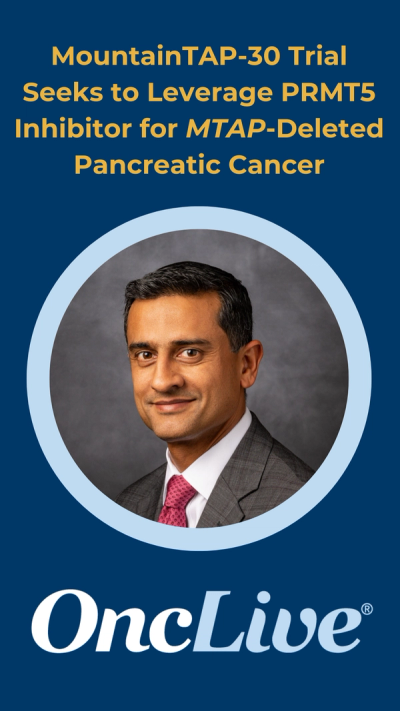
0:50
MountainTAP-30 Trial Seeks to Leverage PRMT5 Inhibitor for MTAP-Deleted Pancreatic Cancer
5 months ago
by
Shubham Pant, MD, MBBS

1:00
Early RAS Inhibitor Data Signal Rare Momentum in Metastatic Pancreatic Cancer
5 months ago
by
Shubham Pant, MD, MBBS
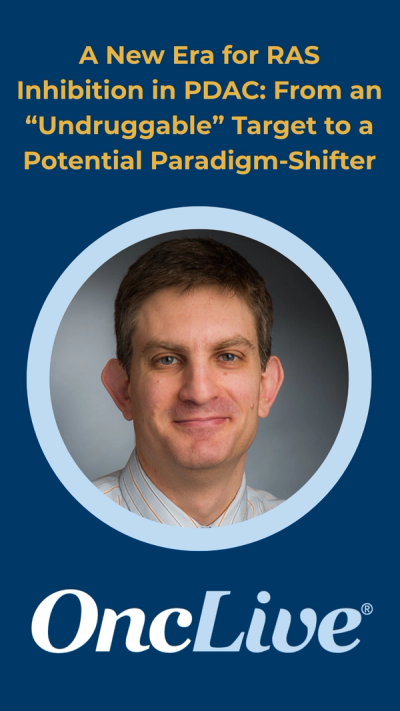
0:58
A New Era for RAS Inhibition in PDAC: From an “Undruggable” Target to a Potential Paradigm-Shifter
5 months ago
by
Brian M. Wolpin, MD, MPH






























































Advertisement
More News

The top 5 OncLive videos of the week cover insights in HER2+ breast cancer, myeloma, pancreatic cancer, prostate cancer, and sarcoma.

The addition of VCN-01 to gemcitabine and nab-paclitaxel improved survival in newly diagnosed metastatic pancreatic cancer.

Study investigators are aiming to leverage therapy resistance, particularly in patients with solid tumors after receiving available RAS inhibitors.

The addition of elraglusib to gemcitabine and nab-paclitaxel improved overall survival is first-line metastatic pancreatic cancer.

Kristen Spencer, DO, details the rationale of the phase 1/2 EVEREST-2 trial evaluating the novel CAR T product A2B694 in pancreatic cancer.
Ignacio Garrido-Laguna, MD, PhD, MBA, discusses updated safety and efficacy data with daraxonrasib in KRAS-mutated pancreatic ductal adenocarcinoma.

Efrat Dotan, MD, discusses gemcitabine plus nab-paclitaxel vs 5-fluorouracil, leucovorin, and liposomal irinotecan in older patients with metastatic pancreatic cancer.

Overall survival data were linked with baseline geriatric assessment and QOL scores in patients with metastatic pancreatic ductal adenocarcinoma.

Paul E. Oberstein, MD, discusses the efficacy and safety of pamrevlumab plus chemotherapy in first- and second-line PDAC.

Treatment with daraxonrasib at the phase 3 dose of 300 mg was well tolerated, had favorable dose intensity, and showed efficacy in RAS–mutated PDAC.

A recap of the top data presented at the 2025 Gastrointestinal Cancers Symposium.
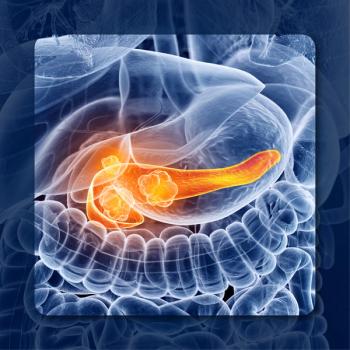
The median OS with frontline FOLFIRINOX was numerically lower than that seen with frontline NALIRIFOX in patients with metastatic PDAC.
Pamrevlumab plus chemotherapy failed to demonstrate a survival benefit in patients with locally advanced, unresectable pancreatic cancer.

Alexander I. Spira MD, PhD, FACP, FASCO, discusses data of RMC-9805 in previously treated, advanced KRAS G12D–mutated pancreatic ductal adenocarcinoma.

Zoldonrasib was well tolerated and associated with manageable AEs and preliminary antitumor activity in patients with KRAS G12D–mutated PDAC.

First-line IMM-1-104 plus chemotherapy produced responses and disease control in patients with pancreatic cancer.
LOAd703 has been granted FDA fast track designation for the treatment of patients with pancreatic cancer.

Alison Schram, MD, details data from the eNRGy study that supported the FDA approval of zenocutuzumab in NRG1 fusion–positive NSCLC and pancreatic adenocarcinoma.
An orphan medicinal product designation was granted to elraglusib by the EMA for patients with advanced pancreatic ductal adenocarcinoma.

NRG1 fusion positivity has gained interest as a treatment target in lung and pancreatic cancer, leading to the FDA approval of zenocutuzumab in December 2024.
The FDA granted accelerated approval to zenocutuzumab for select patients with NSCLC and pancreatic adenocarcinoma with NRG1 fusions.

First-line use of TTFields plus gemcitabine and nab-paclitaxel improved OS vs chemotherapy in unresectable, locally advanced pancreatic adenocarcinoma.

CM24 plus nivolumab and chemotherapy demonstrated an improvement in efficacy vs chemotherapy alone in metastatic pancreatic ductal adenocarcinoma.

Suneel Kamath, MD, shares insights on targeted therapies in pancreatic cancer after an X Takeover with OncLive during Pancreatic Cancer Awareness Month.
Suneel Kamath, MD, took to the OncLive X (Twitter) account during Pancreatic Cancer Awareness Month to share the importance of recognizing this disease.
Advertisement
Advertisement
Trending on OncLive
1
The OncFive: Top Oncology Articles for the Week of 10/4/2026
2
FDA Grants Breakthrough Device Designation to Natera’s Multi-Cancer Early Detection Assay
3
FDA Approves Atezolizumab Plus Chemo for Stage III dMMR Colon Cancer
4
FDA Flashback: Hematologic Cancer Decisions and News From September 2026
5