


Prostate Cancer
Latest News
Advertisement
Latest Videos





























































Advertisement
More News

With increased understanding of the biology of CRPC and the mechanisms of action of AR-targeting drugs, researchers are developing a growing appreciation for the extensive heterogeneity and complexity of both prostate cancer and androgen signaling.

The field of prostate cancer vaccines remains an area of active exploration, with clinical trials into sipuleucel-T continuing even amid a corporate restructuring and a phase III study into PROSTVAC reaching full enrollment.

Jeff Michalski, MD, professor, vice chair of Radiation Oncology, Washington University School of Medicine, Siteman Cancer Center explains the importance of minimizing the long-term consequences of radiation.

In 1974, Patrick C. Walsh, MD, took charge of the Brady Urological Institute at Johns Hopkins University in Baltimore, Maryland, and spent the next few decades refining the radical prostatectomy into a safe, effective, and tolerable procedure, one that has not only extended countless lives but has also preserved quality of life.
Amer Zeidan, MBBS, MHS, assistant professor of Medicine, Hematology, Yale Cancer Center, discusses a population-based study of subsequent myelodysplastic syndromes (MDS) in prostate cancer patients after radiotherapy.

Mathew Hall, MD, radiation oncologist, City of Hope National Medical Center, discusses prostate cancer screening.
Oliver Sartor, MD, medical oncologist, Tulane University School of Medicine, discusses sequencing therapies and potential targets in prostate cancer.

Treatment with olaparib demonstrated a durable overall response rate of 87.5% in a biomarker-defined subgroup of men with pretreated sporadic metastatic castration-resistant prostate cancer in a phase II multi-step adaptive trial.

Topline results announced today from the phase III Swedish trial 10TASQ10 demonstrated that tasquinimod failed to extend overall survival in men with metastatic castrate-resistant prostate cancer.

Jeff Michalski, MD, professor, vice chair of Radiation Oncology, Washington University School of Medicine, Siteman Cancer Center, discusses results of a study which compared standard dose radiation therapy to escalated dose for patients with intermediate-risk prostate cancer.
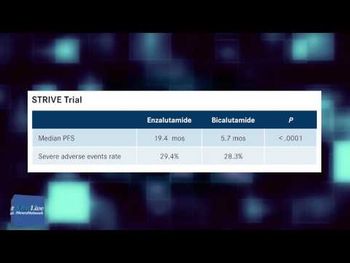

A biomarker panel containing circulating tumor cell number and LDH level was shown to be a surrogate for overall survival in patients with metastatic castration-resistant prostate cancer.


Treatment with enzalutamide reduced the risk of progression by 76% compared with bicalutamide in men with castration-resistant prostate cancer.
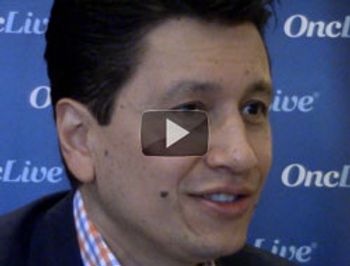
Jorge A. Garcia, MD, Department of Hematology and Oncology, Cleveland Clinic, discusses some of the challenges with immunotherapy in prostate cancer.

The FDA has updated the label for abiraterone acetate plus prednisone to include significant overall survival data from the final analysis of the phase III COU-AA-302 study.
A new phase begins for Thomas Neville, PhD, a Yale and Stanford-trained engineer and economist who worked in energy before a prostate cancer diagnosis drew him into medical research.

Two studies investigating enzalutamide in men with early stage metastatic castration-resistant prostate cancer further confirmed the overall survival and progression-free survival benefit of the agent over placebo.
Advertisement
Advertisement
Trending on OncLive
1
Savolitinib Plus Osimertinib NDA Submitted to FDA for MET-Driven, EGFR-Mutated NSCLC After EGFR TKI
2
FDA Grants Priority Review to Elinzanetant for Endocrine Therapy–Associated Vasomotor Symptoms in HR+ Breast Cancer
3
Calculating the Real Cost of False Positive Findings in Cancer Screening
4
China's NMPA Approves Pirtobrutinib Across CLL
5