





Prostate Cancer
Latest News
Advertisement
Latest Videos






























































Advertisement
More News
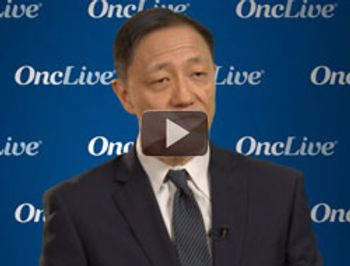
Alec Koo, MD, FACS, managing partner, Skyline Urology, board of directors, LUGPA, discusses results from a recent study on active surveillance in prostate cancer.

In an interview with OncLive, Leonard G. Gomella discusses the benefits, limitations, and considerations of sipuleucel-T for patients with prostate cancer.
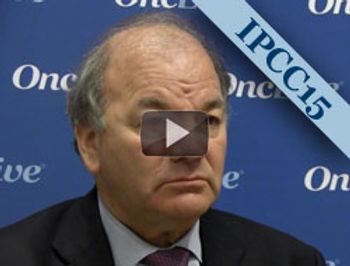
Mitchell Benson, MD, the Herbert and Florence Irving Professor at Columbia University Medical Center, New York-Presbyterian Hospital, discusses potential issues with active surveillance for patients with intermediate-risk prostate cancer.
Robert Dreicer, MD, MS, FACP, FASCO, Division of Hematology and Oncology, Department of Medicine, University of Virginia School of Medicine, discusses sequencing therapies in prostate cancer.
Celestia S. Higano, MD, FACP, professor of medicine and urology, University of Washington, discusses radium-223 chloride and its efficacy for patients with metastatic castration-resistant prostate cancer (mCRPC).
A United States Preventive Services Task Force recommendation against the use of prostate specific antigen testing needs to be updated, said Gary Kirsh, MD, president of the Large Urology Group Practice Association.

Leonard G. Gomella, MD, told attendees at the 8th Annual IPCC that the decision to screen or not to screen for prostate cancer boiled down to "using common sense, shared decision making, and choosing the right patients to screen."

Physicians should engage in careful patient selection before recommending active surveillance for prostate cancer, according to Mitchell C. Benson, MD.

In a similar fashion as astronauts, physicians can mitigate risks and improve outcomes with advanced planning and teamwork, four-time space shuttle commander Tom Henricks said during his keynote address at the Interdisciplinary Prostate Cancer Congress.
Richard Stock, MD, a professor of radiation oncology at the Icahn School of Medicine at Mount Sinai Hospital, talks about brachytherapy and its benefits for patients with prostate cancer.

Charles J. Ryan, MD, Professor of Clinical Medicine, Urology, Helen Diller Family Comprehensive Cancer Center at the University of California, San Francisco (UCSF), discusses the effects he has seen abiraterone have in patients with metastatic castration-resistant prostate cancer (mCRPC).

Former NASA astronaut Tom Henricks will show how team dynamics and organizational culture affect outcomes using dramatic real-life video shot inside of a NASA space shuttle cockpit during launch and landing, as well as scenes of working in space, during a keynote address at the 8th Annual Interdisciplinary Prostate Cancer Congress (IPCC): and Other Genitourinary Malignancies.

A nearly $1 billion windfall licensing agreement involving the immunotherapy PROSTVAC has the company Bavarian Nordic looking toward a long-term manufacturing and distribution arrangement with Bristol-Myers Squibb.

Emmanuel S. Antonarakis, MBBCh, discusses research examining AR-V7 as a biomarker for chemotherapy efficacy in advanced prostate cancer.
Mark Scholz, MD, medical director, Prostate Oncology Specialists, discusses the final analysis of the COU-AA-302 study, which compared abiraterone acetate to prednisone alone in patients with metastatic castration-resistant prostate cancer (mCRPC).

Mohummad Minhaj Siddiqui, MD, assistant professor of surgery, University of Maryland School of Medicine, director of urologic robotic surgery, University of Maryland Marlene and Stewart Greenebaum Cancer Center, discusses a study which demonstrated men with testicular cancer are more likely to develop prostate cancer.
Charles J. Ryan, MD, Professor of Clinical Medicine, Urology, Helen Diller Family Comprehensive Cancer Center at the University of California, San Francisco (UCSF), discusses the final analysis of COU-AA-302.
Emmanuel S. Antonarakis, MBBCh, assistant professor, Johns Hopkins Medicine, discusses a study looking at androgen receptor splice variant 7 (AR-V7) in metastatic castration-resistant prostate cancer (mCRPC).
E. David Crawford, MD, professor, urology, radiation oncology, University of Colorado, discusses the performance of the cell cycle progression (CCP) assay for prostate cancer.

Andrew Loblaw, MD, FRCPC, MSc, clinician scientist, radiation oncologist, Sunnybrook Health Sciences Centre, discusses a study that looked at using active surveillance to monitor men with intermediate-risk prostate cancer.

The beneficial effect of abiraterone acetate on overall survival in men with progressive metastatic CRPC in the COU-AA-302 study becomes even more pronounced after adjustment for crossover from placebo to active treatment.

Androgen deprivation therapy with or without chemotherapy led to similar survival in men with advanced, metastatic hormone-sensitive prostate cancer, an updated analysis of a randomized trial showed.
A phase I study conducted at the NIH, combining a fixed dose of PROSTVAC with escalating doses of the checkpoint inhibitor ipilimumab, produced encouraging survival results in mCRPC.
The proportion of men diagnosed with intermediate- or high-risk cancer, based on blood PSA level, increased by nearly 6% from 2011 to 2013.

The risk of dying from prostate cancer increased fourfold when active surveillance was used to monitor men with intermediate-risk disease compared with low-risk prostate cancer patients.
Advertisement
Advertisement
Trending on OncLive
1
Savolitinib Plus Osimertinib NDA Submitted to FDA for MET-Driven, EGFR-Mutated NSCLC After EGFR TKI
2
FDA Grants Priority Review to Elinzanetant for Endocrine Therapy–Associated Vasomotor Symptoms in HR+ Breast Cancer
3
Calculating the Real Cost of False Positive Findings in Cancer Screening
4
China's NMPA Approves Pirtobrutinib Across CLL
5