


Supportive Care
Latest News

Advertisement
Latest Videos
































































Advertisement
More News

Steven M. Grunberg, MD, University of Vermont, on Barriers to Providing Effective Supportive Care for Patients with Cancer.

Paul J. Hesketh, MD, from Lahey Clinic Medical Center, on Barriers to Multinational Association of Supportive Care in Cancer Guideline Compliance

Dr. Lowell Anthony from the University of Kentucky Markey Cancer Center on Targeted Therapy Associated Diarrhea.

Heidi Donovan from the University of Pittsburgh School of Nursing Discusses Prioritizing Symptoms

Paul Jacobsen, from H. Lee Moffitt Cancer Center and Research Institute, Discusses Cancer Survivorship Rehabilitation.

Much remains to be done in the USA to improve the care of patients at end-of-life.

Dr. Stuart Lichtman, from Memorial Sloan-Kettering Cancer Center Commack, Explains the Benefits of Supportive and Palliative Care.

Donna Berry, from Dana-Farber Cancer Institute, on Compliance to Oral Cancer Therapies.

Jeffrey Crawford, MD, from Duke University Medical Center, on Managing Febrile Neutropenia.
Dr. Jimmie Holland, from Memorial Sloan-Kettering Cancer Center, on the Stigma Toward Psychosocial Care.

Recent evidence shows that some of the newer molecularly targeted therapies can cause diarrhea, which can lead to dose reductions and alterations.
Dr. Richard Gralla, from the Quality of Life Research Associates, on Chemotherapy-Induced Nausea and Vomiting.
Dr. Kathleen Foley, from Memorial Sloan-Kettering Cancer Center, Discusses the World Health Organization Guidelines for Cancer Pain Management.

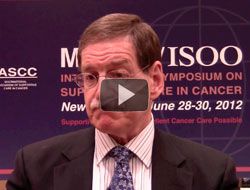
Dr. Steven Grunberg, from the Vermont Cancer Center, Describes the 2012 Multinational Association of Supportive Care in Cancer Symposium.
More than a third of cancer survivors report ongoing symptoms of posttraumatic stress disorder several years after being diagnosed with cancer.
Dr. Roman Perez-Soler, from the Montefiore Medical Center, on the Correlation Between Erlotinib-Induced Skin Rash and Overall Survival
New data appears to undercut prior research by suggesting that neither NSAIDs nor statins influence the development of renal cell carcinoma.

Dr. Diane Bodurka, from the MD Anderson Cancer Center, on the Increasing Number of Cancer Surivors

Semuloparin significantly decreases the risk of thromboembolic events in cancer patients initiating chemotherapy compared with placebo, and without a hike in major bleeding.

An interview with David Cella, PhD, the developer of the FACIT system of questionnaires that scientifically measure the quality of life of patients being treated for cancer.
Whether surgically or medically induced, early menopause forces women to deal with a host of emotional, physical, and practical issues.

Checking in with patients can bring positive results, since oncology nurses are able to offer interventions for most symptoms of cancer treatment. Includes an in-depth look at telephone triage.
It's commonplace to hear newly diagnosed patients and their families talk about relatives, neighbors, and friends who underwent cancer treatment and experienced debilitating, and sometimes lethal, side effects.
The antidepressant duloxetine relieved pain associated with chemotherapy-induced peripheral neuropathy for 59% of patients.

Dr. Michael Rotkowitz, from Cancer Treatment Centers of America, on Dabrafenib and Trametinib Combination Side Effects
Advertisement
Advertisement
Trending on OncLive
1
The OncFive: Top Oncology Articles for the Week of 10/4/2026
2
FDA Approves Atezolizumab Plus Chemo for Stage III dMMR Colon Cancer
3
FDA Grants Breakthrough Device Designation to Natera’s Multi-Cancer Early Detection Assay
4
FDA Flashback: Hematologic Cancer Decisions and News From September 2026
5