




Supportive Care
Latest News
Advertisement
Latest Videos






























































Advertisement
More News


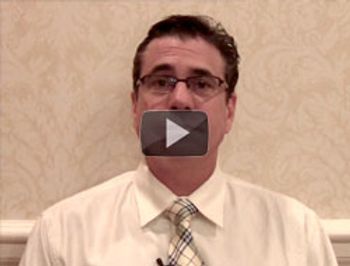
Michael L. Krychman, MD, Executive Director of the Southern California Center for Sexual Health and Survivorship Medicine, discusses managing and treating sexual health concerns in cancer patients and survivors.

Karen Masino, from Ingalls Memorial Hospital, discusses the intricacies of developing a survivorship program.

Rajni Kannan discusses the importance patient education or managing the side effects associated ipilimumab and vemurafenib in metastatic melanoma.

The addition of aprepitant to standard antiemetic prophylaxis significantly improved the complete response rate in patients with germ cell tumors undergoing 5-day cisplatin combination chemotherapy regimens.

Facilities seeking Commission on Cancer accreditation now need to have a patient navigation process in place by 2015.
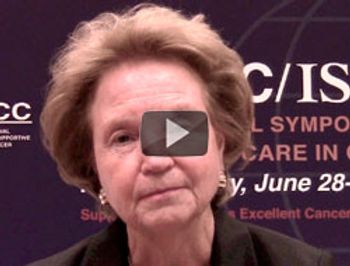
Kathleen M. Foley, MD, from Memorial Sloan-Kettering Cancer Center, on the history and future goals for cancer pain management.

Cancer and its treatment creates or aggravates psychosocial distress, while unresolved physical and practical problems can also add to the distress of patients attempting to complete their treatment and recovery.

Whether brought about by surgery or medical treatments, induced menopause forces women to deal with a number of emotional, physical, and practical issues-all in addition to the original diagnosis.

Carrie Stricker from the Abramson Cancer Center of the University of Pennsylvania on the Efficacy of Survivorship Care Plans for Posttreatment Breast Cancer Survivors.

New data show that cancer-related fatigue is reported by only "a small minority" of women >6 months after completing adjuvant therapy for breast cancer.
Anemia is common and associated with functional disability in patients with cancer aged ≥65 years, according to the results of a study presented at ASCO 2012.

Donna Berry, from the Dana-Farber Cancer Institute, Explains a Nurse-Led Education Program That Enhanced Oral Therapy Compliance.

Forty years after the declaration of war on cancer, one of the most profound shifts in cancer care today is a new focus on treating those living beyond cancer, as well as those living with cancer.

Two medications that are not recommended in guidelines for the standard treatment of cancer-related febrile neutropenia are commonly used- particularly outside of high-volume medical settings- yet are not effective.

A new paradigm that relies on identifying networks or clusters of single nucleotide polymorphisms can accurately predict which patients will develop treatment-related mucositis and other side effects.

Research is needed to justify the dollar savings achieved by a supportive care program, but it is not clear what should be measured and how studies should be designed to demonstrate this.

Robin McConnell, from John Theurer Cancer Center, Discusses Nutrition in Cancer Care

Paul Jacobsen, from the H. Lee Moffitt Cancer Center and Research Institute, Discusses Survivorship Care Plans

Dr. Michael Krychman, from he Southern California Center for Sexual Health and Survivorship Medicine, Discusses the Awareness of Sexual Health Concerns in Breast Cancer Patients.

Dr. Jeffrey Crawford from Duke University Medical Center Discusses Managing Cancer-Related Cachexia
Dr. Kathleen Foley, from Memorial Sloan-Kettering Cancer Center, Addresses the Importance of Palliative Care
Dr. Julie Gralow from the Seattle Cancer Care Alliance Discusses T-DM1-Induced Thrombocytopenia

Donna L. Berry, from Dana-Farber Cancer Institute, on Symptom Distress and Oral Therapy Adherence.
Advertisement
Advertisement
Trending on OncLive
1
The OncFive: Top Oncology Articles for the Week of 10/4/2026
2
FDA Approves Atezolizumab Plus Chemo for Stage III dMMR Colon Cancer
3
FDA Grants Breakthrough Device Designation to Natera’s Multi-Cancer Early Detection Assay
4
FDA Flashback: Hematologic Cancer Decisions and News From September 2026
5