

BMS-986253 plus nivolumab/ipilimumab failed to improve responses or PFS in advanced melanoma after progression on or after a checkpoint inhibitor.
BMS-986253 plus nivolumab/ipilimumab failed to improve responses or PFS in advanced melanoma after progression on or after a checkpoint inhibitor.

Tremelimumab plus paclitaxel induced responses in metastatic urothelial cancer after progression on platinum and an immune checkpoint inhibitor.

The addition of pembrolizumab to radiation did not improve survival in unresected, stage I or II non–small cell lung cancer.

Trastuzumab deruxtecan plus pembrolizumab showed early efficacy in patients with IO-naive, HER2-expressing or -mutant non–small cell lung cancer.

CheckMate 73L missed its primary end point of PFS in advanced unresectable stage III non–small cell lung cancer.

The neoadjuvant/adjuvant pembrolizumab and chemotherapy combination was approved by the FDA in October 2023 for use in this patient population.

Significant tumor necrosis greater than 70% occurred in 3 patients with resectable hepatocellular carcinoma following neoadjuvant treatment with low-dose stereotactic body radiation therapy and cemiplimab-rwlc and adjuvant cemiplimab.

Lenvatinib plus pembrolizumab, pemetrexed, and carboplatin or cisplatin did not improve treatment outcomes compared with placebo plus pembrolizumab, pemetrexed, and carboplatin or cisplatin when given as first-line therapy in patients with stage IV nonsquamous non–small cell lung cancer.

Lifileucel demonstrated clinically meaningful antitumor activity alongside early, durable responses in patients with advanced melanoma following progression on checkpoint inhibitors.
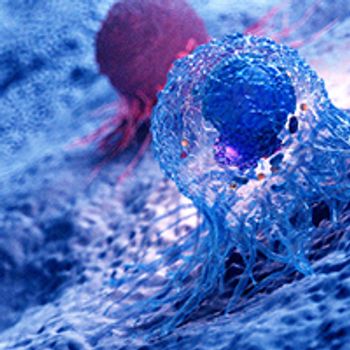
Intravenous and intratumoral treatment with TILT-123 was found to be safe and feasible, with no dose-limiting toxicities when given alone or in combination with tumor infiltrating lymphocyte therapy in patients with advanced, metastatic melanoma.

Lenvatinib plus pembrolizumab did not provide a survival advantage vs standard-of-care docetaxel in patients with advanced-stage non–small cell lung cancer who experienced disease progression following prior exposure to a PD-L1 inhibitor and platinum-based chemotherapy.

The safety and efficacy data observed with the administration of 5 or more cycles of induction platinum/etoposide and concurrent durvalumab in patients with extensive-stage small cell lung cancer enrolled in the phase 3b LUMINANCE study aligned with outcomes reported in the phase 3 CASPIAN trial.

Adjuvant treatment with pembrolizumab continued to induce a disease-free survival benefit vs placebo in patients with resected early-stage NSCLC, according to findings from the phase 3 PEARLS/KEYNOTE-091 trial.

A limited course of tremelimumab added to frontline durvalumab and chemotherapy provided a sustained overall survival benefit vs chemotherapy alone in patients with previously untreated metastatic non–small cell lung cancer.

A coformulation of vibostolimab and pembrolizumab with or without docetaxel failed to result in a statistically significant improvement in progression-free survival compared with docetaxel alone in patients with metastatic non–small cell lung cancer.

Neoadjuvant treatment with SHR-1701 with or without chemotherapy followed by surgery or radiotherapy induced responses in more than half of patients with stage III unresectable non–small cell lung cancer and increased resectability in those assigned to definitive surgery.

John Moroney, MD, discusses the evaluation of COM701 plus BMS-986207 and nivolumab in platinum-resistant ovarian cancer.

Oladapo Yeku, MD, PhD, FACP, discusses the evaluation of COM701 with nivolumab in patients with platinum-resistant epithelial ovarian cancer.

Neoadjuvant treatment with nivolumab (Opdivo) plus platinum doublet chemotherapy showed superior major pathological response rates and pathological complete response rates compared with nivolumab monotherapy among patients with resectable non–small cell lung cancer even for patients with a PD-L1 expression of 50% or greater.
Lifileucel achieved safety and efficacy irrespective of the number of aldesleukin doses administered to patients with advanced melanoma.

Pembrolizumab induced treatment-related adverse effects that were generally mild or moderate in severity, according to finding from a pooled analysis of more than 4000 patients with melanoma, non–small cell lung cancer, or renal cell carcinoma.

Concurrent adagrasib and pembrolizumab produced preliminary activity when administered as first-line treatment in patients with non–small cell lung cancer harboring a KRAS G12C mutation, irrespective of PD-L1 status, according to data from the KRYSTAL-1 phase 1b and the KRYSTAL-7 phase 2 cohorts.

Treatment with dostarlimab (Jemperli) plus chemotherapy reduced the risk of disease progression or death by 30% compared with pembrolizumab (Keytruda) plus chemotherapy as a frontline treatment for patients with metastatic non-squamous non–small cell lung cancer.