
Terry P. Mamounas, MD, discusses key advancements in the use of locoregional therapy for patients with breast cancer.
Terry P. Mamounas, MD, discusses key advancements in the use of locoregional therapy for patients with breast cancer.
Michael D. Alvarado, MD, discusses the decision to undergo breast conservation surgery vs mastectomy following neoadjuvant breast cancer therapy.

Susan M. Domchek, MD, highlights key points related to her presentation on germline testing and breast cancer treatment.

Hyman B. Muss, MD, discusses the potential benefits of metronomic chemotherapy and which patients with metastatic breast cancer could be candidates, as well as how to approach end-of-life conversations and decisions for patients.
Lisa A. Carey MD, ScM, FASCO, discusses the use of response-guided therapy in HER2-positive breast cancer.

Patrick I. Borgen, MD, discusses on the importance of addressing the opioid epidemic through the lens of breast cancer care.
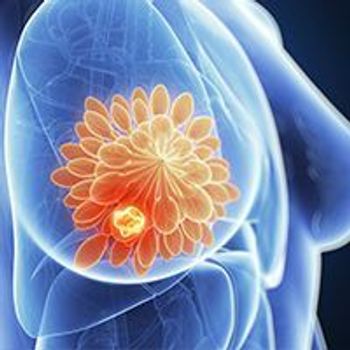
In a single-center study, investigators assessed real-world outcomes in patients with metastatic metastatic triple-negative breast cancer treated with the antibody-drug conjugate sacituzumab govitecan-hziy.

Lindsay Avner Kaplan and Nancy G. Brinker, the keynote speakers of the 40th Annual Miami Breast Cancer Conference, discuss the need to confront social determinants of health for patients and drive the public conversation and interpretation of personal and clinical stories in health care.

After settling the debate of which patients with early-stage, hormone receptor–positive breast cancer require chemotherapy in addition to endocrine therapy, investigators have set their sights on determining whether ovarian function suppression can deliver the same effects of chemotherapy and when to recommend abemaciclib and olaparib.

Novel selective estrogen receptor modulators, selective estrogen receptor degraders, and proteolysis-targeting chimera inhibitors have demonstrated early efficacy for patients with breast cancer who experience disease progression following CDK4/6 inhibitor treatment.

Brain metastases are a common complication in patients with breast cancer, and although systemic therapies for patients with HER2-positive disease have displayed promise in penetration of the blood-brain barrier, work remains for subsets of patients with central nervous system metastases.
Anees Chagpar, MD, MBA, MPH, FACS, FRCS(C), discusses the unmet needs regarding financial toxicities for patients with breast cancer.

The growth of artificial intelligence allows physicians to see tumors in unprecedented ways.
Steven J. Chmura, MD, PhD, discusses the current management strategies for oligometastatic breast cancer.
Kevin Kalinsky, MD, MS, discusses the evolving treatment landscape for patients with triple-negative breast cancer and how to best sequence antibody-drug conjugates within this population.

By moving away from adjuvant- to neoadjuvant-based protocols, such as I-SPY, investigators may be better able to develop effective treatments for patients in less time by refining the understanding of who will benefit from therapy, enabling strategies with multiple pathway targets, and testing approaches earlier in the disease course.

As additional antibody-drug conjugates continue to emerge for the treatment of patients with HER2-negative breast cancer, identifying optimal sequencing strategies and managing toxicities associated with these agents remain top priorities for their use, according to Hope S. Rugo, MD.
Kelly K. Hunt, MD, FACS, FSSO, discusses technical considerations for axillary reverse mapping in breast cancer for the reduction or prevention of lymphedema.

With the advent of effective drug regimens to treat HER2-positive breast cancer, the use of tailored efforts with neoadjuvant therapy in this space may continue to improve efficacy moving forward.

The advent of antibody-drug conjugates has placed a renewed focus on the lesser thought of HER2 classifications of IHC 1+ and 0.
Melissa L. Pilewskie, MD, highlightes some of the primary components of her presentation concerning high-risk breast lesions, which will be delivered during the 40th Annual Miami Breast Cancer Conference®

Laura J. Esserman, MD, MBA, discusses the rationale and design for the phase 2 I-SPY2 trial.

The agenda set for this year's Miami Breast Cancer Conference® has been shaped by the recent updates out of the 2022 San Antonio Breast Cancer Symposium, updates to guideline recommendations over the past year, and the influence of new indications and approvals across subtypes of breast cancer.

Clinical outcomes achieved with talazoparib in a real-world population of patients with HER2-negative, locally advanced or metastatic breast cancer harboring germline BRCA mutations proved to be consistent with those observed in the phase 3 EMBRACA trial.

Several factors aid treatment selection for patients with newly diagnosed metastatic triple-negative breast cancer, with upfront PD-L1 and BRCA testing being the most critical biomarkers to examine.
The combination of adjuvant abemaciclib and endocrine therapy led to a clinically meaningful benefit at 3 years in patients with hormone receptor–positive, HER2-negative, node-positive, early breast cancer.

Clinicians with patients who are experiencing cardiotoxicity as a result of their breast cancer treatment should address the cardiotoxicity using a team-oriented approach based on guideline-directed therapies.
Elacestrant was found to result in a statistically significant and clinically meaningful improvement in progression-free survival over standard-of-care treatment in patients with estrogen receptor–positive, HER2-negative metastatic breast cancer who previously received CDK4/6 inhibitors.
Patrick Borgen, MD, discusses the evolution of immuno-oncology clinical trials in breast cancer.
Debu Tripathy, MD, discusses the emergence of genomics research in breast cancer.