

Improvements in progression-free survival with olaparib (Lynparza) remained consistent regardless of baseline tumor burden for patients with HER2-negative breast cancer with a germline BRCA1/2 mutation.
Improvements in progression-free survival with olaparib (Lynparza) remained consistent regardless of baseline tumor burden for patients with HER2-negative breast cancer with a germline BRCA1/2 mutation.
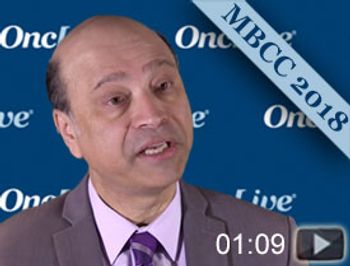
Debu Tripathy, MD, professor and chairman, Department of Breast Medical Oncology, Division of Cancer Medicine, The University of Texas MD Anderson Cancer Center, discusses the FDA approval of olaparib (Lynparza) for patients with BRCA-positive breast cancers and the impact it has had on clinical practice. Tripathy shared this insight in an interview during the 35th Annual Miami Breast Cancer Conference.
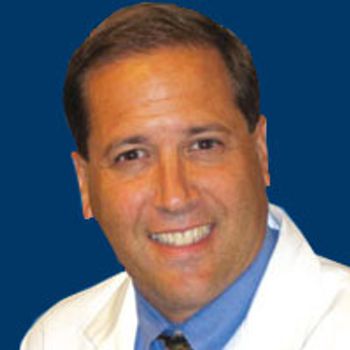
Adam M. Brufsky, MD, PhD, discusses considerations for using denosumab and zoledronic acid in patients with breast cancer.
Male breast cancer is a rare and poorly understood disease, but recent molecular studies have revealed fundamental differences from female breast cancer that could help guide treatment strategies toward a more tailored approach.

Whereas the androgen receptor (AR) is a common target in prostate cancer, emerging findings are showing a potential role for targeting AR in breast cancer, as well.
Preventive sexual counseling can be effective in reducing sexual dysfunction resulting from the treatment of breast cancer patients with aromatase inhibitors; however, that intervention should be provided early in treatment and supported by encouragement from providers.

Debu Tripathy, MD, provided an update on neoadjuvant strategies in HER2-positive breast cancer at the 2017 Miami Breast Cancer Conference.
Michael F. Press, MD, PhD, discusses issues with the ASCO-CAP guidelines on assessment of HER2 amplification by fluorescence in situ hybridization testing.
Hope Rugo, MD, highlights the latest efforts to improve outcomes in triple-negative breast cancer.

For television personality, author, and lifestyle maven Sandra Lee the roots of her controversial decision to have a bilateral mastectomy go back to her childhood, when her grandmother was diagnosed with an advanced and aggressive form of stomach cancer.
The success of olaparib in a phase III trial and recent data for other emerging agents has reversed the PARP narrative in breast cancer, Kimberly Blackwell, MD, said in a presentation at the 34th Annual Miami Breast Cancer Conference.
Multiple ongoing clinical trials are evaluating various immunotherapy strategies for patients with breast cancer, with combinations representing the most potential for future success.
Adam M. Brufsky, MD, PhD, professor of Medicine, associate chief of Hematology/Oncology, co-director of the Comprehensive Breast Care Center, associate director of Clinical Investigation, University of Pittsburgh, discusses when to do a multiparameter genomic assay for a patient with early-stage breast cancer.
Joyce A. O’Shaughnessy, MD, chair of Breast Cancer Research and the Celebrating Women Chair in Breast Cancer at Baylor-Sammons Cancer Center, discusses differentiating between CDK 4/6 inhibitors in breast cancer.
Healthcare resource use and costs remain high among patients with metastatic triple-negative breast cancer, indicating a need for better targeted treatments for this patient class.
Sara Hurvitz, MD, Associate Professor of Medicine at UCLA, discusses data supporting the elimination of anthracyclines in HER2-positive breast cancer treatment.
Adding CDK4/6 and mTOR inhibitors to standard endocrine therapy has significantly improved outcomes in patients with hormone receptor-positive, HER2-negative advanced breast cancer, William J, Gradishar, MD, explained in a presentation at the 34th Annual Miami Breast Cancer Conference.
The so-called butterfly effect, in which a small creature can cause something on the scale of an earthquake merely by flapping its wings, is fodder for debate on whether the digital revolution in medicine can deliver on its promise for precision medicine.
It is imperative that surgeons remain involved in genetic counseling to meet the immense unmet need that exists for patients with breast cancer, given a shortage of available genetic counselors.
Anees B. Chagpar, MD, associate professor of Surgery (Oncology), director of The Breast Center at Smilow Cancer Hospital at Yale-New Haven, Yale Cancer Center, discusses novel agents for neoadjuvant triple-negative breast cancer (TNBC) treatment.

Adding ribociclib to frontline letrozole reduced the risk of disease progression or death by 40% in elderly patients with hormone receptor-positive, HER2-negative advanced breast cancer, according to a subgroup analysis of the phase III MONALEESA-2 trial presented at the 34th Annual Miami Breast Cancer Conference.
Mohammad Jahanzeb, MD, professor of Clinical Medicine, Hematology/Oncology, Sylvester Comprehensive Cancer Center, University of Miami Miller School of Medicine, discusses the APHINITY and ExteNET studies in breast cancer.

The combination of eribulin and pembrolizumab demonstrated promising objective response rates, including a complete response, for patients with metastatic triple-negative breast cancer.
Debu Tripathy, MD, chair of Breast Medical Oncology, The University of Texas MD Anderson Cancer Center, discusses neoadjuvant treatment strategies in HER2-positive breast cancer.
J. Michael Dixon, MD, professor of Surgery, consultant surgeon, and clinical director of the Breakthrough Breast Cancer Research Unit at the University of Edinburgh in Scotland, discusses the prevalence of and risk factors for breast cancer in males.
Constance D. Lehman, MD, PhD, professor of radiology and chief of Breast Imaging in the Department of Radiology at Massachusetts General Hospital, discusses how 3D mammography has been an efficient and beneficial screening tool in the field of breast cancer.
Henry M. Kuerer, MD, PhD, professor of Surgery, PH and Fay Etta Robinson Distinguished Professor in Research, Breast Surgical Oncology, executive director, Breast Programs, director, Breast Surgical Oncology Fellowship Training Program, Department of Surgical Oncology, Division of Surgery, The University of Texas MD Anderson Cancer Center, discusses the challenges associated with treating patients with ductal carcinoma in situ (DCIS).
Anees B. Chagpar, MD, associate professor of Surgery (Oncology) and director of The Breast Center at Smilow Cancer Hospital at Yale-New Haven, discusses how surgical oncologists should approach the treatment of a patient with HER2-positive breast cancer.
Ann H. Partridge, MD, MPH, founder and director, Program for Young Women with Breast Cancer, director, Adult Survivorship Program, senior physician, Dana-Farber Cancer Institute, associate professor of Medicine, Harvard Medical School, discusses preimplantation genetic diagnosis (PGD) in young patients with breast cancer.
Andrew D. Seidman, MD, medical oncologist, Memorial Sloan Kettering Cancer Center, discusses the label indication for ixabepilone (Ixempra) for the treatment of patients with aggressive breast cancer.