
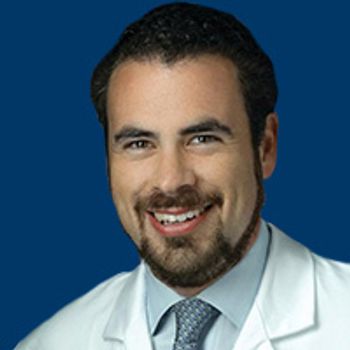
Benjamin Adam Weinberg, MD, discussed the expanding role of circulating tumor DNA in CRC and the various testing methods, the utilization of liquid biopsies, and the need for up-front genetic testing to identify molecular alterations.
Benjamin Adam Weinberg, MD, discussed the expanding role of circulating tumor DNA in CRC and the various testing methods, the utilization of liquid biopsies, and the need for up-front genetic testing to identify molecular alterations.

Wenxin Xu, MD, discusses future considerations for the treatment of patients with kidney cancer.

Andre H. Goy, MD, discusses clinical trial vs real-world treatments in patients with mantle cell lymphoma.
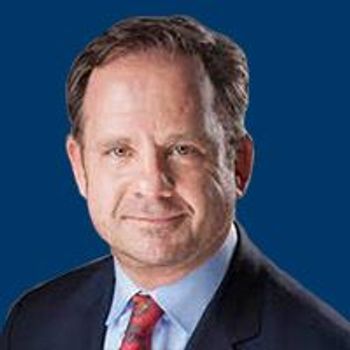
As research and treatment options for patients with mantle cell lymphoma continue to expand, the development of risk-adapted therapies for the 3 primary subtypes—blastoid, smoldering, and classic broad-spectrum—represents a crucial next step in the field.
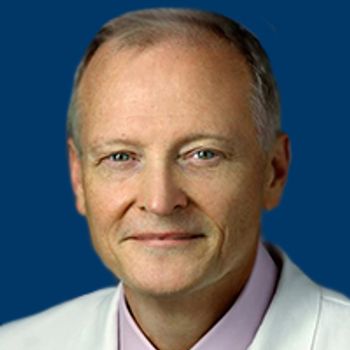
John Lindsay Marshall, MD, discusses past, present, and future developments in molecular testing, as well as the unique offerings of tissue and blood tests and the ways in which these precise approaches will ultimately make cancer diagnosis and treatment more efficient and effective.
Massimo Cristofanilli, MD, discusses the variety of targeted therapies available in metastatic hormone receptor–positive breast cancer.

John L. Marshall, MD, discusses the evolution of genetic testing in gastrointestinal cancer.
Personalized medicine has come to the forefront of breast cancer management, with genomic tools being utilized to avoid unnecessary chemotherapy in those with early-stage disease, PARP and PI3K inhibitors improving outcomes for those who harbor select mutations, and the emergence of highly active targeted agents shaking up the HER2-positive paradigm.

Andre H. Goy, MD, discusses the importance of refined decision making with precision medicine.

John L. Marshall, MD, discusses the importance of molecular profiling when utilizing precision medicine.

Benjamin P. Levy, MD, discusses potential strategies to overcome resistance to osimertinib in EGFR-mutant non–small cell lung cancer.
Current approaches to precision medicine in oncology have been fruitful, but require better integration and utilization of available resources to inform sustainable and effective drug development and clinical care, according to Andre Goy, MD.
A shift in the NSCLC treatment paradigm came in the form of immunotherapy, which has since seen significant progress—mostly in the past decade.

Daniel P. Petrylak, MD, discusses the pivotal trials that have led to the regulatory approvals of the PARP inhibitors olaparib and rucaparib in patients with metastatic castration-resistant prostate cancer and DNA repair mutations.
Benjamin P. Levy, MD, discusses the role of the combination of dabrafenib and trametinib in BRAF V600E-mutant non–small cell lung cancer.
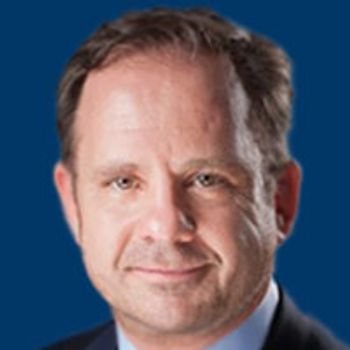
Andre Goy, MD, MS, discusses how matching the right treatment with the right patient resides at the heart of precision medicine, but with continued interest in pursuing the molecular milieu of cancers, precision medicine has the potential to better inform pre- and post-cancer interventions as well.

Despite efforts to advance the precision oncology portfolio for patients with diffuse large B-cell lymphoma by categorizing subtypes of the molecularly heterogenous disease, developing treatment routes for these alternate forms presents an uphill battle.
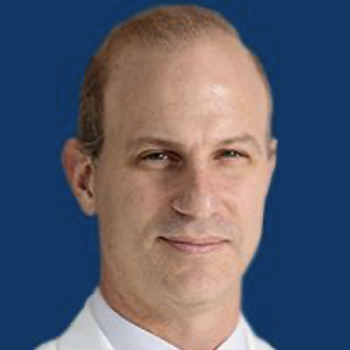
Efforts to leverage targeted therapy and immunotherapy, which have been approved modalities in advanced non–small cell lung cancer, are leading to improved survival in patients with advanced and earlier-stage disease.
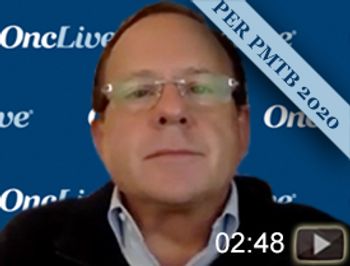
Andre Goy, MD, MS, discusses updates in precision medicine.
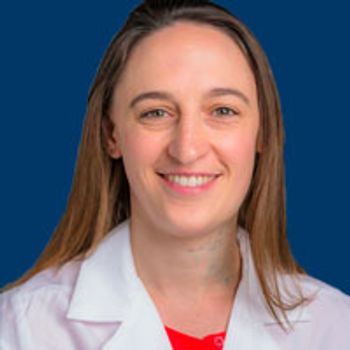
Natalie I. U. Vokes, MD, discusses the rise of predictive genomic biomarkers in oncology.

Over the past decade in gastrointestinal cancer treatment, the acknowledgement that cancer is heterogeneous and likely polyclonal has prompted a shift from gene testing for some patients, to many patients.
Benjamin P. Levy, MD, discusses the disease-free survival benefit with adjuvant osimertinib in the phase 3 ADAURA trial.
Natalie I. U. Vokes, MD, discusses investigative biomarkers of response to checkpoint inhibitors in the field of oncology.