
Biomarker analyses indicate that CD47 expression may help predict benefit from zanidatamab plus evorpacept in HER2-positive metastatic breast cancer.
Biomarker analyses indicate that CD47 expression may help predict benefit from zanidatamab plus evorpacept in HER2-positive metastatic breast cancer.
Hematologic oncology experts preview the top ASCO 2026 abstracts to watch in myeloma, MPNs, large B-cell lymphoma, and more.
Discover which gynecologic cancer abstracts experts believe may affect evolving treatment paradigms and patient care discussions at ASCO 2026.
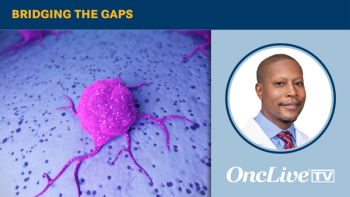
Tycel Phillips, MD, discusses considerations for navigating treatment options in relapsed/refractory mantle cell lymphoma.
Thomas J. Polascik, MD, discusses findings from a study of an AI-based VOC assay for prostate cancer detection.
Martin W. Schoen, MD, MPH, discusses data from a real-world study of enzalutamide vs apalutamide in mCSPC.

In an indirect comparison, NAI+BCG showed numerically higher, significantly longer responses and a trend toward greater bladder preservation vs nadofaragene.
Enzalutamide plus radium-223 demonstrated no early survival advantage but an 80% death risk reduction for long-term survivors in mCRPC at over 60 months.
Rucaparib showed a manageable and consistent safety profile in patients with BRCA-mutated prostate cancer.
No new safety signals were identified, and imAEs were predominantly low-grade and consistent with the known durvalumab safety profile.
Fred Saad, MD, CQ, FRCS, FCAHS, discusses PSA end point data from the PSMAddition study in PSMA+ mHSPC
Adding lutetium Lu 177 vipivotide tetraxetan to ADT and ARPI deepened PSA responses and reduced the risk of PSA progression by 58% in patients with mHSPC.
Talazoparib plus enzalutamide data show rPFS correlates moderate-to-strongly with OS in first-line mCRPC across biomarker-defined subgroups.
Enzalutamide plus leuprolide produced a median treatment suspension of 17 months vs 11.5 months with leuprolide alone in biochemically recurrent prostate cancer.
Mark D. Tyson, II, MD, MPH, discussed the clinical implications of data from the primary analysis of the PATAPSCO trial in NMIBC.
Joshua J. Meeks, MD, PhD, discusses data from a real-world study of BCG retreatment after BCG failure in NMIBC.
Jason Hafron, MD, discusses findings from a study that evaluated the implementation of a multidisciplinary quality initiative in prostate cancer.
Two doses of intravesical mitomycin-C administered before TURBT produced a 77% reduction in the risk of recurrence or death vs TURBT alone in NMIBC.
A biomarker analysis of SunRISe-4 found that high baseline TMB, GBD, and PD-L1 expression were associated with pathologic overall response to the regimen.
Benjamin Croll, MD, discusses findings from a study of the correlation between radiographic response and pathologic response in RCC.
Mark Garzotto, MD, discusses efficacy data with aglatimagene besadenovec plus valacyclovir and EBRT in localized prostate cancer.
Diana Cirstea, MD, discusses sequencing considerations in relapsed/refractory multiple myeloma in the era of T-cell–redirecting therapies.
Durvalumab plus BCG induction and maintenance yielded an HR of 0.68 vs BCG alone for DFS in BCG-naive, high-risk non–muscle-invasive bladder cancer.
Darolutamide plus ADT demonstrated a 50% reduction in the risk of death in metastatic hormone-sensitive prostate cancer.
Pembrolizumab plus BCG achieved a 92% 6-month complete response rate in very high-risk T1 bladder cancer with no progression to muscle-invasive disease.

TRAEs were generally reversible and low grade, and 96.8% of patients remained free from progression to T2 or greater disease at the data cutoff.
Ahead of the 2026 AUA Annual Meeting, GU cancer experts highlighted the abstracts that they are anticipating the most.

Ahead of the 2026 ASCO Annual Meeting, experts in GI malignancies share the most anticipated research being presented during the meeting.
Alexey Danilov, MD, PhD, and Tycel Phillips, MD, highlight key consensus viewpoints in lymphoma published from the 2025 Bridging the Gaps meeting.
We spoke with leading voices in GU oncology to see which presentations they are most looking forward to during the 2026 ASCO Annual Meeting.