
Signifcant efficacy improvements were shown with iza-bren in HR+/HER2-negative breast cancer.
Signifcant efficacy improvements were shown with iza-bren in HR+/HER2-negative breast cancer.
An exploratory analysis of the phase 3 KEYNOTE-B15 trial found that ctDNA status was strongly prognostic for event-free survival regardless of treatment arm.
The KEYNOTE-866 trial did not meet its EFS primary end point with perioperative pembrolizumab added to neoadjuvant cisplatin and gemcitabine.
The sacituzumab govitecan, enfortumab vedotin, and zimberelimab triplet produced early, durable responses in untreated metastatic urothelial cancer.
Surufatinib plus serplulimab and cisplatin/etoposide produced a 69.8% ORR in advanced extrapulmonary neuroendocrine carcinoma.
Efficacy outcomes in KEYNOTE-905 were consistent with a contribution of both enfortumab vedotin and pembrolizumab in cisplatin-ineligible MIBC.
Patient-reported outcomes from the phase 3 lidERA trial show preserved functioning and less frequent joint pain with giredestrant vs standard endocrine therapy.
Arcotatug tavatecan improved PFS and OS vs physician’s choice in previously treated, CLDN18.2-positive advanced gastric and GEJ cancer.
Exploratory subgroup analyses of the phase 2 DOVACC trial suggested a possible signal with the triplet in HRD-negative and PARP inhibitor–naive disease.
Perioperative nivolumab plus neoadjuvant chemotherapy did not significantly improve pCR rate or event-free survival in MIBC.
Overall survival benefit of daraxonrasib vs chemotherapy extends across RAS genotypes, chemotherapy regimens, and prior treatment settings.
Readers share their opinions on some of the most talked-about lung cancer abstracts they’re looking forward to seeing at ESMO 2026.
Readers share their opinions on some of the most talked-about gynecologic cancer abstracts they’re looking forward to seeing at ESMO 2026.
Experts spotlight the prostate and bladder cancer presentations they're most excited to see at the 2026 ESMO Congress.
Read on to see which data are poised to shape clinical discussions and decision-making in lung cancer at the 2026 ESMO Congress in Madrid, Spain.
Jesús Berdeja, MD, discusses how CELMoDs such as iberdomide and mezigdomide may reshape standard-of-care treatment in multiple myeloma.
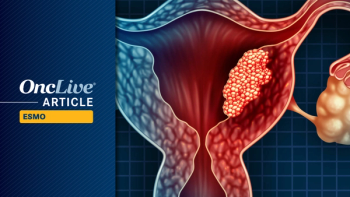
Experts in gynecologic oncology overview top research being presented at the 2026 ESMO Congress.
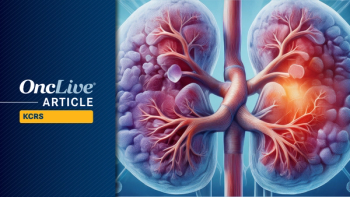
First-line IO-based combination regimens were increasingly used and associated with longer observed survival in advanced renal cell carcinoma.
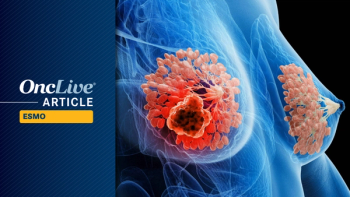
Readers share their opinions on some of the most talked-about breast cancer abstracts they’re looking forward to seeing at ESMO 2026.

Experts spotlight the gastrointestinal cancer presentations they’re most excited to see at the 2026 ESMO Congress.

Experts break down key lung cancer data and trends from the IASLC 2026 World Conference on Lung Cancer.
Young Kwang Chae, MD, discusses tumor-informed and tissue-agnostic ctDNA MRD assays in postsurgical lung cancer surveillance.

Experts break down key multiple myeloma data and trends from the 23rd Annual IMS Meeting.
Binod Dhakal, MD, MS, discusses allogeneic and in vivo CAR T-cell therapies under investigation in relapsed/refractory multiple myeloma.
Mary Ann Anderson, MBBS, FRACP, FRCPA, PhD, discusses unresolved treatment choices in chronic lymphocytic leukemia.
Experts spotlight the variety of breast cancer research being presented at the 2026 ESMO Congress.

The first MRD data from the phase 3 EXCALIBER-RRMM trial support iberdomide-based triplet therapy as early as first relapse, with PFS follow-up ongoing.
After nearly 7 years of follow-up, daratumumab added to VRd continued to improve PFS, PFS2, and sustained MRD negativity in transplant-eligible myeloma.
Peter Voorhees, MD, discusses CRS and infection data for etentamig from the phase 3 CERVINO trial in triple-class–exposed relapsed/refractory myeloma.
Peter Voorhees, MD, discusses phase 3 CERVINO data for etentamig vs standard therapies and next steps for the agent in relapsed/refractory myeloma.