

Nagashree Seetharamu, MD, MBBS, discusses the importance of early and frequent genomic testing in patients with lung cancer, as well as remaining challenges faced in clinical practice and efforts being made to overcome them.

Your AI-Trained Oncology Knowledge Connection!
Nagashree Seetharamu, MD, MBBS, discusses the importance of early and frequent genomic testing in patients with lung cancer, as well as remaining challenges faced in clinical practice and efforts being made to overcome them.

Lori J. Wirth, MD, discusses the phase 3 LIBRETTO-531 trial of selpercatinib in patients with RET-mutant medullary thyroid cancer.

Patrick Boland, MD, discusses the utility of circulating tumor DNA in patients with metastatic colorectal cancer.

Marjorie G. Zauderer, MD, previews some of the new approaches in mesothelioma.
Julie Renee Brahmer, MD, MSc, discusses remaining questions regarding immunotherapy and targeted therapy in locally advanced NSCLC, data from the phase 3 PACIFIC and ADAURA trials, and her hopes for future clinical trials in the paradigm.
Nancy E. Davidson, MD, shares how to leverage imaging technologies to inform treatment decisions in patients with breast cancer.

Expanding the definition of personalized medicine to include social determinants of health disparities is needed to ensure patients with cancer receive optimal care, said Karen Winkfield, MD, PhD, who added that lessons learned from the COVID-19 pandemic have sparked a new wave of enthusiasm to advocate for change and bridge existing gaps in oncology.

Increases investigative efforts into bispecific monoclonal antibodies could lead to their availability to treat a broad range of hematologic and solid cancers. Their current use in practice is limited to non–small cell lung cancer, leukemia, and hemophilia.

The management of endometrial cancer, a molecularly driven malignancy with 4 distinct subtypes, has witnessed significant progress with recent regulatory approvals of checkpoint blockade alone and in combination, said Bhavana Pothuri, MD, MS.

Ajai Chari, MD, discusses recommendations for minimal residual disease testing in patients with multiple myeloma.

As the COVID-19 pandemic persists, patients with cancer should receive the full vaccination with 1 of the 3 approved COVID-19 vaccines as soon as they are able, according to Steven Ludlow, PharmD, BCOP, BCPS.

The identification of prognostic markers at diagnosis in chronic lymphocytic leukemia is critical, says Deborah M. Stephens, DO, who explains that the results of testing for these markers can be used to educate patients on their prognosis, tailor therapy accordingly, and enroll eligible patients on clinical trials.

Newer modalities are exploring ways to provide more specificity on the value of minimal residual disease negativity in acute myeloid leukemia, since currently there is little definitive action that can be taken with the marker in clinical practice, according to Naval Daver, MD.
Marina Kremyanskaya, MD, PhD, discusses the need for disease-modifying treatment approaches for patients with myeloproliferative neoplasms.

Susan Tsai, MD, MHS, discusses ongoing research efforts being made in the realm of pancreatic cancer.
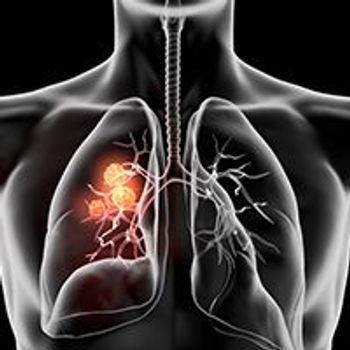
The addition of bevacizumab to erlotinib continued to provide a significant progression-free survival benefit over erlotinib alone when used in the frontline treatment of patients with EGFR-mutated, nonsquamous non–small cell lung cancer, according to data from the final analysis of the phase 3 BEVERLY trial.
Regorafenib did not show a benefit with progression-free survival in patients with advanced or metastatic chordoma.
Treatment with acalabrutinib as monotherapy or in combination with obinutuzumab improved quality-adjusted survival compared with chlorambucil plus obinutuzumab in patients with treatment-naïve chronic lymphocytic leukemia.

The median real-world progression-free survival with durvalumab was higher compared with the median progression-free survival reported in the durvalumab arm of the phase 3 PACIFIC trial in patients with stage III non–small cell lung cancer.
Fam-trastuzumab deruxtecan-nxki led to improved responses in patients with higher HER2 expression at baseline, whereas responses were seen irrespective of RAS- and PIK3CA mutation status and blood tumor mutational burden levels in patients with HER2-positive, metastatic colorectal cancer.

Meghan Thompson, MD, discusses the results of the phase 1/2 BRUIN study in patients with Richter transformation.

Tadeusz Robak, MD, PhD, discusses the results of the 7-year follow-up analysis of the phase 3 RESONATE-2 trial in chronic lymphocytic leukemia.

Adavosertib demonstrated a 65% reduction in the risk of disease progression or death compared with active monitoring in patients with TP53-/RAS-mutant metastatic colorectal cancer following first-line chemotherapy.

The addition of durvalumab to platinum/etoposide chemotherapy continued to demonstrate an overall survival benefit over chemotherapy alone with a favorable safety profile in patients with extensive-stage small cell lung cancer.

Giredestrant resulted in a greater relative reduction in Ki67 score from baseline to week 2 of a window of opportunity phase vs anastrozole in patients with estrogen receptor–positive, HER2-negative early breast cancer, according to results from an interim analysis of the phase 2 coopERA Breast Cancer trial.
Personalized medicine has come to the forefront of breast cancer management, with genomic tools being utilized to avoid unnecessary chemotherapy in those with early-stage disease, PARP and PI3K inhibitors improving outcomes for those who harbor select mutations, and the emergence of highly active targeted agents shaking up the HER2-positive paradigm.
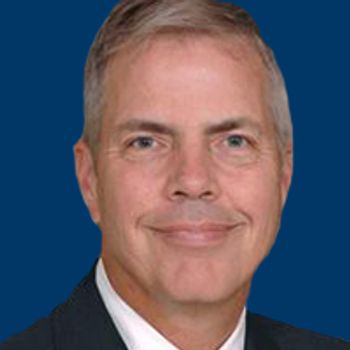
During the XIX International Workshop on Chronic Lymphocytic Leukemia, which occurred virtually 17-20 September, Dr. John Byrd was presented the Binet-Rai Medal Award for his outstanding findings, which led to the use of BTK Inhibitors in almost every phase of CLL therapy.
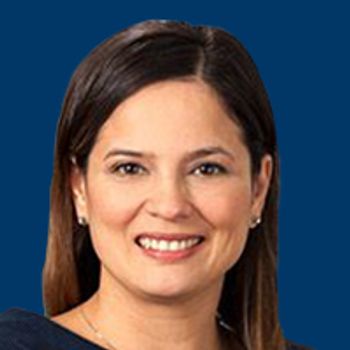
Sitravatinib, a spectrum-selective TKI targeting TAM receptors and VEGFR2, administered in combination with nivolumab induced durable response and robust survival outcomes for patients with non-small cell lung cancer who progressed after deriving benefit from treatment with a checkpoint inhibitor and/or platinum doublet chemotherapy.

Blood-based tumor mutational burden does not predict a benefit of first-line atezolizumab over chemotherapy in patients with non–small cell lung cancer.
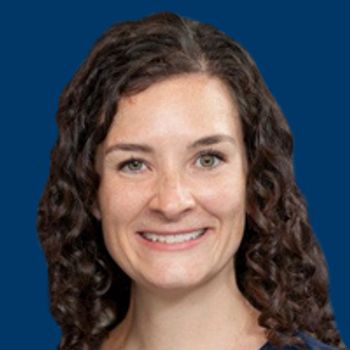
The triplet combination of umbralisib, ublituximab, and pembrolizumab demonstrated durable responses with a tolerable safety profile in patients with relapsed/refractory chronic lymphocytic leukemia and Richter’s transformation.