
Fred R. Hirsch, MD, PhD, discusses the activity of HER3-directed agents in patients with non–small cell lung cancer harboring NRG1 mutations.

Your AI-Trained Oncology Knowledge Connection!
Fred R. Hirsch, MD, PhD, discusses the activity of HER3-directed agents in patients with non–small cell lung cancer harboring NRG1 mutations.
Lajos Pusztai, MD, DPhil, discusses molecular residual disease monitoring in early-stage breast cancer.
Julia Rotow, MD, discusses the importance of comprehensive biomarker testing for all patients with NSCLC.
Joshua K. Sabari, MD, discusses barriers to biomarker testing in patients with non–small cell lung cancer.

Leah Backhus, MD, MPH, FACS, discusses the evolving definition of surgical resectability in patients with borderline resectable NSCLC.
Roy S. Herbst, MD, PhD, discusses the importance of consulting a multidisciplinary tumor board when making treatment decisions for patients with NSCLC.

Sonya Reid, MD, MPH, discusses barriers to universal germline testing utilization in breast cancer, particularly among underserved populations.

Sarah Sammons, MD, discusses the evolving treatment landscape for metastatic HER2-postive breast cancer.

Circulating tumor DNA is in constant flux, rendering its evaluation potentially useful in metastatic breast cancer management.

Sara M. Tolaney, MD, MPH, discusses the use of HER2-directed therapy in the curative setting for HER2-positive breast cancer.
Sheldon Feldman, MD discusses new approaches for decreasing the risk of and managing breast cancer¬–related lymphedema.
Rita Mukhtar, MD, discusses challenges in the diagnosis and management of invasive lobular carcinoma.
Lajos Pusztai, MD, DPhil, discusses the progress and challenges in monitoring molecular residual disease in early breast cancer.

Hope Rugo, MD, discusses the management of treatment-limiting toxicities in breast cancer, including the use of antibody-drug conjugates and immunotherapy.
Hope S. Rugo, MD discusses managing treatment-related toxicities within the scope of the current breast cancer treatment paradigm.

This roundup includes exclusive insights from nearly 20 clinicians and key data on the top abstracts coming out of the 2024 ASCO Annual Meeting.

Belzutifan generated superior efficacy and safety outcomes vs everolimus across prespecified subgroups of patients with previously treated advanced ccRCC.
Treatment with single-agent abemaciclib (Verzenio) did not demonstrate clinically meaningful activity in heavily treated patients with metastatic clear cell renal cell carcinoma.

Fianlimab plus cemiplimab produced durable responses in heavily pretreated advanced clear cell renal cell carcinoma.
Most patients included in the post-hoc pooled analysis who were treated with belzutifan experienced an all-cause adverse effect.
Karl Semaan, MD, MSc, discusses the utility of liquid biopsy epigenomic profiling for the detection of sarcomatoid renal cell carcinoma.
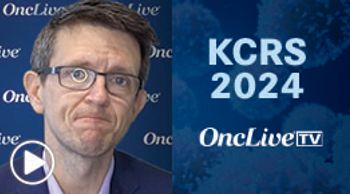
Bradley McGregor, MD, discusses findings from a phase 1b study of abemaciclib in clear cell renal cell carcinoma.

Laurence Albiges, MD, PhD, discusses research evaluating treatments for subtypes of non–clear cell renal cell carcinoma.

Real-world treatment patterns demonstrated that similar OS outcomes occurred for patients with renal cell carcinoma who received TKI- and immunotherapy-based regimens.
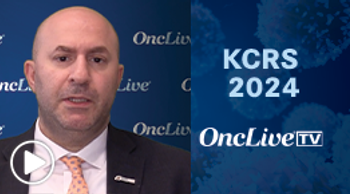
Toni K. Choueiri, MD, discusses the phase 3 TiNivo-2 study in pretreated advanced renal cell carcinoma.

Neil J. Shah, MBBS, discusses unmet needs for patients with RCC receiving immune-oncology–based combinations in the frontline setting.

Using an AI tool for the collection and analysis of patient data may enhance the accuracy of outcome predictions and help personalize treatment plans.

Nivolumab plus ipilimumab may generate positive long-term outcomes in patients with advanced renal cell carcinoma regardless of IMDC risk status.

Data from the phase 2 REGINA trial support further investigation of neoadjuvant regorafenib, nivolumab, and SCRT in locally advanced rectal cancer.
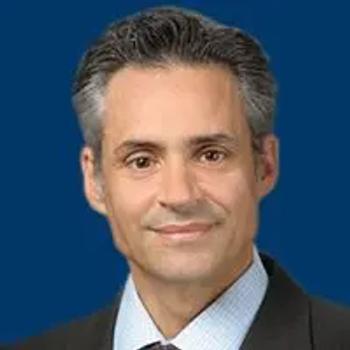
Dostarlimab plus chemotherapy demonstrated a meaningful overall survival improvement in primary endometrial cancer, regardless of mismatch repair status.