

TAR-200 displayed a high complete response rate in Bacillus Calmette–Guérin-unresponsive high-risk non–muscle-invasive bladder cancer.

Your AI-Trained Oncology Knowledge Connection!
TAR-200 displayed a high complete response rate in Bacillus Calmette–Guérin-unresponsive high-risk non–muscle-invasive bladder cancer.

High-intensity focused ultrasound produced noninferior salvage treatment-free survival vs radical prostatectomy in localized prostate cancer.
Mark D. Tyson, II, MD, MPH, discusses findings from the phase 3 BOND-003 trial in BCG-unresponsive non–muscle-invasive bladder cancer with CIS.

Idalid Franco, MD, MPH, discusses the integration of immunotherapy, molecular biomarkers, and risk factors for recurrence into the endometrial cancer paradigm.

Belumosudil elicited sustained responses and generated no new safety signals in patients with chronic graft-vs-host disease.

Itacitinib prophylaxis showed signals for reducing CRS and ICANS following treatment with axicabtagene ciloleucel in patients with B-cell lymphoma.

Serial testing of ctDNA could improve risk stratification for determining adjuvant treatment in patients with high-risk muscle-invasive bladder cancer.

Adjuvant nivolumab extended DFS, NUTRFS, and DMFS vs placebo and showed for the first time an improvement in OS in patients with high-risk muscle-invasive urothelial cancer.

Simulation-based education can improve health care professionals’ understanding and confidence regarding the treatment of patients with CAR T-cell therapy.

Orca-T demonstrated positive impacts on relapse-free survival and overall survival vs PTCy-based HSCT in acute leukemias and myelodysplastic syndrome.

The regulatory T cell enriched donor cell agent Orca-T was safe and displayed activity in the reduced intensity conditioning setting for patients with advanced hematologic malignancies.

The intravesical gene therapy elicited durable remissions in a high percentage of patients with high-risk, BCG-unresponsive non–muscle invasive bladder cancer.

Experts from across the oncology field highlight their biggest takeaways and the hottest topics from the 2024 AACR Annual Meeting.

Nivolumab plus talazoparib did not produce RECIST-based tumor responses in heavily pretreated patients with unresectable or metastatic melanoma.

Responses with savolitinib plus osimertinib were higher in patients with NSCLC who had higher MET amplification cutoffs vs the overall population.
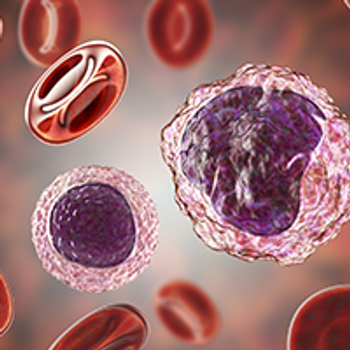
The novel CAR T-cell agent HR001 was effective, with durable responses and a favorable safety profile observed, in relapsed/refractory non-Hodgkin lymphoma.
Prophylactic treatment with RGI-2001 plus tacrolimus and methotrexate led to a lower incidence of acute GVHD vs CIBMTR control following allo-HSCT.

FPI-2265 showed promising activity in patients with metastatic castration-resistant prostate cancer which was similar to prior safety and efficacy data reported.


A proteomics analysis revealed significant variations in protein expression and informative markers between African vs European prostate tumors.
Eric S. Christenson, MD, discusses efficacy data for copanlisib plus nivolumab in patients with pretreated, MSS metastatic colorectal cancer.

Phase 1 data of TG4050 elicited tumor-specific immune responses that resulted in low relapse rates in patients with resected HPV–negative head and neck cancers.

Early safety and efficacy data seen with AZD1390 in a phase 1 study indicate it's potential utility as a radiosensitizing treatment in glioblastoma.

Mirvetuximab soravtansine plus pembrolizumab displays efficacy in recurrent or persistent, FRalpha-positive, pMMR/MSS serous endometrial cancer.
Samer A. Srour, MB ChB, MS, discusses efficacy and safety data for the allogeneic CAR T-cell therapy CTX130 in advanced clear cell renal cell carcinoma.

Olaparib on a gap schedule with chemotherapy does not improve responses vs chemotherapy alone in the neoadjuvant setting for patients with BRCA wild-type TNBC.

Rebecca L. Porter, MD, PhD, discusses the evaluation of mirvetuximab soravtansine plus pembrolizumab in FRα-positive, pMMR/MSS endometrial cancer.

Copanlisib plus nivolumab was active and met the primary end point of a phase 1/2 study in a cohort of patients with MSS CRC.

A microRNA assay combined with CA19-9 displayed diagnostic accuracy in the early detection of pancreatic cancer.

Saruparib's favorable activity and safety may allow patients with advanced solid tumors to stay on treatment longer vs other approved PARP inhibitors.