

Adagrasib plus cetuximab elicited a 34% objective response rate in patients with previously treated KRAS G12C-mutant advanced colorectal cancer.

Your AI-Trained Oncology Knowledge Connection!
Adagrasib plus cetuximab elicited a 34% objective response rate in patients with previously treated KRAS G12C-mutant advanced colorectal cancer.

Administration of atezolizumab after definitive local therapy did not improve EFS or OS in patients with head and neck squamous cell carcinoma.

Linvoseltamab elicited responses with acceptable safety in patients with relapsed/refractory multiple myeloma, including difficult-to-treat subsets

The anti-CD70 CAR T-cell therapy CTX130 showed activity and manageable toxicities in advanced renal cell carcinoma.

Deborah J. Wong, MD, PhD, discusses the evaluation of atezolizumab vs placebo after definitive local therapy in high-risk, locally advanced HNSCC.
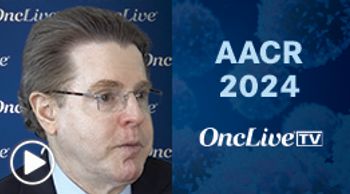
Michael R. Migden, MD, discusses efficacy data for RP1 in advanced non-melanoma skin cancer after prior solid organ transplant.

Fifty-seven percent of drugs granted accelerated approval for a cancer indication failed to show clinical benefit in confirmatory studies.

Adjuvant treatment with the personalized neoantigen vaccine, autogene cevumeran, delayed pancreatic cancer recurrence in pancreatic ductal adenocarcinoma.

Cadonilimab plus oxaliplatin and capecitabine leads to survival benefit in gastric/GEJ adenocarcinoma, regardless of PD-L1 expression.

Phase 2 data from the AUGMENT-101 study show that revumenib elicits responses with acceptable safety in pediatric patients with KMT2A+ acute leukemia.

Bernard H. Bochner, MD, FACS, discusses updates in the treatment of muscle-invasive bladder cancer and ongoing trials in the space.

Daniel Spratt, MD, discusses how evolving radiation therapy techniques in prostate cancer can reduce adverse effects and shorten treatment courses.

MK-1084 had an acceptable toxicity profile when administered as a monotherapy in patients with KRAS G12C–mutated previously treated solid malignancies.

Anlotinib plus etoposide, carboplatin, and placebo improved PFS vs etoposide plus carboplatin and 2 placebos in first-line ES-SCLC.

Durvalumab/chemoradiation did not significantly improve survival vs chemoradiation alone in patients with unresectable non–small cell lung cancer.

Patients with non–small cell lung cancer treated on the IMscin002 trial preferred subcutaneous atezolizumab vs the intravenous formulation.

Patrick I. Borgen, MD, discusses the ongoing debate of routine MRI testing in early-stage breast cancer.

Kari Hacker, MD, PhD, discusses the proportion of HER2-expressing endometrial cancers eligible for HER2-targeted antibody-drug conjugate treatment.

Janos L. Tanyi, MD, PhD, discusses the use of pafolacianine sodium injections during cytoreductive surgery in FRα–positive ovarian cancer.

Avutometinib plus defactinib led to tumor regression in most heavily pretreated patients with recurrent low-grade serous ovarian cancer.

Becotarug plus osimertinib elicited responses with manageable safety in patients with non–small cell lung cancer and EGFR exon 12 insertion mutations.

Amivantamab plus chemotherapy extended the time to treatment discontinuation and subsequent therapy in EGFR exon 20 insertion–mutated NSCLC.

Steven E. Finkelstein, MD, DABR, FACRO, discusses the importance of disseminating treatment advancements and ongoing research in radiation oncology.
Perioperative nivolumab improved responses in resectable non–small cell lung cancer, irrespective of the number of neoadjuvant treatment cycles completed.

Treatment with XPO1 inhibitors could be effective and warrants further investigation in low-grade serous and clear cell ovarian cancer.
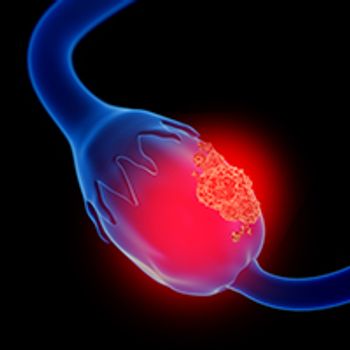
ctDNA may aid clinicians in determining whether to proceed with or discontinue PARP inhibitor maintenance therapy for patients with recurrent epithelial ovarian cancer.
NT219 in combination with cetuximab was safe and effective in patients with recurrent/metastatic squamous cell carcinoma of the head and neck.

Reshma L. Mahtani, DO, discusses unique challenges women may face when transitioning between different career roles within oncology.

Ixabepilone plus bevacizumab produced a survival advantage and high response rates vs ixabepilone alone in platinum-resistant ovarian cancer.
A phase 1b trial is investigating the novel GCN2 kinase activator NXP800 in patients with platinum-resistant, ARID1A-mutated ovarian cancer.