
The phase 1a/1b NX-1607-101 trial will evaluate NX-1607, a CBL-B inhibitor, in patients with advanced malignancies, including diffuse large B-cell lymphoma.

Your AI-Trained Oncology Knowledge Connection!
The phase 1a/1b NX-1607-101 trial will evaluate NX-1607, a CBL-B inhibitor, in patients with advanced malignancies, including diffuse large B-cell lymphoma.

Treatment with single-agent pirtobrutinib showed encouraging efficacy with a tolerable safety profile in a cohort of heavily pretreated patients with relapsed/refractory follicular lymphoma.
Oral iptacopan (Fabhalta) monotherapy induced durable responses and hemolysis control in patients with paroxysmal nocturnal hemoglobinuria and persistent anemia who had previously received anti-C5 treatment.
Brentuximab vedotin plus nivolumab, doxorubicin, and dacarbazine was found to have efficacy and acceptable safety and tolerability when used as a frontline treatment in patients with previously untreated advanced, classical Hodgkin lymphoma.

Acalabrutinib, as monotherapy or in combination with obinutuzumab, continued to improve progression-free survival vs obinutuzumab and chemotherapy in patients with treatment-naive chronic lymphocytic leukemia, regardless of genomic marker status.
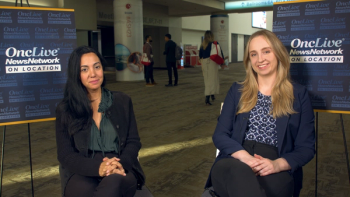
OncLive® will be LIVE with OncLive® News Network: On Location at the 2023 ASH Annual Meeting. Each day, we will broadcast a series of interviews with top thought leaders, to learn their thoughts and reactions to data presented across oncology during the conference.

The combination of Isa-KRd significantly increased the rates of minimal residual disease negativity at cutoffs post-consolidation vs KRd in patients with newly diagnosed multiple myeloma.
Axatilimab induced rapid and durable responses with an acceptable toxicity profile at all doses analyzed with highest efficacy observed at the 0.3-mg/kg dose in patients with recurrent or refractory chronic graft-vs-host disease.
Susan Bal, MD, discusses updated safety and efficacy data from a phase 1 study evaluating the GPRC5D-targeted autologous CAR T-cell therapy BMS-986393 in relapsed/refractory multiple myeloma, including in patients with prior BCMA-directed therapy.
Paolo Ghia, MD, PhD, full professor, discusses a biomarker subgroup analysis of the phase 3 SEQUOIA trial investigating zanubrutinib vs bendamustine plus rituximab in patients with treatment-naive chronic lymphocytic leukemia or small lymphocytic lymphoma without 17p deletions.
Oral decitabine/cedazuridine and parenteral hypomethylating agents were associated with similar levels of comorbidities and disease burden in patients with myelodysplastic syndrome.

Odronextamab produced durable responses and a generally manageable safety profile in patients with relapsed/refractory diffuse large B-cell lymphoma.
Ibrutinib plus venetoclax, given at a duration determined by minimal residual disease, improved progression-free survival and overall survival vs fludarabine, cyclophosphamide, and rituximab in patients with treatment-naive chronic lymphocytic leukemia.
Autologous hematopoietic cell transplantation lowered relapse and progression rates and improved survival outcomes vs CAR T-cell therapy in patients with relapsed large B-cell lymphoma who experienced complete remission with interim treatment.

Obecabtagene autoleucel elicited durable responses in patients with relapsed or refractory B-cell acute lymphoblastic leukemia independent of leukemic burden at lymphodepletion, although better outcomes were observed in those with lower burden.

Up-front treatment with navitoclax plus ruxolitinib significantly reduced spleen volume by 35% or more at week 24 vs ruxolitinib plus placebo in patients with myelofibrosis; however, a significant difference was not observed in total symptom score v. 4.0 between the arms, according to data from the phase 3 TRANSFORM-1 study.
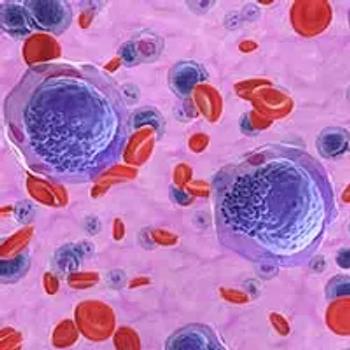
The presence of molecular minimal residual disease following induction chemotherapy can be used to determine patients with NPM1-mutated acute myeloid leukemia who may benefit from allogeneic transplant in first remission, including those with FLT3 ITD–mutated disease.

The high-precision cell therapy Orca-T demonstrated high rates of relapse-free survival, overall survival, and graft-vs-host disease RFS at 1 year, as well as a low incidence of GVHD in patients with intermediate- to high-risk myelodysplastic syndrome.

The use of Orca-T with myeloablative chemotherapy conditioning had comparable safety and efficacy in younger and older patients with hematologic malignancies, according to data from a phase 1b study.
The administration of axicabtagene ciloleucel in the second-line setting improved overall survival and progression-free survival vs standard-of-care treatment in patients with relapsed/refractory large B-cell lymphoma who are at least 65 years of age.

Venetoclax-based therapy generated durable responses both overall and in the second or third line following covalent BTK inhibitor discontinuation in real-world patients with chronic lymphocytic leukemia or small lymphocytic lymphoma.

The use of the BCMA-directed CAR T-cell therapy D8 Fab CAR and the dual-targeting AUTO8 CAR T-cell therapy is safe and feasible in patients with relapsed/refractory multiple myeloma.
Golidocitinib displayed antitumor activity and an acceptable safety profile in patients with refractory/relapsed peripheral T-cell lymphoma, according to data from the pivotal phase 2 JACKPOT8 study.
Pirtobrutinib continued to showcase clinically meaningful efficacy in heavily pretreated patients with chronic lymphocytic leukemia or small lymphocytic lymphoma who had prior exposure to a covalent BTK inhibitor.
The utilization of remote patient monitoring within the first 30 days of outpatient CAR T-cell therapy can promote patient safety, reduce costs, and decrease hospitalization rates by allowing patients with hematologic malignancies to connect with a virtual care platform.

Zanubrutinib continued to demonstrate improved progression-free survival benefit over ibrutinib in the treatment of patients with relapsed/refractory chronic lymphocytic leukemia and small lymphocytic lymphoma, according to extended follow-up data from the phase 3 ALPINE trial.

Michael R. Cook, MD, discusses real-world data associated with the utilization of bridging therapy prior to treatment with axicabtagene ciloleucel in patients with relapsed/refractory large B-cell lymphoma.
Andre Goy, MD, discusses outcomes with brexucabtagene autoleucel in patients with relapsed/refractory mantle cell lymphoma enrolled in the phase 2 ZUMA-2 trial and the expanded access ZUMA-18 study.
Idecabtagene vicleucel resulted in meaningful improvements in symptoms, functioning, overall health status, and health-related quality of life vs standard regimens in select patients with triple-class exposed relapsed/refractory multiple myeloma, according to updated data from the phase 3 KarMMa-3 trial.

Although the use of bridging therapy prior to treatment with axicabtagene ciloleucel did not improve efficacy or safety outcomes for patients with relapsed/refractory large B-cell lymphoma, responses to bridging therapy may be prognostic of favorable outcomes after axi-cel administration.