

The FDA has granted a breakthrough device designation to HLA-LOH as a companion diagnostic test, according to an announcement from Tempus.
The FDA has granted a breakthrough device designation to HLA-LOH as a companion diagnostic test, according to an announcement from Tempus.

The natural killer T-cell agonist IMM60 may overcome resistance to PD-1 inhibitors when combined with immunotherapy in patients with melanoma and non–small cell lung cancer.

Treatment with repotrectinib continued to produce high and durable responses with a manageable safety profile in patients with ROS1-positive locally advanced or metastatic non–small cell lung cancer who were naïve to a TKI or previously treated with 1 TKI and no chemotherapy.

Treatment with the all-oral triplet of tucatinib, letrozole, and palbociclib yielded clinically meaningful efficacy results and had an acceptable safety profile in patients with hormone receptor–positive, HER2-positive metastatic breast cancer.

MB-106, a first-in-class, CD20-targeted autologous CAR T-cell therapy, led to durable clinical responses with low-grade cytokine release syndrome in patients with indolent lymphoma.

The nation’s top-ranked UT MD Anderson Cancer Center and flagship UT Austin to build new hospitals as part of project.

The combination of vemurafenib and cobimetinib led to a 94% partial response rate or better in 16 patients with newly diagnosed BRAF-mutated papillary craniopharyngiomas.

The combination of tucatinib and ado-trastuzumab emtansine elicited an improvement in progression-free survival compared with placebo plus T-DM1 in patients with HER2-positive metastatic breast cancer who received previous treatment with a taxane and trastuzumab in any setting.

Zeynep Eroglu, MD, explains the rationale for adding navitoclax to dabrafenib plus trametinib in the treatment of patients with BRAF V600–mutant metastatic melanoma, highlights the methodologies and results of the CTEP-P9466 trial, and describes the implications of this research for this patient population.

Harry Gill, MD, discusses the importance of offering patients with APL an entirely oral treatment regimen, key efficacy findings from this trial, and the tolerability of this regimen.

The FDA has granted priority review to the supplemental new drug application seeking the approval of ivosidenib for the treatment of patients with IDH1-mutated, relapsed/refractory myelodysplastic syndrome.
Use of Copper 64 PSMA I&T for PET/CT imaging met the threshold for significance regarding region-level correct localization rate and patient-level correct detection rate in patients with histologically confirmed metastatic prostate cancer, meeting the coprimary end points of the phase 2 SOLAR trial.

Francine Walton, MPH, shares how her mother has shaped her perspective on the cancer journey, including the importance of hope and resilience in the face of adversity.
The FDA has lifted the partial clinical hold placed on the clinical program evaluating the investigational new drug, CART-ddBCMA, in the treatment of patients with relapsed/refractory multiple myeloma.
Recent years have brought tremendous progress in demonstrating that there is hope for improving mortality from pancreatic ductal adenocarcinoma through early detection.

Berubicin was found to have acceptable tolerability when administered as second-line treatment in patients with recurrent or refractory glioblastoma multiforme.
The FDA has approved HEPZATO KIT (melphalan/Hepatic Delivery System) for use in the treatment of select patients with unresectable hepatic-dominant metastatic uveal melanoma.

The FDA has approved FoundationOne CDx to be utilized as a companion diagnostic for the dual-action tablet of niraparib plus abiraterone acetate, which was approved for use in combination with prednisone in adult patients with deleterious or suspected deleterious BRCA-mutated metastatic castration-resistant prostate cancer.
The FDA has placed a clinical hold on the phase 1 PLAT-08 trial evaluating SC-DARIC33 in pediatric and young-adult patients with relapsed/refractory CD33-positive acute myeloid leukemia.

Tian Zhang, MD, discusses unanswered questions regarding molecular drivers of kidney cancer that the OPTIC RCC trial aims to answer, next steps with this research, and the potential benefits of receiving systemic therapy prior to undergoing cytoreductive nephrectomy for patients with metastatic renal cell carcinoma.
The FDA has granted accelerated approval to elranatamab-bcmm (Elrexfio) for the treatment of adult patients with relapsed or refractory multiple myeloma who have previously received at least 4 lines of therapy, including a proteasome inhibitor, an immunomodulatory agent, and an anti-CD38 monoclonal antibody.

Surgeons affiliated with Hackensack Meridian JFK University Medical Center’s Advanced Lung and Airway Center successfully performed the first robotic resection of malignant thymoma, a cancer of the thymus gland, followed by installation of heated chemotherapy into the chest.
The FDA has granted an orphan drug designation to quratusugene ozeplasmid (Reqorsa) for the treatment of patients with small cell lung cancer.
Treatment with the folate receptor–α antibody-drug conjugate BAT8006 led to responses with a manageable safety profile in patients with advanced solid tumors, including ovarian cancer, breast cancer, and cervical cancer.

Several articles featured in a recent issue of the highly respected publication the Medical Letter on Drugs and Therapeutics highlight themes across drug development that are relevant within the broad antineoplastic arena. The topics range from appropriate control arms in randomized clinical trials to sponsorship of trials to the rationale for developing novel agents when suitable, cost-effective biosimilar and generic products are available.
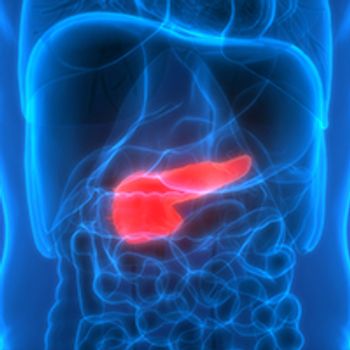
Treatment with the GVAX pancreatic cancer vaccine plus nivolumab and urelumab increased the presence of intratumoral activated cytotoxic T cells and showed early signs of efficacy in patients with resectable pancreatic adenocarcinoma.
Single-agent IBI322 elicited responses with favorable safety in patients with classical Hodgkin lymphoma that had become resistant to anti–PD-1/PD-L1 therapy, according to data from a phase 1 trial.
The addition of the chimeric monoclonal antibody CAEL-101 to standard therapy with cyclophosphamide, bortezomib, and dexamethasone with or without daratumumab demonstrated a manageable toxicity profile with prolonged clinical benefit in patients with amyloid light-chain amyloidosis.
The FDA has approved niraparib plus abiraterone acetate, given with prednisone, for the treatment of adult patients with deleterious or suspected deleterious BRCA-positive, metastatic castration-resistant prostate cancer, as detected by an FDA-approved test.
The novel personalized cancer vaccine IFx-Hu2.0 was found to be safe and well tolerated with weekly dosing in patients with checkpoint inhibitor–resistant cutaneous squamous cell carcinoma and Merkel cell carcinoma, according to data from an ongoing phase 1b trial.