

The combination of teclistamab and nirogacestat produced high and deep responses in patients with relapsed/refractory multiple myeloma.
The combination of teclistamab and nirogacestat produced high and deep responses in patients with relapsed/refractory multiple myeloma.

Helena A. Yu, MD, discusses the investigation of BL-B01D1 in patients with advanced solid tumors, the potential significance of this research for those with EGFR-mutant and wild-type disease, and the expanding body of evidence supporting continued antibody-drug conjugate development in non–small cell lung cancer.
Treatment with the second-generation BTK inhibitor tirabrutinib continued to elicit durable responses in patients with relapsed/refractory primary central nervous system lymphoma, according to findings from the final 3-year analysis of a phase 1/2 trial.

The addition of ofranergene obadenovec to paclitaxel failed to significantly improve survival outcomes compared with paclitaxel alone in patients with platinum-resistant ovarian cancer.

Press Release
Florida Cancer Specialists & Research Institute, LLC, physicians and senior leaders are co-authors of a study that confirms the effectiveness of trilaciclib for the treatment of adult patients with extensive-stage small cell lung cancer.

The FDA has approved a study may proceed letter in advance of its 30-day review period to Oncternal Therapeutics for its phase 1/2 study evaluating ONCT-534, a novel dual-action AR inhibitor in patients with mCRPC who have relapsed or are refractory to approved AR signaling inhibitors.

The first patients have been dosed in the phase 2 portion of a phase 1/2 trial evaluating BDC-1001 monotherapy in patients with HER2-positive colorectal cancer, endometrial cancer, and gastroesophageal cancer.
Yasser Mohamed Ali Ged, MBBS, highlights the early efficacy seen in patients with renal cell carcinoma with BAP1 mutations and next steps for the ORCHID trial.

Ulka Nitin Vaishampayan, MBBS, discusses factors to consider for choosing between immuno-oncology/immuno-oncology and VEGF TKI/immuno-oncology combinations for the frontline treatment of patients with renal cell carcinoma, areas of ongoing research in this disease, and treatment updates across the prostate cancer spectrum.
The safety and efficacy achieved with the combination of savolitinib and durvalumab vs standard-of-care sunitinib or durvalumab monotherapy will be evaluated in patients with MET-driven papillary renal cell carcinoma in the phase 3 SAMETA trial.

Hans Lee, MD, discusses unmet needs in patients with relapsed/refractory multiple myeloma, highlights key efficacy and safety findings from the LINKER-MM1 trial, and how these data may inform the future of the multiple myeloma treatment paradigm.

Press Release
This month, researchers reduce the risk of infections after pancreatic surgery and discover the best cost-effective treatment combination for prostate cancer patients.

China’s Center for Drug Evaluation of the National Medical Products Administration has granted a breakthrough therapy designation to glecirasib for the treatment of patients with pancreatic cancer harboring a KRAS G12C mutation and who have progressed after frontline standard-of-care treatment.

Finding effective treatments beyond the first line for patients with locally advanced or metastatic estrogen receptor-positive, HER2-negative breast cancer and an ESR1 mutation remains a challenge following development of resistance to agents.

David F. McDermott, MD, discusses how combining HIF-2α inhibition with CDK4/6 inhibition could be an effective treatment regimen in patients with renal cell carcinoma and shared details from the LITESPARK-024 trial.

The development of etrumadenant as a potential treatment option for patients with metastatic castration-resistant prostate cancer will be discontinued after data from the phase 1/2 ARC-6 trial did not demonstrate a sufficient clinical benefit for etrumadenant plus zimberelimab and docetaxel compared with docetaxel alone.
The FDA has granted accelerated approval to talquetamab-tgvs for the treatment of adult patients with relapsed or refractory multiple myeloma who have received at least 4 prior lines of therapy, including a proteasome inhibitor, an immunomodulatory agent, and an anti-CD38 antibody.
The FDA has issued a complete response letter to the new drug application seeking the approval of avasopasem manganese as a treatment for radiotherapy-induced severe oral mucositis in patients with head and neck cancer undergoing standard-of-care treatment.

Dana Chase, MD, FACOG, discusses key efficacy, safety, and quality of life data from the RUBY trial supporting the FDA approval of dostarlimab and explains how this approval could help improve the efficacy of current chemotherapy regimens in advanced-stage or recurrent endometrial cancer.

Bhuvaneswari Ramaswamy, MD, and colleagues highlight treatment for patients with HR-positive breast cancer, discuss the role of pembrolizumab plus chemotherapy in early-stage triple-negative breast cancer, and expand on unmet needs for patients with metastatic HER2-positive breast cancer.
The FDA has granted regular approval to pralsetinib (Gavreto) for adult patients with metastatic RET fusion–positive non–small cell lung cancer, as detected by an FDA-approved test.
Seth Wander, MD, PhD, discusses evidence to support the investigation of PROTACs in patients with hormone receptor–positive breast cancer; preliminary efficacy and safety findings with vepdegestrant; and potential strategies for targeting acquired ESR1 resistance mutations.

Press Release
The ranking by U.S. News & World Report marks the latest recognition for the organization as one of the nation’s elite cancer hospitals.
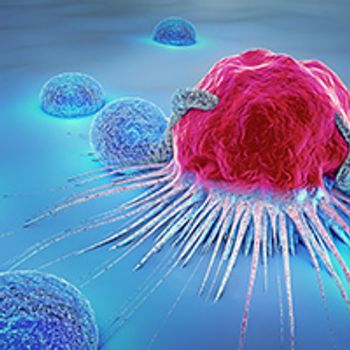
Treatment with the long-acting interleukin-2 superkine led to durable tumor control and no dose-limiting toxicities in patients with advanced solid tumors, according to data from the dose-escalation portion of the phase 1/2 ABILITY-1 trial.

Kedar Kirtane, MD, speaks on the unique mechanism of action of A2B530 and how the agent could represent a huge leap forward in the application of CAR T-cell agents for patients with solid tumors if the EVEREST-1 study proves to be positive.

The PD-1 inhibitor pembrolizumab displayed activity with a manageable safety profile in patients with certain rare and ultra-raresarcoma histotypes.

Experts from various institutions were interviewed by OncLive® at the 24th Annual International Lung Cancer Congress® about the ongoing platinum chemotherapy shortage in the United States.

Michelina Cairo, MD, discusses key insights from trials including SONIA and CAPItello-291; how adverse effects inform treatment decisions across the breast cancer spectrum; and where the future is headed for ADCs and oral SERDs in patients with breast cancer.

Balazs Halmos, MD, explains why a national effort is needed to mitigate current and future drug shortages in oncology and discusses strategies being used to navigate the current cisplatin and carboplatin shortages.
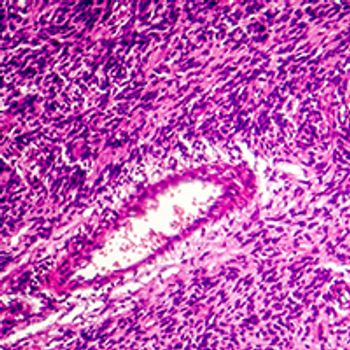
Treatment with camsirubicin led to a reduction in tumor size in patients with advanced soft tissue sarcoma.