

The FDA has granted orphan drug designation to LSTA1 for use as a potential therapeutic option in patients with malignant glioma, according to an announcement from Lisata Therapeutics, Inc.
The FDA has granted orphan drug designation to LSTA1 for use as a potential therapeutic option in patients with malignant glioma, according to an announcement from Lisata Therapeutics, Inc.

The University of Chicago Medical Center ranks among the nation’s best hospitals in 10 specialties, according to results of the U.S. News & World Report’s annual survey.
The FDA has approved the therascreen PDGFRA RGQ PCR kit for use as a companion diagnostic, co-developed by Qiagen and Blueprint Medicines, to assist in the identification of patients with gastrointestinal stromal tumors who may be candidates to receive avapritinib.
Pamela Kunz, MD, details key clinical trial updates across the gastrointestinal cancer arena presented during the 2023 ASCO Annual Meeting, including the phase 3 PROSPECT trial in locally advanced rectal cancer and the phase 3 IMbrave050 trial in patients with resected in hepatocellular carcinoma at high risk of recurrence.
Lionel Kankeu Fonkoua, MD, discusses the need for diverse representation across cancer clinical trials and research, emphasizes some of the disparities in enrollment criteria for these research efforts, and details some of the planned and ongoing initiatives at the Mayo Clinic that seek to facilitate change in the field.
The FDA has granted clearance for a global, registrational, phase 3 study examining lisaftoclax in combination with a BTK inhibitor in patients with relapsed/refractory chronic lymphocytic leukemia or small lymphocytic lymphoma who received prior treatment with a BTK inhibitor.
Michael D. Chuong, MD, discusses the role of MRI-guided radiation therapy in pancreatic cancer and other solid tumors; the benefits of the MRIdian system; and future directions regarding MRIdian operation training and research investigating this approach in combination with chemotherapy.
Rimas V. Lukas, MD, reflects on the key points of his presentation delivered at the 2023 Best of ASCO Meeting, which comprised existing unmet needs in low-grade glioma, key efficacy and safety findings from the INDIGO trial, and the viability of vorasidenib-based combination regimens for future investigation.
Guru P. Sonpavde, MD, discusses key data presented from the phase 3 THOR and SWOG S1011 studies at the 2023 ASCO Annual Meeting, and details ongoing trials that could help advance precision medicine approaches for patients with bladder cancer.
Tony S.K. Mok, MD, BMSc, FRCPC, FASCO, provides perspective on the use of tumor treating fields in lung cancer, the use of anti–PD-L1 inhibitors approved in China, and the potential impact of the microbiome on response with immunotherapy.
Jacob Sands, MD, discusses how the ongoing shortages of carboplatin and cisplatin have presented new challenges to patient care, how he and colleagues at Dana-Farber Cancer Institute are navigating these shortages, and how these limitations could ultimately have an impact on patients.
Press Release
Lucio Gordan, MD, President & Managing Physician of Florida Cancer Specialists & Research Institute, LLC, talked with Kevin Keegan, General Manager of Oncology Business with Illumina, about how FCS is bringing precision oncology through analysis of real-world data, innovative technology and research to cancer patients being treated in community settings.

Treatment with intermittent or continuous doses of relacorilant in combination with nab-paclitaxel resulted in an overall survival benefit compared with nab-paclitaxel monotherapy, but failed to demonstrate an improvement in progression-free survival in patients with recurrent, platinum-resistant ovarian cancer.
Nirav Shah, MD, discusses the efficacy of pirtobrutinib in patients with mantle cell lymphoma who were previously treated with a covalent BTK inhibitor and progressed, and outlines the next steps for exploration of the noncovalent BTK inhibitor in this population.
Pembrolizumab produced sustained antitumor activity in patients with relapsed/refractory primary mediastinal large B-cell lymphoma, according to data from the final analysis of the phase 2 KEYNOTE-170 trial.
The safety and efficacy of zipalertinib plus platinum-based chemotherapy will be compared with platinum-based chemotherapy alone in patients with treatment-naïve, locally advanced or metastatic non–small cell lung cancer harboring EGFR exon 20 insertion mutations in the phase 3 REZILIENT3 trial.
The FDA has released a complete response letter to its biologics license application resubmission, indicating that it needs more data to support approval for remestemcel-L for the treatment of pediatric patients with steroid-refractory acute graft-vs-host disease.

Trastuzumab plus ramucirumab and paclitaxel yielded promising efficacy and a manageable safety profile among patients with previously treated HER2-positive advanced gastric/gastroesophageal junction cancer.
Selpercatinib significantly improved progression-free survival vs platinum-based chemotherapy plus pemetrexed and pembrolizumab in patients with advanced or metastatic non–small cell lung cancer harboring RET fusions.

Haifa Kathrin Al-Ali, MD, provides background on the phase 1/2 study of BMS-986158, presents initial efficacy and safety data from the study, and discusses her hope that novel combination regimens like these could achieve the challenging goal of disease modification in myelofibrosis in the future.
Press Release
Grants totaling $1.5 million have been awarded by the New Jersey Commission on Cancer Research to several investigators at Rutgers Cancer Institute of New Jersey, the state’s only National Cancer Institute-designated Comprehensive Cancer Center together with RWJBarnabas Health.

Single-fraction stereotactic ablative body radiotherapy generated overall survival outcomes comparable to those achieved with multifraction SABR in patients with lung oligometastases.
R. Lor Randall, MD, FACS, provides details about the 2024 Birmingham Orthopedic Oncology Meeting and its main topic of discussion, explains the rationale for its inception, and emphasizes the importance of this meeting for orthopedic oncologists treating chondrosarcoma.
The FDA has granted an orphan drug designation to ABM-1310 for the treatment of patients with BRAF V600–mutant glioblastoma.
Matthew Frank, MD, PhD, discusses the rationale for evaluating CD22 CAR T cells in heavily pretreated patients with large B-cell lymphoma, important safety and efficacy data with this approach, next steps for this research, and how continued efforts may shed needed light on sequencing in this space.
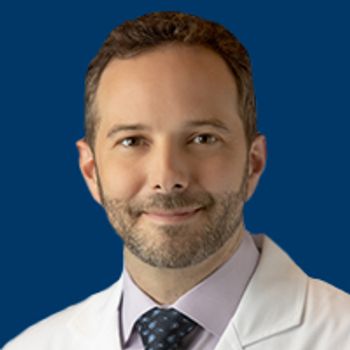
Stephen T Magill, MD, PhD, details his inspirations behind entering not just the neuro-oncology and surgical treatment field, but also the arena of meningioma care and research; provides topline advice for current fellows looking to enter this field; and details current and ongoing research in this space taking place at Northwestern Medicine.
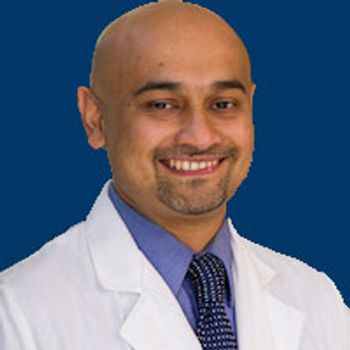
Raquibul Hannan, MD, PhD, discusses the benefits of using stereotactic radiation in patients with localized RCC who are unfit for surgery, research findings indicating improved outcomes in patients who received radiation for metastatic disease, and how this radiation technique may work in concert with systemic therapy.
Catherine C. Coombs, MD, and Alexey Danilov, MD, PhD, moderate a discussion on the role and sequencing of BTK inhibitors, venetoclax-based regimens, and CAR T-cell therapy in mantle cell lymphoma and chronic lymphocytic leukemia.
The preliminary efficacy, safety, and optimal dose of the MUC16xCD3 bispecific antibody ubamatamab alone or in combination with cemiplimab-rwlc continues to be explored in patients with advanced platinum-resistant ovarian cancer in the phase 2 portion of an ongoing, first-in-human, phase 1/2 study.

The addition of batiraxcept to paclitaxel did not significantly improve progression-free survival compared with paclitaxel alone in a prespecified subset of patients with platinum-resistant ovarian cancer who were not previously exposed to bevacizumab, missing the primary end point of the phase 3 AXLerate-OC trial.