

Roy S. Herbst, MD, PhD, highlights the evolution of EGFR TKIs and the need for treatments improving DFS and OS outcomes in EGFR-mutant NSCLC.
Roy S. Herbst, MD, PhD, highlights the evolution of EGFR TKIs and the need for treatments improving DFS and OS outcomes in EGFR-mutant NSCLC.

Sandip Patel, MD, explores how AI and multiomics are transforming localized non–small cell lung cancer care.

Huntsman Cancer Foundation and Sigma Chi International Fraternity announced a $31 million pledge for the Sigma Chi Center for Advanced Therapeutics.

The EMA’s CHMP recommended the approval of vimseltinib for symptomatic tenosynovial giant cell tumor.
Durvalumab received FDA priority review and breakthrough therapy designation for resectable gastric and GEJ adenocarcinoma.

Perioperative tislelizumab received a positive CHMP opinion for resectable non–small cell lung cancer at high risk of recurrence.

Shyam A. Patel, MD, PhD, and Jonathan M. Gerber, MD, discuss the next steps for validating IHC as a biomarker for TP53 mutations in MDS and AML.

Jue Wang, MD, outlines how prolonged androgen suppression may drive prostate cancer evolution.

Alan Tan, MD, discusses how a trial analysis of ipilimumab plus nivolumab in metastatic ccRCC informs strategies for optimal immunotherapy sequencing.
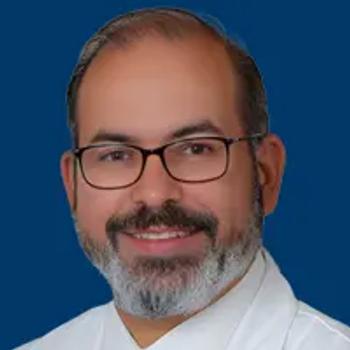
Jorge J. Nieva, MD, compares treatment options for patients with ROS1-positive non–small cell lung cancer.

The top 5 OncLive videos of the week cover insights in multiple myeloma, breast cancer, melanoma, and CLL/SLL.

Hossein Borghaei, DO, MS, discusses novel approaches to overcoming immunotherapy resistance in patients with non–small cell lung cancer.

RP1 BLA in advanced melanoma receives CRL from FDA, generic ibrutinib tablets gets green light for B-cell malignancies, and more.

Marina C. Garassino, MD, discusses the standing of durvalumab and other immunotherapy-based approaches in locally advanced NSCLC.

Sukhmani Padda, MD, discusses ways in which evolving treatment paradigms are tailoring treatment to target atypical EGFR alterations in NSCLC.

Heather Wakelee, MD, discusses underlying resistance mechanisms and potential therapies for EGFR+ NSCLC following osimertinib.

Lyudmila A. Bazhenova, MD, discusses considerations for treatment intensification in patients with EGFR-mutated NSCLC.

The European Commission has approved isatuximab plus VRd in transplant-eligible newly diagnosed multiple myeloma.

The CHMP has issued a positive opinion for the use of vorasidenib in IDH1/IDH2-mutant grade 2 glioma

Fewer than 1 in 5 U.S. adults aged 45-49 screened for colorectal cancer, despite guidelines
VS-7375 earned FDA fast track designation for KRAS G12D–mutant pancreatic ductal adenocarcinoma.

The combination of sonrotoclax and zanubrutinib produced deep and durable responses in relapsed/refractory mantle cell lymphoma.

The European Commission has approved cabozantinib for the treatment of patients with pancreatic and extrapancreatic neuroendocrine tumors.

Laura Huppert, MD, outlines additional information needed to implement the SERENA-6 approach in hormone receptor–positive breast cancer.
The CEO of Huntsman Cancer Institute is stepping down after holding the role since 2006.

The European Commission and Health Canada have approved belantamab mafodotin-based combinations for relapsed/refractory multiple myeloma.
The FDA has approved a generic version of ibrutinib tablets for B-cell malignancies.
Tabelecleucel earned FDA priority review for EBV-positive post-transplant lymphoproliferative disease following a January 2025 complete response letter.

The FDA has granted breakthrough therapy designation to elironrasib for KRAS G12C–mutated advanced NSCLC previously treated with chemotherapy and immunotherapy.
Shyam A. Patel, MD, PhD, and Jonathan M. Gerber, MD, discuss the use of IHC testing for earlier identification of TP53 mutations in MDS and AML.