

The incidence of ICANS and CRS post-CAR T-cell therapy decreased after 2 weeks in patients with DLBCL, supporting a reduction of the monitoring period.

Your AI-Trained Oncology Knowledge Connection!
The incidence of ICANS and CRS post-CAR T-cell therapy decreased after 2 weeks in patients with DLBCL, supporting a reduction of the monitoring period.

An EHR-based prompt or “nudge” decreased the rates of sentinel lymph node biopsy among older patients with early-stage breast cancer.
Adrienne G. Waks, MD, details her approach to treatment sequencing in metastatic HER2-positive disease and the potential role of T-DXd in the first line.

Crofelemer did not improve the incidence of diarrhea in patients with solid tumors receiving targeted therapy.

Rituximab maintenance therapy following frontline bendamustine plus rituximab improved EFS, EFS2, and OS vs no maintenance therapy in patients with MCL.

Press Release
Women with severe endometriosis are 10 times more likely to get ovarian cancer, compared to women who do not have the disease.
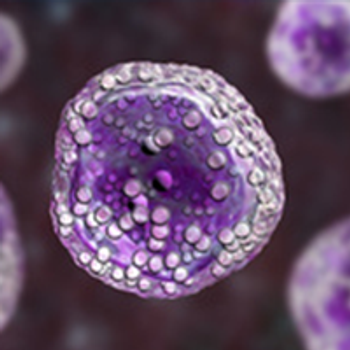
Iopofosine I 131 generated a major response rate of 56.4% in patients with relapsed/refractory Waldenström macroglobulinemia.

The FDA has accepted the resubmission of a BLA for remestemcel-L in pediatric steroid-refractory acute graft-vs-host-disease.

The ROR2-targeted ADC ozuriftamab vedotin has received FDA fast track designation in recurrent or metastatic head and neck squamous cell carcinoma.

Vishal Patel, MD, FAAD, FACMS, highlights the evolving role of PD-1 inhibitors in the management of nonmelanoma skin cancers.
Paolo Tarantino MD, and V. K. Gadi, MD, PhD discuss data from DESTINY-Breast03 and DESTINY-Breast06.
Adrienne G. Waks, MD, parses out recent and upcoming data in HER2+ breast cancer and discusses why abbreviated neoadjuvant regimens are not ready for primetime.

Sonya Reid, MD, MPH, discusses barriers to universal germline testing utilization in breast cancer, particularly among underserved populations.

Sarah Sammons, MD, discusses the evolving treatment landscape for metastatic HER2-postive breast cancer.

Circulating tumor DNA is in constant flux, rendering its evaluation potentially useful in metastatic breast cancer management.
V. Craig Jordan, PhD, of The University of Texas MD Anderson Cancer Center and a pioneer in the field of breast cancer, died on June 9, 2024.
Justin M. Watts, MD, discusses 5-year efficacy and safety data for olutasidenib in IDH1-mutant, relapsed/refractory AML.
Pembrolizumab plus ibrutinib or idelalisib produced responses in patients with Richter transformation of chronic lymphocytic leukemia.

The FDA has granted fast track designation to HP518 for androgen receptor–positive triple-negative breast cancer.

The FDA has expanded the orphan drug designation for SurVaxM, a brain cancer immunotherapy developed at Roswell Park Comprehensive Cancer Center.
Kassem Faraj, MD, details the 340B Drug Pricing program and data from a study examining participation in the program for patients with advanced prostate cancer.
Brian Rini, MD, details recent data in renal cell carcinoma surrounding the utility of KIM-1 as a potential biomarker and next steps for KIM-1 research.

Sara M. Tolaney, MD, MPH, discusses the use of HER2-directed therapy in the curative setting for HER2-positive breast cancer.

Roswell Park Comprehensive Cancer Center has promoted 3 nurses to leadership roles and new leaders were named in Case Management and Patient Education.

Hope Rugo, MD, discusses the management of treatment-limiting toxicities in breast cancer, including the use of antibody-drug conjugates and immunotherapy.
Tanios S. Bekaii-Saab, MD, FACP, details data from the ESOPEC trial in early-stage gastroesophageal cancers, and findings from Checkmate-9DW in HCC.

J. Ryan Mark, MD, FACS, is joining Fox Chase Cancer Center as an associate professor in the Department of Urology and the Fox Chase – Temple Urologic Institute.

The marketing authorization application seeking the approval of vimseltinib for the treatment of tenosynovial giant cell tumor is under EMA review.

The type II variation application for frontline nivolumab plus ipilimumab in unresectable/advanced hepatocellular carcinoma was validated by the EMA.
The EMA has accepted a marketing authorization application seeking approval of belantamab mafodotin regimens in relapsed/refractory multiple myeloma.