
Frontline maintenance therapy with avelumab following platinum-based chemotherapy led to similar outcomes in routine clinical practice and the JAVELIN Bladder 100 trial in metastatic urothelial cancer.

Your AI-Trained Oncology Knowledge Connection!
Frontline maintenance therapy with avelumab following platinum-based chemotherapy led to similar outcomes in routine clinical practice and the JAVELIN Bladder 100 trial in metastatic urothelial cancer.
Eric S. Winer, MD, discusses the mechanism of action of emavusertib and preliminary findings from the TakeAim Leukemia trial in acute myeloid leukemia.
Press Release
The new process checking system makes sure the right drugs are dispensed, improving patient safety.
China’s NMPA has approved zevor-cel for the treatment of adult patients with relapsed/refractory multiple myeloma after at least 3 lines of therapy.

HIPEC was not associated with additional complications or worse survival in patients with FIGO stage IV ovarian cancer vs those with stage III disease.

The President’s Cancer Panel has issued an initial assessment of the National Cancer Plan with recommendations to accelerate cancer care developments.

Ashish Saxena, MD, PhD, discusses the movement of targeted and immune therapies in non–small cell lung cancer treatment.

Robert S. Negrin, MD, discusses the use of Orca-T as a viable strategy for patients with hematologic malignancies undergoing allogeneic transplant.

Most oncology drugs approved by the EMA recover research and development costs within a few years, even if the drug is providing little added benefit.
SNB-101, a novel polymer nanoparticle agent, has been granted orphan drug designation by the FDA for the treatment of patients with pancreatic cancer.
The FDA has granted fast track designation to IDP-023 for the treatment of patients with non-Hodgkin lymphoma and multiple myeloma

The European Medicines Agency has validated a marketing authorization application seeking the approval of nirogacestat for patients with desmoid tumors.

The blood cancer expert comes to Sylvester Comprehensive Cancer Center after leading the discovery and testing of several immunotherapy approaches.
In case you missed it, below is a recap of all drugs that have been approved by the FDA in February 2024.
The FDA has approved a label expansion for ibrutinib with an oral suspension formulation in all current indications.

Nikhil A. Gopal, MD, discusses the benefit of belzutifan in addition to effective immunotherapy-based regimens in advanced RCC.

Pasi A. Jänne, MD, PhD discusses the FDA approval of osimertinib plus chemotherapy for patients with EGFR-positive non–small cell lung cancer.

The FDA granted an orphan drug designation to LUT014 for the treatment of EGFR inhibitor–induced acneiform rash.

Northwestern Medicine scientists have discovered the Achilles heel of chemotherapy-resistant ovarian cancer—its hunger for cholesterol.
The National Comprehensive Cancer Network recommends ropeginterferon alfa-2b as first-line cytoreductive therapy for polycythemia vera.
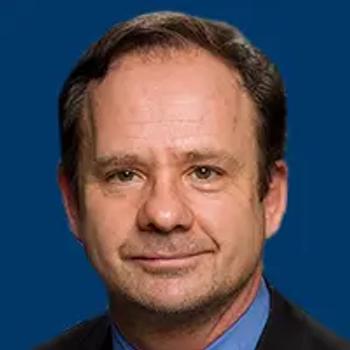
Andre H. Goy, MD, discusses how the ZUMA-18 trial data support the benefit of earlier-line use of brexucabtagene autoleucel in mantle cell lymphoma.
The FDA granted fast track designation to 9MW2821 for potential use in advanced, recurrent, or metastatic esophageal squamous cell carcinoma.

Rusfertide displayed activity in phlebotomy-dependent polycythemia vera.
Bezuclastinib plus BSC improved mast cell burden and total symptom score vs placebo plus BSC in adult patients with nonadvanced systemic mastocytosis.
The FDA has granted breakthrough therapy designation to NVL-520 for pretreated, metastatic ROS1-positive non–small cell lung cancer.
The biologics license application for first-line tislelizumab plus chemotherapy for gastric/gastroesophageal junction cancer has been accepted by the FDA.

The FDA has granted priority review to the sBLA of epcoritamab for relapsed/refractory follicular lymphoma.

Press Release
Three Virginia health systems together will serve as one of eight groups in the U.S. to conduct research for the Cancer Screening Research Network.

Patients with mismatch repair–deficient, immunohistochemistry-intact colorectal cancer or endometrial cancer benefit from immune checkpoint inhibitors.

Daniel Olson, MD, discusses the significance of the FDA approval of lifileucel for patients with advanced melanoma.