
Mitchell R. Smith, MD, PhD, discusses the use of chemotherapy versus targeted therapy in patients with newly diagnosed and relapsed/refractory chronic lymphocytic leukemia.

Your AI-Trained Oncology Knowledge Connection!
Mitchell R. Smith, MD, PhD, discusses the use of chemotherapy versus targeted therapy in patients with newly diagnosed and relapsed/refractory chronic lymphocytic leukemia.

Evidence is increasing that blood-based biomarkers have predictive utility in advanced non–small cell lung cancer. Going further, blood-based next-generation sequencing appears to have clinical utility in selecting targeted treatment in this setting.

Reagan M. Street, MD, MMS, discusses the shift toward targeted treatment in advanced ovarian cancer partly brought on by PARP inhibitors and the importance of hierarchical genomic testing.

Faculty from Texas Oncology and Quest Med Fusion highlight exciting ongoing research efforts at their respective institutions.
Treatment with pemigatinib resulted in a durable objective response rate in 35.5% of patients with previously treated, locally advanced or metastatic cholangiocarcinoma who harbored an FGFR2 fusion or rearrangement.
Larotrectinib demonstrated a clinically meaningful improvement in progression-free survival compared with time to progression on prior treatment in patients with TRK fusion–positive cancers using a measure known as the growth modulation index.
Treatment with the novel KIT and PDGFRA inhibitor ripretinib reduced the risk of progression or death by 85% compared with placebo for heavily pretreated patients with advanced gastrointestinal stromal tumors, according to findings from the phase III INVICTUS trial presented at the ESMO Congress 2019.
The FDA has granted a breakthrough therapy designation to the PARP inhibitor niraparib for the treatment of patients with BRCA1/2–mutant metastatic castration-resistant prostate cancer who have previously received chemotherapy and an androgen receptor inhibitor.
Treatment with the MEK inhibitor trametinib significantly improves progression-free survival and leads to a strong trend toward improved overall survival in recurrent, low-grade serous ovarian cancer.

Durvalumab added to etoposide and platinum-based chemotherapy as a first-line treatment for patients with extensive-stage small cell lung cancer delays development of new lesions and improves patient-reported outcomes compared with etoposide and platinum-based therapy alone.

Patients with ROS1-positive and NTRK-positive non–small cell lung cancer had frequent and durable responses, which appeared to deepen over time in some cases, with the multikinase inhibitor entrectinib.
The FDA has approved a labeling supplement for neratinib for the extended adjuvant treatment of patients with HER2-positive early-stage breast cancer.
Molecular testing has become an imperative step in the treatment decision-making process for oncologists, and new technologies and assays are emerging to further help identify tumor abnormalities and at the right time.

Robert G. Uzzo, MD, MBA, FACS, discusses the evolving yet relevant role of surgery in renal cell carcinoma.
Lewis R. Roberts, MB, ChB, PhD, discusses the past, present, and future of treatment in patients with perihilar and intrahepatic cholangiocarcinoma.  

Chen Fu, MD, discusses the data supporting the use of CT-P6 in HER2-positive breast cancer, the benefits to bringing more biosimilars to the market, and the future that these products have in oncology.
Davendra Sohal, MD, MPH, discusses the SWOG S1505 data and other emerging areas of research in pancreatic cancer.
Edgardo S. Santos, MD, FACP, FCCP, discusses data from the PACIFIC trial and how it has changed the standard of care for stage III non–small cell lung cancer patients whose disease has not progressed following concurrent platinum-based chemoradiation.

Faculty from Duke Cancer Institute provide insight into the exciting breast cancer research being conducted at their institution.
Alberto Chiappori, MD, discusses emerging biomarkers in non–small cell lung cancer and the different ways to test for them.
Atlantic Health System of Morristown New Jersey and Translational Genomics Research Institute of Arizona have opened a center dedicated to phase I clinical trials in cancer and improving access for patients with limited coverage.
David H. Ilson, MD, PhD, discusses the utility of TAS-102 in gastric and GEJ adenocarcinoma as well as other encouraging research in these spaces.
Donald A. Richards, MD, PhD, highlights the key takeaways from the pivotal POLO trial and underscores the importance of genetic testing in metastatic pancreatic cancer.

Sarah Sammons, MD, discussed the MONALEESA-7 and MONARCH 2 studies and how CDK4/6 inhibitors are changing the advanced hormone receptor–positive, HER2-negative breast cancer space.
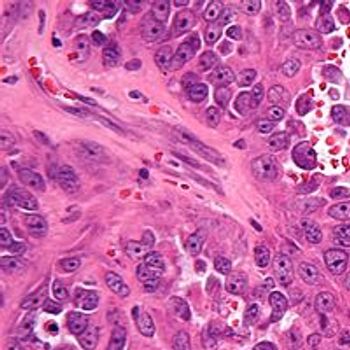
The National Comprehensive Cancer Network has updated its Clinical Practice Guidelines in Oncology for Soft Tissue Sarcoma to include a category 1 recommendation for pexidartinib (Turalio) for the treatment of patients with tenosynovial giant cell tumor.
The FDA has approved daratumumab in combination with bortezomib, thalidomide, and dexamethasone for the treatment of patients with newly diagnosed multiple myeloma who are eligible for autologous stem cell transplant.

Jasmine M. Zain, MD, discusses the phase III ECHELON-2 trial and the ongoing work being done in peripheral T-cell lymphoma and other T-cell lymphomas.
Susan Faye Dent, MD, discussed the importance of cardiac health in patients with breast cancer.
Raja Mudad, MD, FACP, discussed the available EGFR inhibitors and sequencing challenges for patients with EGFR-mutant non-small cell lung cancer.
Carey K. Anders, MD, discussed current approaches in the management of patients with breast cancer that has metastasized to the brain.