

The National Cancer Act of 1971 introduced the concept of a “war on cancer,” which has since affected the language we use when discussing the disease.
The National Cancer Act of 1971 introduced the concept of a “war on cancer,” which has since affected the language we use when discussing the disease.
The Damon Runyon Cancer Research Foundation awarded a total of $3.6 million to 9 winners of the Damon Runyon-Rachleff Innovation Awards. The grants support investigators whose ideas have the potential to significantly advance the prevention, diagnosis, or treatment of cancer.
Widespread germline testing in the United States could prevent cancer in hundreds of thousands of people. However, despite known benefits, uptake for genetic testing has been slow: only 1 in 5 individuals use recommended genetic services even when there is a significant family history of colorectal, breast, or ovarian cancer.
Rahul Banerjee, MD, discusses how to navigate the obstacles in interpreting Kaplan-Meier curves.
Feedback plays a key role in medical edu-cation and faculty development as it allows everyone to evaluate their performance and improve their intrapersonal skills.
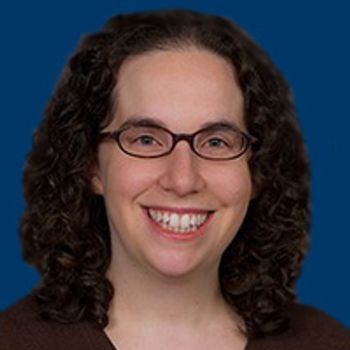
Evan B. Shereck, MD, MEd, talks about working with families experiencing incredible stress, the importance of wellness for both physicians and their partners, and making medical learning fun.
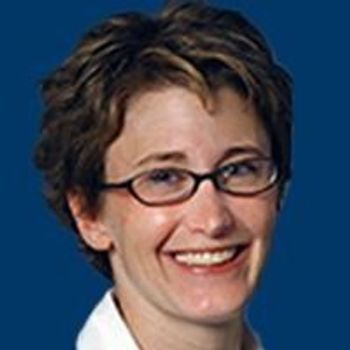
Jill Gilbert, MD, discusses pandemic fatigue, loss of connection, and frustration at the collapse of the social contract.
Evan B. Shereck, MD, MEd, serves as professor of pediatrics, Division of Hematology and Oncology, School of Medicine; program director, Pediatric Hematology/Oncology Fellowship; associate director, Cancer Research Training, Knight Cancer Institute; and block co-director, Blood and Host Defense at Oregon Health & Science University. In this episode, she highlights the average work day as an attending physician.
Evan B. Shereck, MD, MEd, serves as professor of pediatrics, Division of Hematology and Oncology, School of Medicine; program director, Pediatric Hematology/Oncology Fellowship; associate director, Cancer Research Training, Knight Cancer Institute; and block co-director, Blood and Host Defense at Oregon Health & Science University. In this episode, she expands on her process for making medical education more accessible.
Evan B. Shereck, MD, MEd, serves as professor of pediatrics, Division of Hematology and Oncology, School of Medicine; program director, Pediatric Hematology/Oncology Fellowship; associate director, Cancer Research Training, Knight Cancer Institute; and block co-director, Blood and Host Defense at Oregon Health & Science University. In this episode, she highlights her path toward becoming a fellowship director.
Evan B. Shereck, MD, MEd, professor of pediatrics, Division of Hematology and Oncology, School of Medicine; program director, Pediatric Hematology/Oncology Fellowship; associate director, Cancer Research Training, Knight Cancer Institute; and block co-director, Blood and Host Defense at Oregon Health & Science University, discusses how she works to "gamify" medical education.
Evan B. Shereck, MD, MEd, serves as professor of pediatrics, Division of Hematology and Oncology, School of Medicine; program director, Pediatric Hematology/Oncology Fellowship; associate director, Cancer Research Training, Knight Cancer Institute; and block co-director, Blood and Host Defense at Oregon Health & Science University. In this episode, she discussed her passion with pediatric oncology.
Evan B. Shereck, MD, MEd, serves as professor of pediatrics, Division of Hematology and Oncology, School of Medicine; program director, Pediatric Hematology/Oncology Fellowship; associate director, Cancer Research Training, Knight Cancer Institute; and block co-director, Blood and Host Defense at Oregon Health & Science University. In this episode, she discusses how she helps her fellows navigate their career goals.