

Dana-Farber Cancer Institute will host the Fifth Transatlantic Exchange in Oncology, bringing together leading cancer researchers and clinicians.
Dana-Farber Cancer Institute will host the Fifth Transatlantic Exchange in Oncology, bringing together leading cancer researchers and clinicians.

Research showed that an oncolytic virus could prolong survival in patients with glioblastoma.
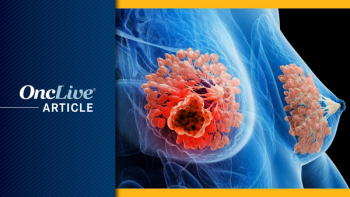
PATINA shows palbociclib added to anti-HER2 plus endocrine maintenance prolongs progression-free survival by 15+ months in HR+, HER2+ metastatic breast cancer.
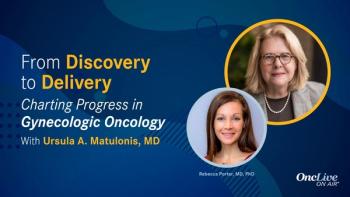
Drs Matulonis and Porter discuss the role of immunotherapy in gynecologic cancer management, focusing on clinical breakthroughs and future directions.

Nicholas Polizzi, PhD, and Edward Boyden, PhD, are recipients of the December 2025 Medical Research Grant from the W. M. Keck Foundation.
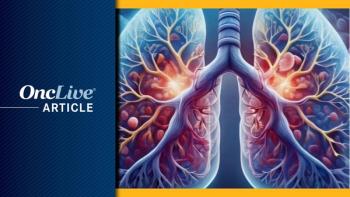
A global analysis led by Dana-Farber combined patient data from 6 major clinical trials to compare 2 immunotherapies for advanced non–small cell lung cancer.
Sara Tolaney, MD, MPH, discusses the recent FDA approval of T-DXd and pertuzumab for HER2-positive breast cancer and its supporting data.
Extending endocrine therapy beyond 5e years significantly reduces relapse risk in young women with HR-positive early-stage breast cancer.
Erica L. Mayer, MD, MPH, discusses updated data with CDK4/6 inhibitors and ongoing investigations of oral SERDs in HR-positive breast cancer.

The top 5 OncLive TV videos of the week cover insights in multiple myeloma, breast cancer, and colorectal cancer.

Guilherme Nader-Marta, MD, and Erica L. Mayer, MD, MPH, discusses innovative treatments for HR-positive, HER2-negative metastatic breast cancer.
Sacituzumab govitecan displayed efficacy in terms of PFS both with/without pembrolizumab in patients with untreated TNBC.
The top 5 OncLive TV videos of the week cover insights in leukemia, lung cancer, multiple myeloma, indolent systemic mastocytosis, and pancreatic cancer.

Investigators at Dana-Farber Cancer Institute have developed an AI-based noninvasive tool that can predict the likelihood of oropharyngeal cancer spread.

Drs Rotow and Woodard talk through recent updates to the perioperative non–small cell lung cancer treatment paradigm.
The top 5 OncLive TV videos of the week cover insights in ALL, breast cancer, lung cancer, and pancreatic cancer.

Dana-Farber Cancer Institute’s adult stem cell transplant program and Dana-Farber/Boston Children’s Cancer and Blood Disorders Center’s pediatric stem cell transplant program received exceptional ratings from the CIBMTR.
Sara M. Tolaney, MD, MPH, discusses updated safety data from ASCENT-04 evaluating sacituzumab govitecan plus pembrolizumab in PD-L1–positive TNBC.
Breast oncology experts discuss SABCS 2025 data from HER2CLIMB-05 and lidERA that may influence maintenance therapy and adjuvant endocrine care.
Pasi A. Jänne, MD, PhD, discusses considerations for selecting a frontline combination regimen in EGFR-mutated NSCLC.
Drs Matulonis and Konstantinopoulos discuss the different subtypes of endometrial cancer and treatment developments for this disease.
Sara M. Tolaney, MD, MPH, discusses the design and potential significance of the ongoing ELEGANT trial of elacestrant in ER-positive early breast cancer.
Joaquim Bellmunt, MD, PhD, discusses future research directions with ctDNA-guided immunotherapy in urothelial cancer.
Pasi A. Jänne, MD, PhD, discusses the design of the FLAURA2 trial in EGFR+ NSCLC.
In case you missed any, read a recap of every episode of OncLive On Air that aired in November 2025.

Dana-Farber Cancer Institute will present numerous presentations at ASH 2025 about studies in hematologic diseases and cancers.
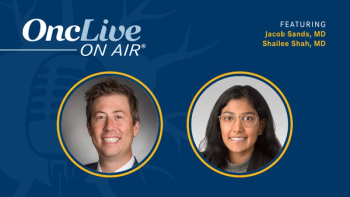
Drs Sands and Shah discuss LEMS symptom identification and what guidelines currently note as best practices for the diagnosis of this disease.
Joaquim Bellmunt, MD, PhD, discusses subgroup and safety data from the phase 3 IMvigor011 trial in patients with MIBC.
Dana-Farber Cancer Institute was awarded a $20 million grant by The Elaine and Eduardo Saverin Foundation for advancements in metastatic breast cancer.
The top 5 OncLive TV videos of the week cover insights in ovarian cancer, lung cancer, urothelial cancer, and prostate cancer.