
Frailty is common among older adults with blood cancers and strongly predicts survival, independent of age.
Frailty is common among older adults with blood cancers and strongly predicts survival, independent of age.
Erica L. Mayer, MD, MPH, discusses the FDA approval of camizestrant for ESR1-mutated HR+/HER2– breast cancer and the importance of ctDNA monitoring.

Dana-Farber, Mass General Brigham, and Broad Institute researchers uncovered clues to why colorectal cancer can be more aggressive in younger people.
Biagio Ricciuti, MD, PhD, discusses Krascendo 1 data for divarasib, co-mutation–guided sequencing, and emerging RAS inhibitors in KRAS G12C–positive NSCLC.

Judy E. Garber, MD, MPH, of the Dana Farber Cancer Institute is the recipient of the 2026 Basser Global Prize.
Breast cancer experts address frequently asked questions on adjuvant and metastatic CDK4/6 inhibitor selection in HR-positive breast cancer.
Drs Sen and Sands discuss lurbinectedin's place in the small cell lung cancer treatment paradigm.
Drs Matulonis and Liu explore the rapidly expanding landscape of novel therapies for ovarian cancer, spanning the next generation of antibody-drug conjugates, resistance mechanisms, cell cycle targets, and emerging strategies for rare histologic subtypes.
AI-assisted scoping review of code sharing in clinical prediction model research
Check out this September recap of OncLive’s coverage of the top news and expert insights in breast cancer.
Dana-Farber’s Xin Gu, PhD, and Nicholas Polizzi, PhD, received NIH New Innovator Awards for high-risk, high-reward research.
Lung cancer experts discuss emerging strategies after immunotherapy in advanced squamous NSCLC, including updated PRESERVE-003 data from WCLC 2026.
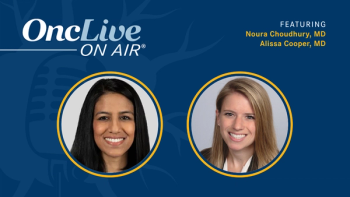
Drs Cooper and Choudhury discuss the evolving role of DLL3-targeting T-cell engagers in SCLC, with a focus on tarlatamab and how emerging trial data may reshape the current treatment paradigm across lines of therapy.
The top 5 OncLive TV videos of the week cover insights in breast cancer, PV, myeloma, and CLL.
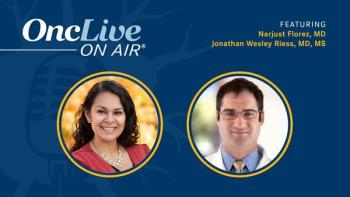
Drs Florez and Riess discuss the distinction between HER2 overexpression and HER2 mutations in non–small cell lung cancer.
Erica L. Mayer, MD, MPH, discusses the FDA approval of camizestrant and the clinical role of the ctDNA-guided switch paradigm introduced by SERENA-6.
New research reveals how cancers carrying mutations in the p53 tumor-suppressor protein can hide those mutations from T cells.
The top 5 OncLive TV videos of the week cover insights in NSCLC, large granular lymphocytic leukemia, ovarian cancer, and myelofibrosis.
Brandon Huffman, MD, discusses INCB161734’s mechanism of action, phase 1 data, and the DAWN-303 trial design in KRAS G12D–mutated pancreatic cancer.
Giada Bianchi, MD, discusses the mechanism of action for anselamimab in AL amyloidosis.
Dana-Farber Cancer Institute is launching Solavia Decision Suite to bring clinical expertise and evidence-based treatment pathways directly into clinicians’ workflows.
First-line trastuzumab deruxtecan reduced the risk of progression or death by 37% compared with pembrolizumab plus chemotherapy in HER2-mutant non–small cell lung cancer.
A donation from Mario Germano Giuliani and Lisa Giuliani will support research in multiple myeloma at Dana-Farber Cancer Institute.
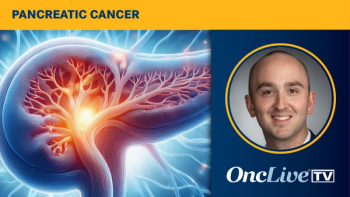
Brandon Huffman, MD, discusses INCB161734 and how the phase 3 DAWN-303 trial is testing it in metastatic pancreatic cancer.
During a recent OncLive Peer Exchange, panelists discussed testing strategies, updated data, and treatment sequencing in ROS1+ NSCLC.
The phase 3 DAWN-303 trial is evaluating the oral KRAS G12D inhibitor INCB161734 in previously untreated, KRAS G12D–mutated metastatic PDAC.
Richard K. and Nancy K. Lubin have made a $35 million gift to Dana-Farber Cancer Institute’s Future of Cancer Care Fund.
Dana-Farber research aided in the FDA approval of iberdomide-based therapy in relapsed/refractory multiple myeloma.
In case you missed any, read a recap of the episodes of OncLive On Air that aired in July 2026.

Narjust Florez, MD, discusses how the agenda for the Bridging the Gaps in Lung Cancer meeting evolves year to year based on emerging data and community feedback.