
Glenn J. Hanna, MD, discusses the efficacy of elraglusib plus chemotherapy with or without immunotherapy in patients with advanced salivary gland cancer.
Glenn J. Hanna, MD, discusses the efficacy of elraglusib plus chemotherapy with or without immunotherapy in patients with advanced salivary gland cancer.
Penpulimab gets green light from FDA for nasopharyngeal carcinoma, sacituzumab govitecan combination boosts PFS in TNBC, and more.
Experts from across oncology specialties highlight research being presented at the 2025 AACR Annual Meeting.
Jennifer Chan, MD, MPH, highlights the significance of the FDA approval of cabozantinib for the treatment of patients with pNET and epNET.

Investigators found that the cancer-controlling effects of immune checkpoint inhibitors continue even after treatment is stopped due to immune-related adverse events in patients with advanced NSCLC.
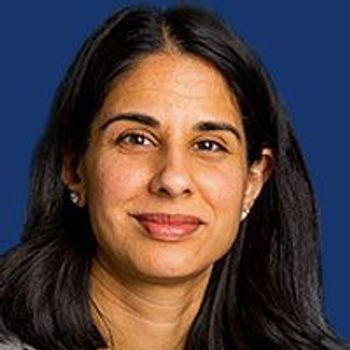
Sara M. Tolaney, MD, MPH, discusses the value of incorporating ctDNA monitoring of ESR1 mutations into routine management for HR-positive breast cancer.
The top 5 OncLive videos of the week cover insights in multiple myeloma, AL amyloidosis, myelofibrosis, breast cancer, and sarcoma.
Sara M. Tolaney, MD, MPH, discusses the ideal time for patients with HR-positive breast cancer to undergo genetic testing for ESR1 mutations.
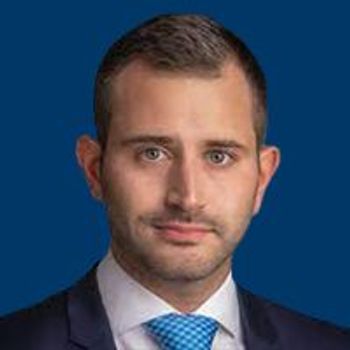
Paolo Tarantino, MD, discusses the growing emphasis on anthracycline-sparing approaches for the treatment of HER2-positive breast cancer.
Three researchers from Dana-Farber Cancer Institute have been selected by the American Association for Cancer Research (AACR) as recipients of 2025 Scientific Achievement Awards.
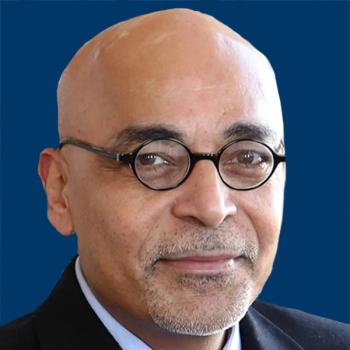
K. “Vish” Viswanath, PhD, of Dana-Farber Cancer Center, has been named Fellow of the American Association for the Advancement of Science.

Panagiotis A. Konstantinopoulos, MD, PhD, discusses CRs achieved with letrozole, abemaciclib, and metformin in ER–positive endometriod endometrial cancer.
Here is your snapshot for all therapeutic options that were approved by the FDA in March 2025 spanning tumor types.
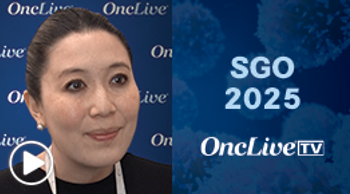
Elizabeth Lee, MD, discusses the efficacy of rinatabart sesutecan in patients with FRα-expressing high-grade serous or endometrioid platinum-resistant ovarian cancer.
The median DOR with Rina-S was not reached and the treatment was well tolerated in patients with FRα-unselected platinum-resistant ovarian cancer.
Count Me In, a patient-partnered research initiative led by Dana-Farber Cancer Institute and the Broad Institute of MIT and Harvard, is launching a project focused on translocation renal cell carcinoma.
Daniel J. DeAngelo, MD, PhD, discusses the clinical implications of findings from the PATHFINDER trial of avapritinib in advanced systemic mastocytosis.
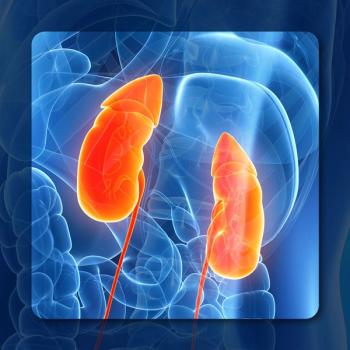
Treatment with casdatifan was well tolerated and showed meaningful clinical activity in patients with previously treated ccRCC.
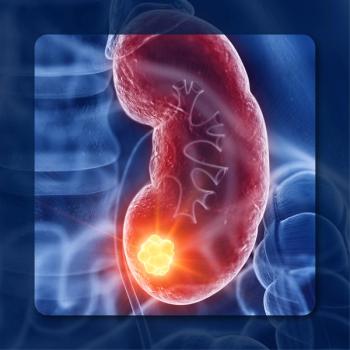
Dana-Farber investigators found that normally defunct viral genes that lie dormant in the human genome can be activated in ccRCC.
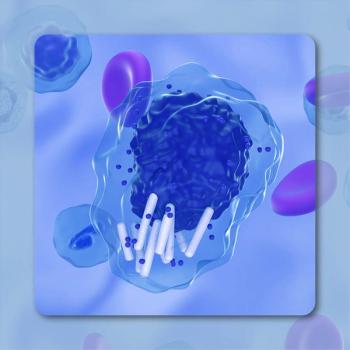
During an OncLive Peer Exchange at the 2024 ASH Meeting, expert investigators in hematology discussed findings from several clinical trial updates in CLL.
Lakshmi Nayak, MD, discusses the mechanism of action of emavusertib and the study of this drug relapsed/refractory primary and secondary CNS lymphoma.
Eric S. Winer, MD, discusses the efficacy of emavusertib in patients with relapsed/refractory AML harboring FLT3 and/or spliceosome factor mutations.

Kimberly Stegmaier, MD, was recently named Chair of Pediatric Oncology at Dana-Farber Cancer Institute.
Experts across the field of GU oncology share important insights and spotlight key research presented at the 2025 GU Cancers Symposium.
Experts highlight the top presentations to watch for at the 2025 Genitourinary Cancers Symposium.
Daniel J. DeAngelo, MD, PhD, details how the split dosing of obe-cel yields reduced toxicities and makes it a unique CAR T-cell therapy for relapsed/refractory ALL.
Patients in a clinical trial being treated for stage III or IV clear cell renal cell carcinoma generated successful responses after a personalized cancer vaccine.

The model, called EpiBERT, was inspired by BERT, a deep learning model designed to understand and generate human-like language.
Toni K. Choueiri, MD, discusses the significance of targeting HIF-2α using NKT2152 in previously treated advanced clear cell renal cell carcinoma.
Daniel DeAngelo, MD, PhD, discusses data supporting the FDA approval of obe-cel for patients with relapsed or refractory B-cell precursor ALL.