
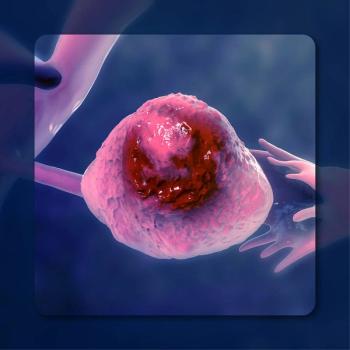
Investigators are opening a trial to evaluate a novel type of immune cellular therapy in patients with recurrent, platinum-resistant ovarian cancer.
Investigators are opening a trial to evaluate a novel type of immune cellular therapy in patients with recurrent, platinum-resistant ovarian cancer.

Nancy U. Lin, MD, discusses the safety data from DESTINY-Breast12 with T-DXd for HER2+ advanced/metastatic breast cancer with or without brain metastases.

Daniel DeAngelo, MD, PhD, discusses how the shift away from chemotherapy has affected the management of chronic lymphocytic leukemia.

Daniel DeAngelo, MD, discusses the integration of JAK inhibitors into clinical practice for patients with myelofibrosis.
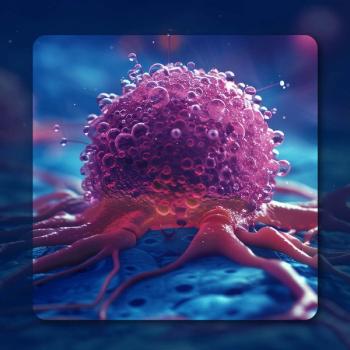
The biomarker analysis of patients enrolled on part B of the CheckMate 914 trial explored the effects of PD-L1 and KIM-1 expression.

David Pellman, MD, and Matthew Vander Heiden, MD, PhD of Dana-Farber Cancer Institute have been named to the National Academy of Medicine.

Researchers at Dana-Farber Cancer Institute have created a CRISPR-based rapid molecular diagnostic for two forms of leukemia that are driven by mutations that involve gene fusions.

Daniel DeAngelo MD, PhD, discusses the incorporation of JAK inhibitors into the myelofibrosis treatment paradigm.

David C. Fisher, MD, discusses the evolving therapeutic landscape in follicular lymphoma.
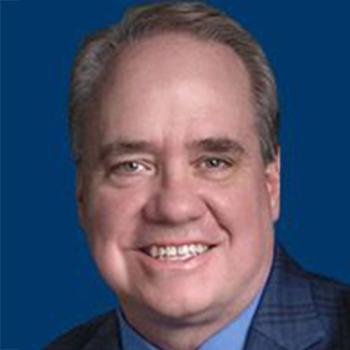
U.S. News & World Report has recognized Dana-Farber/Boston Children's Cancer and Blood Disorders Center as the #2 pediatric cancer program in the nation.
David C. Fisher, MD, discusses the evolving role of BTK inhibitors in the CLL treatment paradigm.
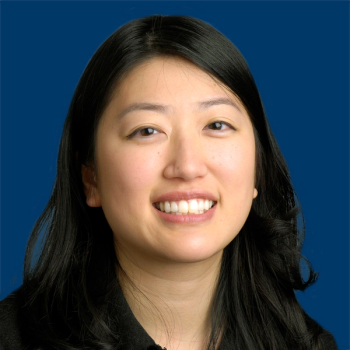
Nancy U. Lin, MD, discusses findings from the DESTINY-Breast12 trial of trastuzumab deruxtecan in advanced HER2-positive breast cancer with brain metastases.

Nancy U. Lin, MD, discusses the importance of the DESTINY-Breast12 trial of T-DXd in patients with HER2+ breast cancer with vs without brain metastases.

Dana-Farber Cancer Institute has used weighted blankets to aid in patient care.

In focus groups conducted in the US, doctors and patients expressed openness to considering environmental factors when discussing treatment options.

Press Release
Cigall Kadoch, PhD, has been named as the Laureate of the Blavatnik National Awards for Young Scientists in the field of life sciences.

Press Release
Clinical trials may be inappropriately excluding some people with "Duffy-null phenotype," a trait found in people of African or Middle Eastern descent.

Marc Machaalani, MD, discusses an investigation into the distribution of ERBB2 amplifications across sex, race, and varying cancer types.
Research from Dana-Farber Cancer Institute clinicians showed that adding nivolumab to tivozanib did not improve survival for patients with advanced RCC.

Kimmie Ng, MD, MPH, discusses factors of consideration for later-line treatment decisions in patients with refractory metastatic colorectal cancer.
Breast cancer experts highlight early-phase and real-world studies of interest from the 2024 ESMO Congress.

Toni K. Choueiri, MD, discusses early findings from a phase 1/2 trial evaluating NKT2152 in previously-treated advanced clear cell renal cell carcinoma.
T-DXd shows substantial antitumor activity in brain metastases in patients with HER2-positive breast cancer in a major international clinical trial.

Kimmie Ng, MD, MPH, discusses the addition of vitamin D to standard chemotherapy plus bevacizumab in patients with untreated metastatic colorectal cancer.
Oncology experts share their key takeaways in genitourinary cancers and recent updates from the 2024 ESMO Congress.

Ann H. Partridge, MD, MPH, discusses unique challenges associated with very young patients who have ER+/node-positive breast cancer.
The SOLARIS trial results suggest that high-dose vitamin D3 cannot be recommended as a treatment for patients with untreated metastatic colon cancer.

Alicia Morgans, MD, MPH, discusses prior data and follow-up analysis of the ARAMIS trial in nonmetastatic castration-resistant prostate cancer.

Paolo Tarantino, MD, discusses advancements that may lead to more tailored treatment approaches in early-stage HER2+ breast cancer.
Toni Choueiri, MD, discusses findings with tivozanib plus nivolumab in metastatic RCC after progression on an immune checkpoint inhibitor.