
In 2024, kidney cancer is projected to be one of the top 10 cancers in terms of incidence rate in the United States, with an estimated 81,610 new diagnoses.
In 2024, kidney cancer is projected to be one of the top 10 cancers in terms of incidence rate in the United States, with an estimated 81,610 new diagnoses.
Key opinion leaders analyze the potential significance of preliminary data on BGB-16673, a BTK inhibitor degrader, in anticipation of its presentation at EHA 2024.
The panel explores potential applications and impact of BTK inhibitor degraders as an emerging class of novel agents for treating relapsed/refractory chronic lymphocytic leukemia.

Key opinion leaders examine promising antibody-drug conjugates (ADCs) in the pharmaceutical development pipeline.
Expert clinicians offer strategic guidance on optimal sequencing of antibody-drug conjugates (ADCs) in treatment protocols.

Emre Yekedüz, MD, discusses a case study shared via an OncLive X poll on the adjuvant treatment of clear cell renal cell carcinoma.

Praful K. Ravi, MB, BChir, MRCP, discusses the prognostic impact of residual cancer burden on long-term outcomes in high-risk localized prostate cancer.
Bradley McGregor, MD, discusses the future implications of evolutions in the renal cell carcinoma treatment paradigm.
Sara M. Tolaney, MD, MPH, discusses standard frontline treatment approaches for patients with HER2-positive breast cancer.

Bradley McGregor, MD, discusses the clinical implications of the DAD-IO trial in patients with metastatic urothelial carcinoma.
Renee Saliby, MD, MSc, discusses the investigation of the correlation between intermediate end points and OS in metastatic renal cell carcinoma.
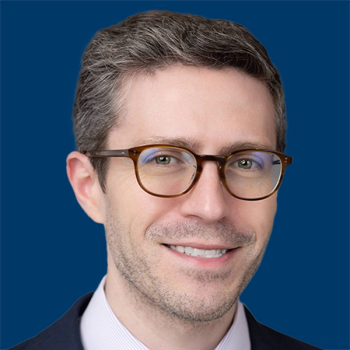
Andrew Hantel, MD, discusses environmental and health impacts of decentralizing cancer care in response to high emissions generated by US health care.
Andrew Hantel, MD, discusses the evaluation of eligibility criteria in acute myeloid leukemia clinical trials that may perpetuate racial disparities.
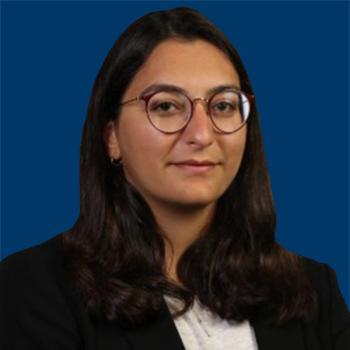
Renee Maria Saliby, MD, MS, discusses potential intermediate end points for overall survival in previously treated metastatic renal cell carcinoma.
Experts provide clinical insights on the management of emetogenicity in patients receiving antibody-drug conjugates.
A panel of experts discuss hematologic adverse events associated with antibody-drug conjugate therapies.
Key opinion leaders analyze the implications of the FDA's accelerated approval for lisocabtagene maraleucel (liso-cel) in chronic lymphocytic leukemia, based on promising results from the TRANSCEND CLL 004 trial.
A medical expert offers commentary on the recent FDA accelerated approval of pirtobrutinib, discussing the implications of the BRUIN trial findings that supported this decision for chronic lymphocytic leukemia treatment.

Andrew Hantel, MD, discusses the environmental and health impacts of decentralizing cancer care in response to high emissions generated by health care.

Praful K. Ravi, MB, BChir, MRCP, discusses the use of neoadjuvant androgen receptor pathway inhibitors prior to radical prostatectomy in high-risk, localized prostate cancer.

Adrienne G. Waks, MD, discusses how neoadjuvant and adjuvant anthracycline- and taxane-based regimens compare with one another in HER2+ breast cancer.

Sarah Sammons, MD, discusses treating beyond progression and novel research on PI3K inhibitors in HR-positive, HER2-negative metastatic breast cancer.
Clara Steiner, MD, discusses a pilot study of an implantable microdevice for in vivo evaluation of drug responses in renal cell carcinoma.
Marc Machaalani, MD, discusses the rationale for examining AXL and its interaction with c-Met in renal cell carcinoma.
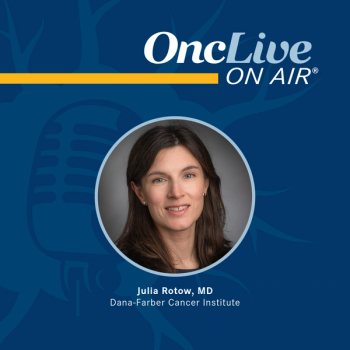
Dr Rotow discusses data that demonstrated the central nervous system activity of datopotamab deruxtecan and osimertinib in patients with NSCLC.
Eddy Saad, MD, MSc, discusses the association between an IL-7 SNP and immune-related AEs in patients with RCC who received immune checkpoint inhibitors.
Sarah Sammons, MD, describes how she treats patients with HR-positive, HER2-negative metastatic breast cancer who progressed on prior CDK4/6 inhibitors.
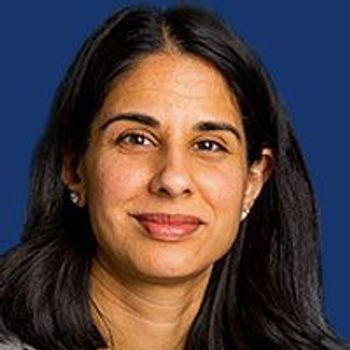
Sara M. Tolaney, MD, MPH, discusses the use of ADCs in HER2-positive breast cancer and ongoing research in this patient population.

Sara M. Tolaney, MD, MPH, discusses key data on checkpoint inhibitor combinations in metastatic triple-negative breast cancer.
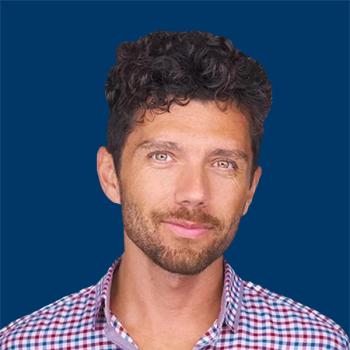
Edward Chouchani, PhD, of Dana-Farber Cancer Institute, has been named a Howard Hughes Medical Institute Investigator.